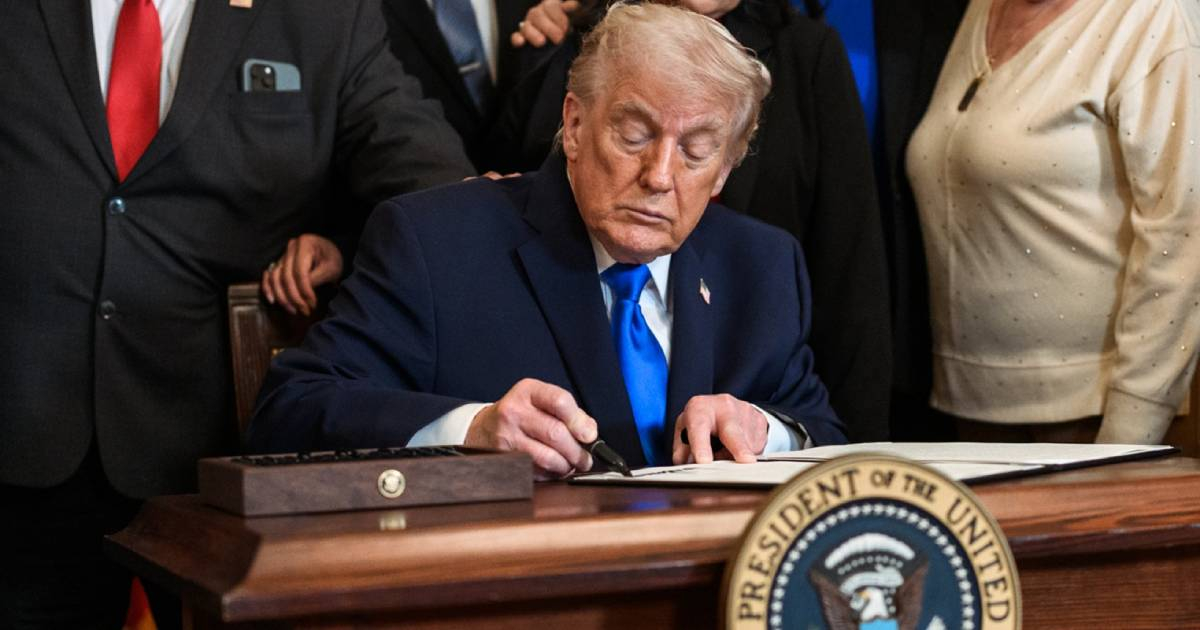
On Friday, President Donald Trump signed an executive order imposing sanctions on foreign individuals linked to repression in Cuba and threats against the national security and foreign policy of the United States.
The document, released by the White House, expands the legal framework established by Executive Order 14380 of January 29, 2026, which declared a national emergency concerning Cuba and labeled the regime's policies as an "unusual and extraordinary threat" to U.S. interests.
In the new order, Trump states that the Cuban government's policies are "not only designed to harm the United States but are also repugnant to the moral and political values of free and democratic societies."
This order freezes all assets and property interests in the U.S. of foreign individuals deemed by the Secretary of State or Treasury to be operating in key sectors of the Cuban economy: energy, defense, metals and mining, financial services, and security.
Sanctions also apply to leaders, officials, or executives of the Cuban government; individuals providing material support to the regime; those responsible for severe human rights abuses in Cuba; and individuals involved in corruption related to the Havana government.
One of the broadest provisions extends sanctions to adult family members of those already designated under the same order, significantly widening the scope of the measures.
The travel section suspends entry into the United States—as immigrants or non-immigrants—of all individuals meeting sanction criteria unless the Secretary of State determines their entry is in the national interest.
The order authorizes the Secretary of the Treasury to sanction foreign financial institutions that facilitate significant transactions with blocked individuals, including banning correspondent accounts in the U.S.
The document also states that designations will not require prior notification to those affected, as "the ability to instantly transfer funds would render the measures ineffective" if advance notice were given.
This new order is part of the maximum pressure strategy the Trump administration has intensified since January 2026, which included intercepting at least seven tankers bound for Cuba and banning the island from receiving Russian oil, measures that have exacerbated an energy crisis with blackouts lasting up to 25 hours a day.
The Cuban regime has responded with accusations of "collective punishment" and has denounced Washington's pressures to international organizations, while the island's economy faces a projected GDP decline of 7.2% in 2026.
The new order revisits and expands the focus on personal sanctions that Trump applied during his first administration when the Office of Foreign Assets Control (OFAC) sanctioned General Luis Alberto Rodríguez López-Calleja, then president of the military conglomerate GAESA—who passed away in 2022—on September 30, 2020.
The Secretary of State and the Secretary of the Treasury are authorized and directed to implement the order through temporary suspension of regulations, publication of rules in the Federal Register, and use of all powers granted by the International Emergency Economic Powers Act to the president.
Understanding Trump's Sanctions on Cuba
What does the new executive order against Cuba entail?
The executive order imposes sanctions on foreign individuals linked to Cuba's repression and threats to U.S. national security, freezing their assets in the United States and restricting their entry into the country.
Who will be affected by these sanctions?
The sanctions target leaders, officials, and executives of the Cuban government, as well as those who provide material support to the regime, commit severe human rights abuses, or are involved in corruption.
How will the U.S. enforce these sanctions?
The Secretary of State and the Secretary of the Treasury are tasked with implementing the order by suspending regulations, publishing rules, and utilizing powers granted by the International Emergency Economic Powers Act.