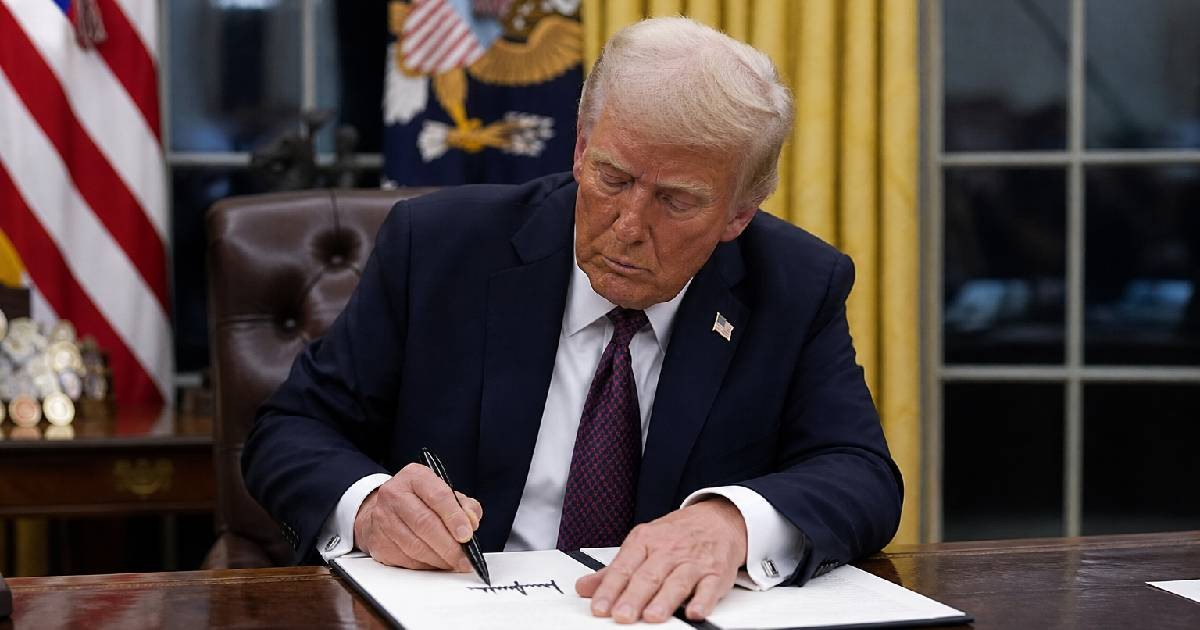
President Donald Trump signed a fresh executive order on Friday, intensifying U.S. sanctions against Cuba's government, two White House officials revealed to Reuters.
This action targets individuals, entities, and affiliates that bolster the regime's security apparatus, engage in corruption, or perpetrate severe human rights abuses. It also extends to agents, officials, or supporters of the Havana government.
The order further authorizes secondary sanctions on those conducting or facilitating transactions with designated targets, expanding the reach of pressure beyond Cuba's borders.
As of publication, specific individuals or entities impacted by the new order remained undisclosed.
A White House official cautioned that "Cuba provides a permissive environment for hostile foreign intelligence, military, and terrorist operations less than 100 miles from U.S. territory."
The order also hints at the Cuban government's alignment with Iran and militant groups like Hezbollah.
This latest measure is part of a series of maximum pressure actions executed by the Trump administration against Cuba since the start of his second term, which intensified after the capture of Venezuelan President Nicolás Maduro in Caracas on January 3, 2026.
That operation severed the island's primary crude supply of 25,000 to 35,000 barrels daily and was followed on January 29 by Executive Order 14380, declaring a national emergency due to Cuba's threats to U.S. security.
This order also imposed tariffs on third-party countries supplying oil to Cuba, prompting Mexico—another key provider—to halt its crude shipments to the island under threat of commercial reprisals.
Since January 2025, the Trump administration has imposed over 240 sanctions on the Cuban regime and intercepted at least seven tankers en route to the island.
The impact on Cuba's economy has been catastrophic: blackouts lasting up to 25 hours a day in over 55% of the territory and a projected economic contraction of 7.2% for 2026, according to The Economist Intelligence Unit.
Trump has repeatedly stated that "Cuba is next" after Venezuela and Iran, though he has not specified the exact actions he plans to take against the island.
On March 30, the president declared that Cuba "will fail soon" and that the United States "will be there to help."
Secretary of State Marco Rubio has also warned that Washington will not allow any foreign security apparatus to operate with impunity 90 miles from U.S. territory.
Historically, the United States has demanded that Cuba open its economy, pay reparations for properties expropriated under Fidel Castro, and hold free and fair elections. The regime has countered that its socialist system is non-negotiable.
The White House maintains that the Cuban regime is doomed to fail and that the new executive order signed on Friday marks another turn in its maximum pressure strategy.
Understanding the Impact of U.S. Sanctions on Cuba
What is the purpose of the new executive order against Cuba?
The new executive order aims to expand U.S. sanctions by targeting individuals and entities that support the Cuban regime's security, engage in corruption, or violate human rights. It also permits secondary sanctions on those conducting transactions with designated targets.
How has the Cuban economy been affected by U.S. sanctions?
The sanctions have led to severe economic repercussions, including extensive blackouts affecting over 55% of the island and an anticipated 7.2% economic contraction in 2026.
Why does the U.S. perceive Cuba as a security threat?
The U.S. considers Cuba a security threat because it allegedly provides a favorable environment for hostile foreign intelligence, military, and terrorist operations close to American shores.