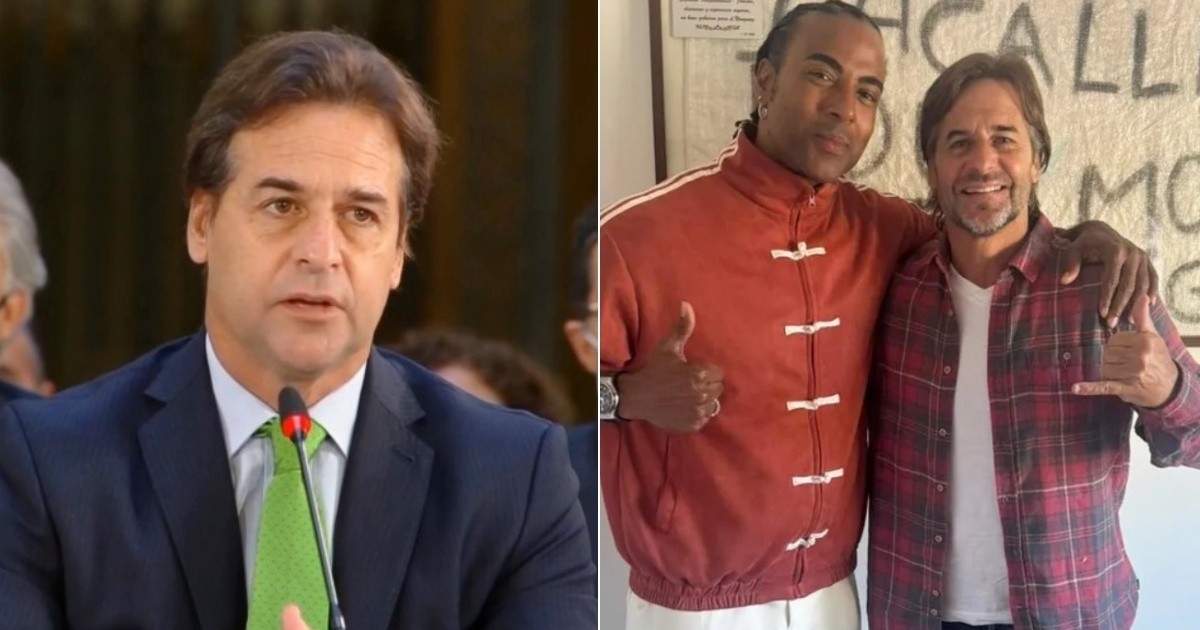
Yotuel Romero, a member of the Cuban group Orishas, made a notable visit to Montevideo on Thursday to express his gratitude to former Uruguayan President Luis Lacalle Pou. The appreciation stemmed from Lacalle Pou's bold action of quoting a line from the song "Patria y Vida" directly to Cuban leader Miguel Díaz-Canel at the VI CELAC Summit in September 2021.
Romero's meeting with Lacalle Pou occurred just before Orishas' debut concert in Uruguay that same evening at the Teatro de Verano Ramón Collazo, as part of their Represent Cuba 2026 tour.
A Bold Statement at the CELAC Summit
The roots of this gratitude trace back to September 18, 2021, when Lacalle Pou, then the president of Uruguay, delivered an unscripted speech at the VI CELAC Summit. During his address, he quoted a powerful segment of "Patria y Vida" while facing Díaz-Canel, challenging the Cuban regime publicly.
The quoted lines were: "Let no more blood be shed just for thinking differently. Who told you that Cuba is yours? My Cuba belongs to all my people."
Lacalle Pou praised the song for its beauty and highlighted that "those who sing it feel oppressed by the government." His speech also expressed concern over the situations in Cuba, Nicaragua, and Venezuela.
The Aftermath and Reaction
The Cuban state television chose to censor this moment, cutting the broadcast before Lacalle Pou could finish the quote. In response, Díaz-Canel dismissed the song, calling it "a lie" and "a construction by some artists against the Cuban revolution," while attempting to shift focus by criticizing domestic issues in Uruguay.
This exchange sparked a viral wave of memes and reactions on social media and was extensively covered by international media. Yotuel emphasized that "Patria y Vida" stands "for the Cuban people and against the dictatorship," garnering widespread support from Cubans abroad, particularly in Uruguay, who praised Lacalle Pou as a "voice of millions."
Orishas Express Gratitude
Roldán González, another Orishas member, conveyed his thanks in an interview with El País Uruguay, stating, "He told the dictator part of our song to his face, and it was incredibly important for the Cuban exile community. My mother taught me to be grateful, and I thank the former president for that."
The duo also criticized those who remain silent about the situation in Cuba, stating, "Not supporting the Cuban people is disrespectful and inhumane."
A Memorable Day in Montevideo
Before meeting Lacalle Pou, Yotuel Romero visited Uruguay's Legislative Palace, where he was welcomed by Cuban-born Deputy Leydis Aguilera and National Party Representative Pablo Abdala. From the steps of the Palace, Romero shared an emotional message: "Today, I speak not as an artist but as a brother. Uruguay not only opens its doors but also its heart. Thank you, Montevideo, for looking at Cuba with eyes of humanity."
"Patria y Vida": From Anthem to Latin Grammy Winner
Released in February 2021 by Yotuel Romero, Gente de Zona, Descemer Bueno, Maykel Osorbo, and El Funky, "Patria y Vida" flips the Cuban regime's slogan "Patria o Muerte" and became the anthem of the July 11, 2021 protests, the largest anti-government demonstrations in Cuba in decades.
By November of the same year, "Patria y Vida" clinched the Latin Grammy for Song of the Year, surpassing nominations from artists like Maluma, Carlos Vives, Ricky Martin, and Mon Laferte. At the time of the CELAC summit, two of its performers, Maykel Osorbo and Luis Manuel Otero Alcántara, were imprisoned in Cuba.
Frequently Asked Questions about "Patria y Vida" and Its Impact
What is the significance of the song "Patria y Vida"?
"Patria y Vida" is a protest song that challenges the Cuban regime's slogan "Patria o Muerte" and has become an anthem for freedom and resistance against oppression in Cuba.
How did Luis Lacalle Pou's actions impact the Cuban opposition?
Luis Lacalle Pou's public quoting of "Patria y Vida" at a major summit gave international visibility to the Cuban opposition's plight and inspired support from Cubans worldwide.
Why was the song "Patria y Vida" censored in Cuba?
The Cuban government censored "Patria y Vida" because it criticizes the regime and has been embraced by those opposing the government, representing a threat to their control.