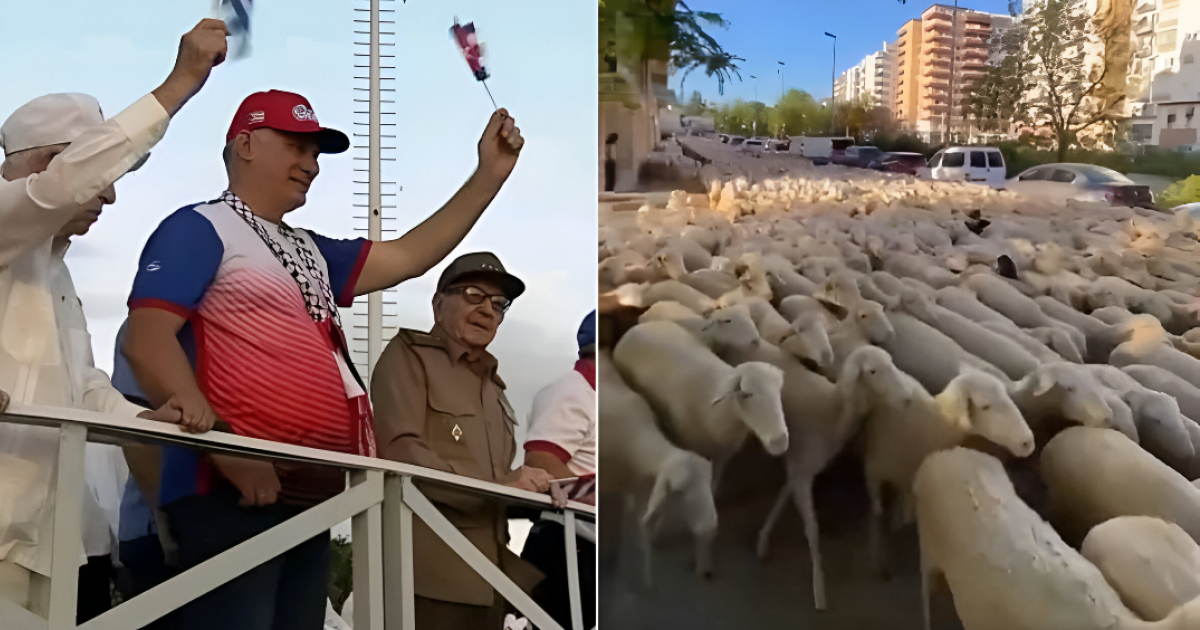
In observance of May Day 2026, Cuba's official presidential account on X released a message from Raúl Castro. The former leader asserted that the government stands "ready for the machete charge" alongside the people, poised to confront both external adversaries and internal mistakes, with the rallying cry "Long live free Cuba!" reverberating throughout the land.
The statement, shared ahead of the International Workers' Day, accompanied the regime's official slogan for the event: "The Homeland is defended," under the motto "To die for the Homeland is to live."
The Venue Shift
This year's central event took place at the José Martí Anti-Imperialist Tribune, located opposite the U.S. Embassy on Havana's Malecón, instead of the usual venue at Revolution Square. Osnay Miguel Colina Rodríguez, head of the organizing committee for the Cuban Workers' Central, announced this change in April, citing "austerity" and a "cruel energy blockade" as reasons.
Public and International Reactions
Critics suggest that decentralizing the event—where participants gathered from various local councils—was an attempt to mask low turnout due to the severe economic and energy crises, which have led to blackouts lasting up to 24 hours. Reports also indicate that children were taken out of schools to join local marches, as seen in San Miguel del Padrón the day before the event.
In response to the gathering in front of its diplomatic headquarters, the U.S. Embassy in Havana issued a security alert for the morning of May 1, starting at 8:00 AM.
Historical Context and Militaristic Discourse
Castro's rhetoric is not new; he used similar phrases—"ready for the saddle" and "machete charge"—during the celebration of the 65th anniversary of the revolutionary triumph on January 1, 2024, in Santiago de Cuba. The year 2026 has seen the regime amplify its militaristic discourse, dubbing it the "Year of Defense Preparation."
On January 18, the National Defense Council, led by Castro, approved plans to transition to a "State of War." Since then, military exercises have occurred every Saturday under the doctrine of "war of the entire people," featuring AK-47 rifle shooting, drone operations, and anti-tank mine drills.
Underlying Issues Amid Militaristic Rhetoric
The regime's warlike language also aims to distract from the acute internal crisis: power outages extending up to 24 hours, severe fuel shortages, and a widespread decline in basic services. The phrase "machete charge" harks back to a tactic used by the mambí fighters during the wars for independence from Spain, a symbol historically co-opted by the regime to validate its narrative of resistance.
Despite formally stepping down as the first secretary of the Communist Party in 2021, 94-year-old Castro continues to wield significant influence over Díaz-Canel's government. On April 3, he sent a letter to Cuba's Central Army, stating, "Today, as the Homeland faces new threats, I reaffirm my trust that you will confront any aggression, confident in victory."
Understanding Cuba's Current Political Landscape
Why was the May Day event relocated from Revolution Square?
The event was relocated to the José Martí Anti-Imperialist Tribune due to reasons of "austerity" and a "cruel energy blockade," as announced by the organizing committee's president, Osnay Miguel Colina Rodríguez.
What does the phrase "machete charge" signify in Cuban rhetoric?
The term "machete charge" refers to a combat tactic used by mambí fighters during Cuba's wars of independence from Spain. The regime has historically used this symbolism to reinforce its message of resistance and defiance.
How is the Cuban government addressing its internal crisis amid militaristic rhetoric?
The government employs warlike language to divert attention from internal issues such as prolonged blackouts, fuel shortages, and deteriorating basic services, while also conducting military exercises to bolster its defense posture.