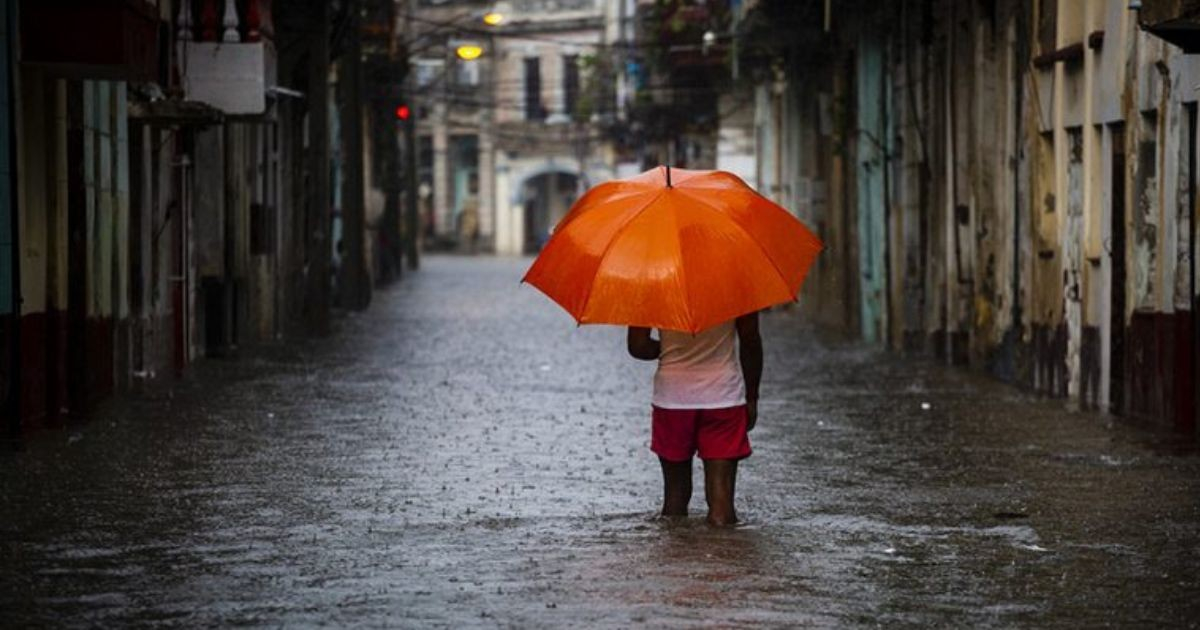
The Cuban Institute of Meteorology's Climate Center (INSMET) has released its climate outlook for the 2026 rainy season, predicting a summer with rainfall aligning closely with historical norms but with higher-than-average maximum temperatures. This pattern continues the global warming trend observed over recent years.
The forecast covers two key periods: May-June-July and August-September-October, during which Cuba experiences nearly 75% of its annual rainfall.
Meteorologist Elier Pila Fariñas from INSMET explains, "The expected rainfall should match historical averages, indicating a typically wet summer for the region."
However, the season's defining feature will be the heat: "Maximum temperatures are anticipated to exceed historical averages, following the consistent upward trend seen globally in recent years."
Minimum temperatures are expected to remain within the average range, although "they will be close to the upper limit," suggesting that relief during nighttime will be minimal.
The Influence of El Niño on Weather Patterns
A significant factor in the forecast is the El Niño phenomenon. Pila anticipates that its warm phase will solidify, particularly from July onwards, acting as a "limiting factor for cyclonic formation."
This prediction aligns with the Colorado State University's April forecast, which projected 13 named storms, six hurricanes, and two major hurricanes in the Atlantic for 2026, equating to 75% of an average season from 1991-2020.
Moreover, scientists from the National Oceanic and Atmospheric Administration (NOAA) warn of a 62% chance of a "Super El Niño" developing between June and August 2026, with Pacific surface temperatures rising more than 2°C above average.
Comparing to Previous Seasons
This forecast of a milder cyclonic summer follows the exceptionally active 2025 season, which reached 105% of the historical average and was highlighted by Hurricane Melissa. On October 29, Melissa struck eastern Cuba as a Category 3 hurricane, causing extensive damage with sustained winds of 195 km/h.
The hurricane affected over 3.5 million people and damaged more than 116,000 homes, leaving the region in a state of heightened vulnerability.
Extreme heat is an established trend in Cuba. In April 2024, the country broke the 40°C barrier for the first time, recording 40.1°C in Jucarito, Granma, and reaching similar temperatures shortly after in Bolivia, Ciego de Ávila.
Pila notes, "The persistent heat typical of these months is only broken by prolonged rainy events, particularly during the May-June and September-October periods."
While the forecast provides a broad view of the upcoming summer-autumn period, it also cautions that the reliability of these models decreases the further out they predict.
FAQs on Cuba's 2026 Summer Weather Forecast
What is the weather forecast for Cuba's summer 2026?
The forecast predicts rainfall close to historical norms, but with maximum temperatures exceeding average levels, continuing a global warming trend.
How will El Niño affect Cuba in 2026?
El Niño's warm phase is expected to limit cyclonic activity, potentially leading to a milder hurricane season, despite higher temperatures.
How does the 2026 forecast compare to past years?
The 2026 forecast suggests a less active hurricane season compared to the highly active 2025 season, which reached 105% of the historical average.