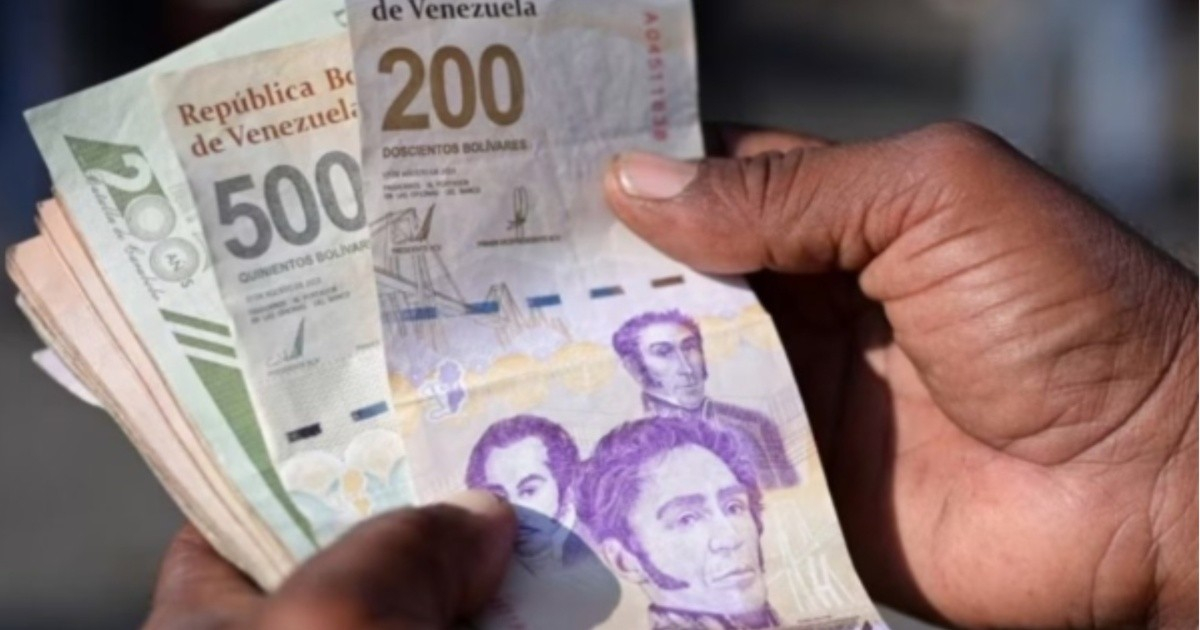
Amid a surge of union protests and on the eve of International Workers' Day, Venezuela's interim president, Delcy Rodríguez, declared a 26% increase in the country's comprehensive minimum wage for workers, bumping it up from $190 to $240 a month.
"Our first announcement is that the comprehensive minimum income will now reach $240," Rodríguez stated on the state-run Venezolana de Televisión. She emphasized that this is the most significant raise in recent years.
On the same day, the Bolivarian National Police impeded a union march in Caracas by erecting barriers and positioning vehicles at Plaza Morelos, despite the organizers having secured permits from the mayor's office eight days prior.
Carlos Salazar, a member of the National Union Coalition, criticized the police's actions, claiming "over a thousand officers" encircled the protest's gathering spot.
"We workers will not remain silent any longer. Starting May 1st, we will launch a nationwide protest campaign, and we will catch them off guard," Salazar declared at the gathering.
Rodríguez also revealed that pensioners would receive $70 monthly. She acknowledged that this amount is inadequate and called for a special care plan for the elderly.
Despite the changes, the legal minimum wage remains frozen at 130 bolivars since March 2022, equivalent to roughly 27 cents per month. The "comprehensive minimum income" scheme involves bonuses that do not impact labor benefits such as social security, a point of contention among unions.
This marks the second adjustment in two months. In March 2026, Rodríguez had already raised the minimum income from $160 to $190, funded by fuel oil sales under the oil sector's reopening.
Rodríguez attributed the funds for the latest increase to oil revenues originating from agreements with the United States, asserting that it was a consensus reached with both pro-government and opposition union leaders.
However, the economic landscape remains grim. Venezuela experienced a 71.8% inflation rate during the first quarter of 2026, according to official data, and the basic food basket costs over $700 monthly for a family.
José Patines, the general secretary of the Foreign Ministry's union, bluntly highlighted the wage gap: "If after 27 years you cannot provide a salary increase that at least covers the $700 cost of the food basket, let's go to free elections now."
The announcement coincides with Rodríguez leading the "Great National Pilgrimage for a Sanctions-Free Venezuela," a 13-day movement that began on April 19 and concludes tomorrow, May 1, in Caracas.
Rodríguez has been acting as interim president since Nicolás Maduro's capture on January 3, 2026, surpassing 100 days in charge of the Venezuelan government. Meanwhile, Maduro remains detained in New York on charges of narcoterrorism and conspiracy to import cocaine.
Patines announced that unions will declare May as a "month of labor, social, and political struggle," signaling that protests are likely to persist despite the wage increase.
Key Aspects of Venezuela's Minimum Wage Increase
What prompted the increase in Venezuela's minimum wage?
The increase was announced amidst growing union protests and ahead of International Workers' Day, as part of efforts to address workers' demands and economic challenges.
How does the new comprehensive minimum income impact workers?
The new comprehensive minimum income of $240 includes bonuses that do not affect labor benefits like social security, a distinction often criticized by unions.
How is the Venezuelan economy performing amid these changes?
Venezuela is experiencing a challenging economic climate with a 71.8% inflation rate in the first quarter of 2026, and the basic food basket costing over $700 monthly.