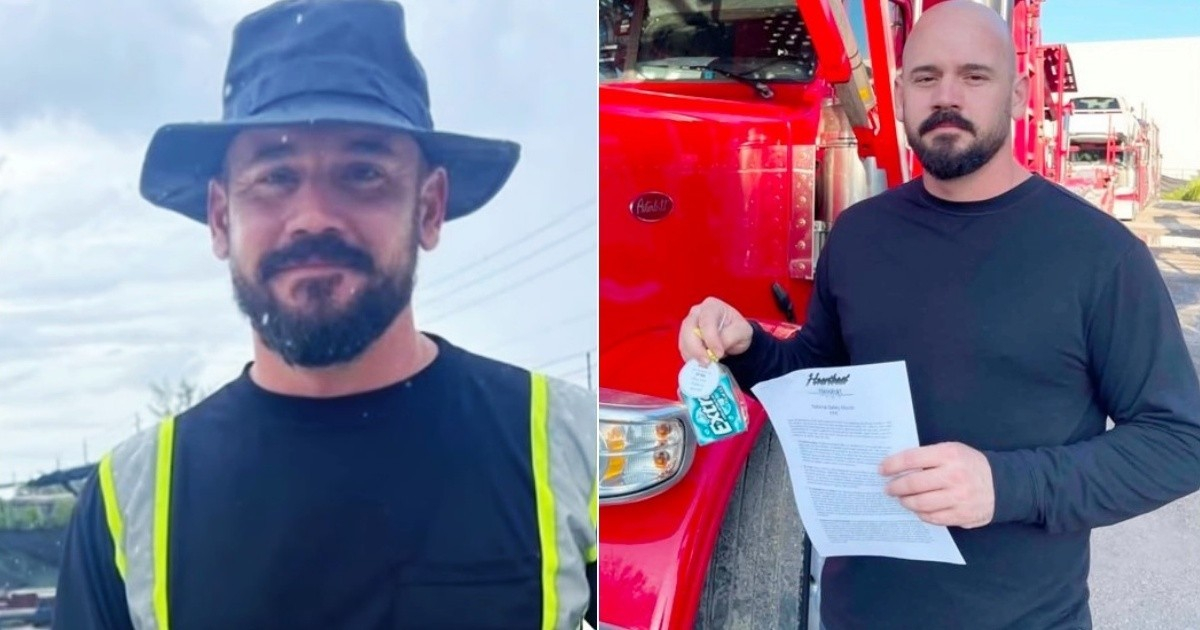
The tragic death of Alejandro Jacomino González, a 41-year-old Cuban trucker residing in Port St. Lucie, Florida, has sparked significant concern among truck drivers and freight company owners regarding the apparent lack of safety at U.S. highway rest stops. His body was found along the Georgia coast last Wednesday, as confirmed by the FBI.
Jacomino González went missing on April 17 while transporting luxury vehicles—Mercedes-Benz and BMW—from the Brunswick port in Georgia to Miami, working for Heartbeat Auto Transport. He was last seen at 1:21 a.m. in a rest area on I-95 South in Grant-Valkaria, Brevard County, Florida. At 7:49 a.m., the truck's GPS recorded a sudden turn north toward Jacksonville, deviating from his original route, and communication with him ceased.
The truck was discovered the same day, abandoned in Port Wentworth, Georgia, without Jacomino González, and several high-end cars missing. Three of the vehicles were later found in Florida, while others remain unaccounted for.
For days, the FBI searched for the missing Cuban truck driver, and on April 24, they issued a public alert, classifying the case as a vehicular hijacking and potential kidnapping in Brevard County. Last Wednesday, the FBI confirmed Jacomino González's body had been found, though they withheld details on the exact location and cause of death. The FBI's Tampa and Atlanta divisions are jointly handling the ongoing investigation.
The case has stirred outrage among the Cuban trucker community in South Florida. Fernando Espinosa of America Auto Transport expressed his concerns in an interview with Telemundo 51, pointing to the lack of security and suggesting a motive: "It's speculative, but I would say they were tracking him because of the high-value cars he was transporting. They load cars there at the Brunswick port, in Georgia, and I'm sure they followed him, waiting for the right moment to strike."
Espinosa also criticized federal authorities: "The Department of Transportation has enough funds to invest in truckers' safety, who are essential to the country's industry. It's the harsh reality, and nothing has been done."
This criticism is supported by structural issues: According to the U.S. Department of Transportation, there is only one safe parking space available for every 11 trucks on the nation's highways. Rest stops often lack cameras directed at trucks and security personnel, unlike adjacent commercial areas. "You’ll find cameras near their sales areas. Around our places, you won't see a camera, not a single security guard patrolling, no protection at all. You go to the bathroom, come back, and you don't know if someone is in your truck," Espinosa lamented.
The case also raises questions about Heartbeat Auto Transport: Telemundo 51 reported that its registered address in Miami is a vacant lot, and the owner refused to comment, citing an ongoing investigation.
This incident is not isolated. In March 2022, another Cuban trucker, Alexis Sánchez Azcuy, disappeared in Texas while on a delivery route; his truck was found with bloodstains. The perpetrator of his murder was sentenced on July 16, 2025, to life imprisonment plus 20 additional years for murder and desecration of a corpse.
Both cases share a troubling pattern: a Cuban trucker, a long-distance route, an abandoned truck with stolen cargo, and the driver missing.
Addressing Safety Concerns for Truckers
What are the main safety concerns at U.S. rest stops for truckers?
The primary safety concerns include the lack of surveillance cameras directed at trucks, insufficient security personnel, and inadequate safe parking spaces for truckers.
How does the Department of Transportation plan to address these issues?
Critics argue that the Department of Transportation has sufficient funds to improve trucker safety, but there is a perceived lack of action in implementing necessary security measures at rest stops.
What similarities exist between the cases of Alejandro Jacomino González and Alexis Sánchez Azcuy?
Both Cuban truckers disappeared under similar circumstances, involving long-distance routes, abandoned trucks with missing cargo, and their eventual absence.