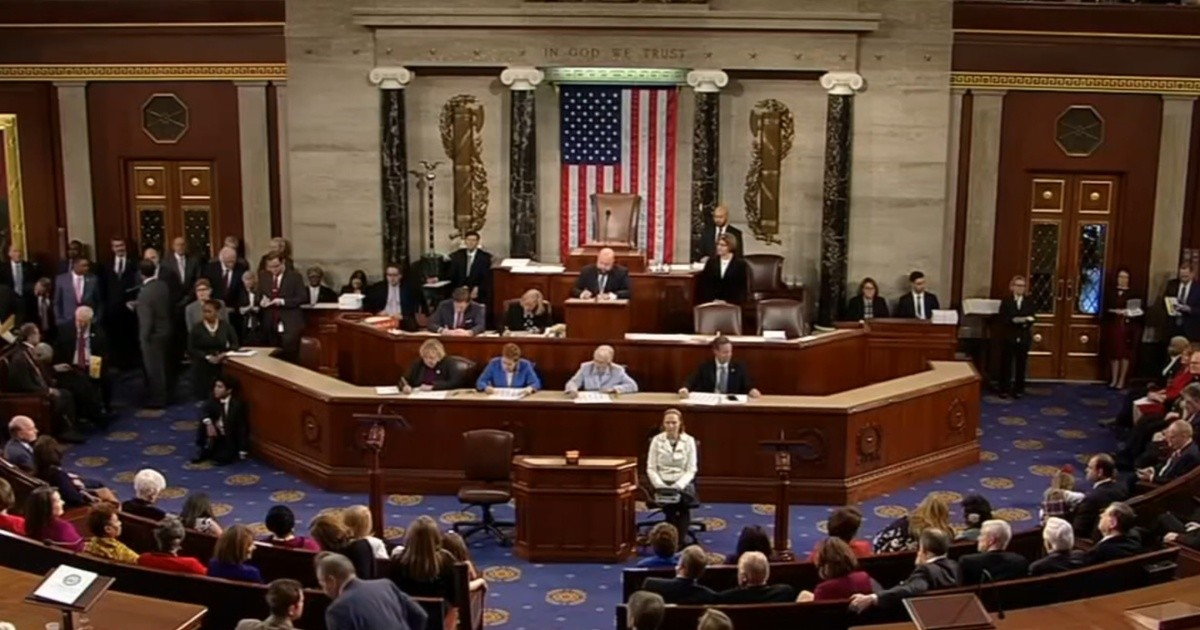
On Wednesday, Florida's legislature gave the green light to Governor Ron DeSantis' proposed congressional redistricting map in a vote that closely adhered to party lines. This decision could significantly shift the balance of power in the U.S. House of Representatives ahead of the November 2026 elections.
The state House passed the map with 83 votes in favor and 28 against, and the Senate followed suit with a 21 to 17 vote, sending the plan to the governor for signature. Under the new configuration, Republicans would hold a 24 to 4 advantage across the state's 28 congressional districts, up from the current 20 to 8 split. This change could result in a net gain of four seats for the Republican Party.
The process moved at an unusually rapid pace: DeSantis unveiled the map via official memo on Monday, April 27. Public hearings were conducted with minimal citizen participation on Tuesday, and both legislative chambers approved the plan just 48 hours later.
Impact on Democratic Districts
The new map would notably affect certain Democratic districts, including Representative Darren Soto's district in Osceola and southern Orlando, which would shift from a 3.50% Democratic advantage to a 17.71% Republican lead. Similarly, Lois Frankel's district would move from a 5.55% Democratic tilt to a 10.47% Republican edge.
Democrats are expected to retain only four districts, all located in central and southern Florida.
Legal and Political Controversies
The approval came scarcely an hour after the U.S. Supreme Court ruled in Louisiana v. Callais that a majority-black district in Louisiana was unconstitutional. This decision significantly weakened Section 2 of the Voting Rights Act of 1965, removing a key legal tool that Democrats might have used to challenge the map in federal courts.
DeSantis has justified the move by pointing to demographic imbalances. "District 14 had roughly 100,000 fewer votes than the adjacent District 12. The numbers make the case," the governor stated. "It's a matter of fairness," he added.
Federal House Democratic Leader Hakeem Jeffries criticized the map as "blatantly illegal and political malpractice," alleging it violates the 14th Amendment by intentionally diluting the voting power of communities of color. DeSantis retorted sarcastically, "Nothing would please Florida Republicans more than for voters to see Hakeem Jeffries as the alternative. I welcome him to Florida."
Wider Strategy and Opposition
This measure is part of a nationwide strategy championed by former President Donald Trump, who urged Florida to redraw its districts on Sunday, April 26, especially after a Virginia referendum where Democrats gained new seats. Florida is poised to become the eighth state to alter its maps before November 2026, following in the footsteps of Virginia, Utah, Ohio, North Carolina, Missouri, California, and Texas.
Not all Republicans are on board with the initiative. Representatives Mario Díaz-Balart, Carlos Giménez, Greg Steube, and Daniel Webster worry that the new design could put their previously secure seats at risk.
Republican consultant Alex Alvarado concluded that the redistricting would increase the number of competitive seats from four to seven without providing a net gain for the party.
The map also faces the challenge of the Fair Districts Amendment, approved by Florida voters in 2010, which explicitly prohibits drawing districts with the intent to favor a party. DeSantis argues that this amendment violates the equal protection clause of the federal Constitution. A Common Cause survey from September 2025 indicated that 55% of Florida voters oppose mid-decade redistricting, including a plurality of Republicans.
Immediate legal challenges in both state and federal courts are anticipated once DeSantis signs the map.
Understanding the Implications of Florida's New Electoral Map
What changes does the new electoral map bring to Florida?
The new map would shift the Republican advantage to 24 out of 28 congressional districts, potentially adding four more GOP seats compared to the current configuration.
Why is the new redistricting map controversial?
The map is contentious due to its potential to disproportionately favor Republicans and its rapid approval process, which included limited public input. Additionally, it raises concerns of violating the 14th Amendment by diluting minority voting power.
What legal challenges could the new map face?
The map could face legal challenges based on the Fair Districts Amendment, which prevents districts from being drawn to favor a political party, and potential violations of equal protection under the U.S. Constitution.