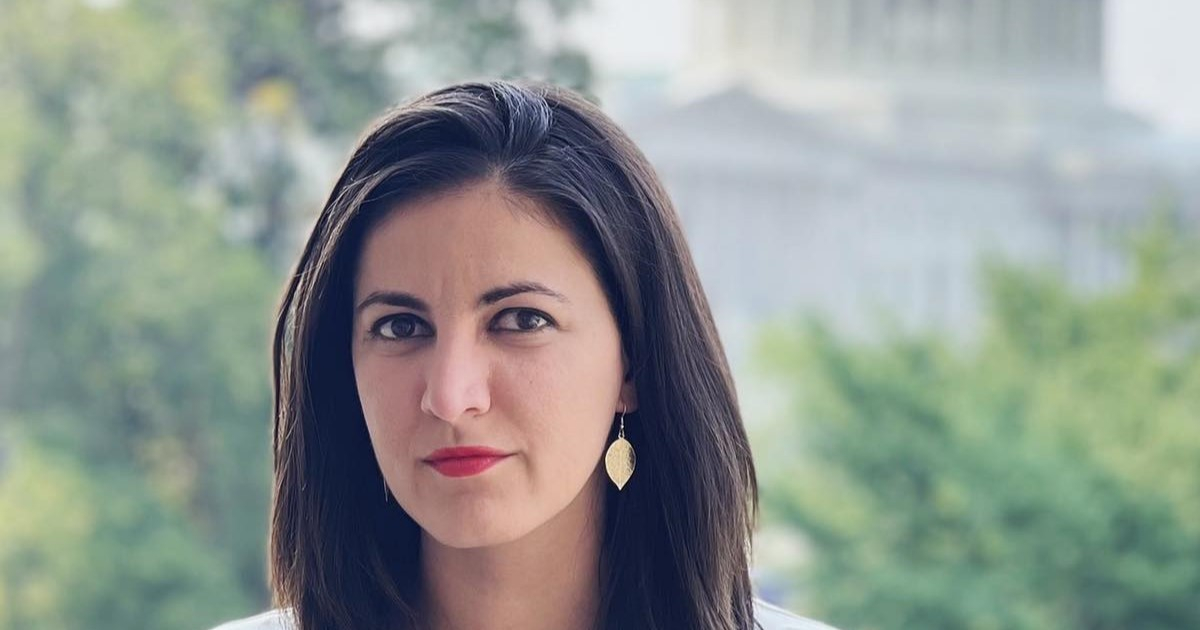
Rosa María Payá has publicly expressed her gratitude towards the Florida Senate and Senator Alexis Calatayud for issuing an official proclamation that acknowledges the Liberation Agreement as "the path to freedom and democracy in Cuba."
Signed by Calatayud, representing South Miami-Dade's District 38, this document marks the inaugural legislative endorsement from a state-elected official for the agreement, which the Florida Senate recognizes as a blueprint for a free and democratic Cuba.
"A crucial step in recognizing that a free Cuba is in the best interest of Florida, the U.S., and the world," Payá wrote on her X account. "We, the Cuban people, have a plan and the responsibility to lead the necessary transition for Cuba."
Significance of the Proclamation
The proclamation highlights that the Cuban people have endured over six decades under a communist dictatorship. The Liberation Agreement was crafted by democratic opposition leaders, civil society, and pro-democracy movements to establish a peaceful and organized transition.
On the same day, the Florida legislature applauded a group of Cuban dissidents visiting the Senate and House of Representatives.
Cuban Opposition Recognized
Among those present were José Daniel Ferrer García, Orlando Gutiérrez-Boronat, Alian Collazo, and Krista Schmidt, as well as Payá herself. "We were just surprised with recognition in the Florida State Congress," Ferrer García wrote on Facebook following the acknowledgment of Cuban dissidents in the Florida Congress.
The Liberation Agreement was signed on March 2 in Miami by the Cuban Resistance Assembly, led by Gutiérrez-Boronat, and the Pasos de Cambio coalition, headed by Payá, along with over 30 Cuban exile organizations.
Phases of the Liberation Plan
The plan outlines a three-phase roadmap: liberation—which includes the end of the regime and the immediate release of over 1,000 political prisoners—stabilization with a provisional government and humanitarian assistance, and democratization through internationally supervised free elections.
This proclamation comes amid a significant mobilization of the exile community. Just two days earlier, Cuban exiles gathered in Bayfront Park under the slogan "United for a Free Cuba," an event broadcast live to the island via Radio Martí and TV Martí.
During this demonstration, Payá urged governments and politicians worldwide to join the international effort: "I hope more and more governments around the world choose to ally with the most crucial partner the Cuban people have right now, which is the U.S. government, under the leadership of President Trump, under Secretary Marco Rubio."
The diplomatic context is highly tense: the Cuban regime has rejected Washington's ultimatum to release high-profile political prisoners, with its UN ambassador stating that "internal matters regarding detainees are not on the negotiating table."
Senator Calatayud, 30, of Cuban descent, represents one of Florida's largest Cuban-American communities and won her seat in November 2022 with 54.4% of the vote.
Her proclamation is the first formal state legislative action supporting the Liberation Agreement, which the document itself defines as the path for "peaceful liberation, stabilization, reconstruction, and democratization of Cuba."
Understanding the Liberation Agreement for Cuba
What is the Liberation Agreement for Cuba?
The Liberation Agreement is a strategic plan developed by Cuban democratic opposition leaders, civil society, and pro-democracy movements. It aims to establish a peaceful and orderly transition to freedom and democracy in Cuba.
Who endorsed the Liberation Agreement?
The Florida Senate, through Senator Alexis Calatayud, officially endorsed the Liberation Agreement, marking it as the first state legislative support for this initiative.
What are the phases of the Liberation Plan?
The plan consists of three phases: liberation, which includes ending the regime and freeing political prisoners; stabilization, involving a provisional government and humanitarian help; and democratization, which involves internationally supervised free elections.
Why is the Liberation Agreement important for Florida?
A free Cuba is seen as beneficial for Florida due to its significant Cuban-American population and the socio-political ties between Florida and Cuba. The agreement is viewed as a step towards positive change in the region.