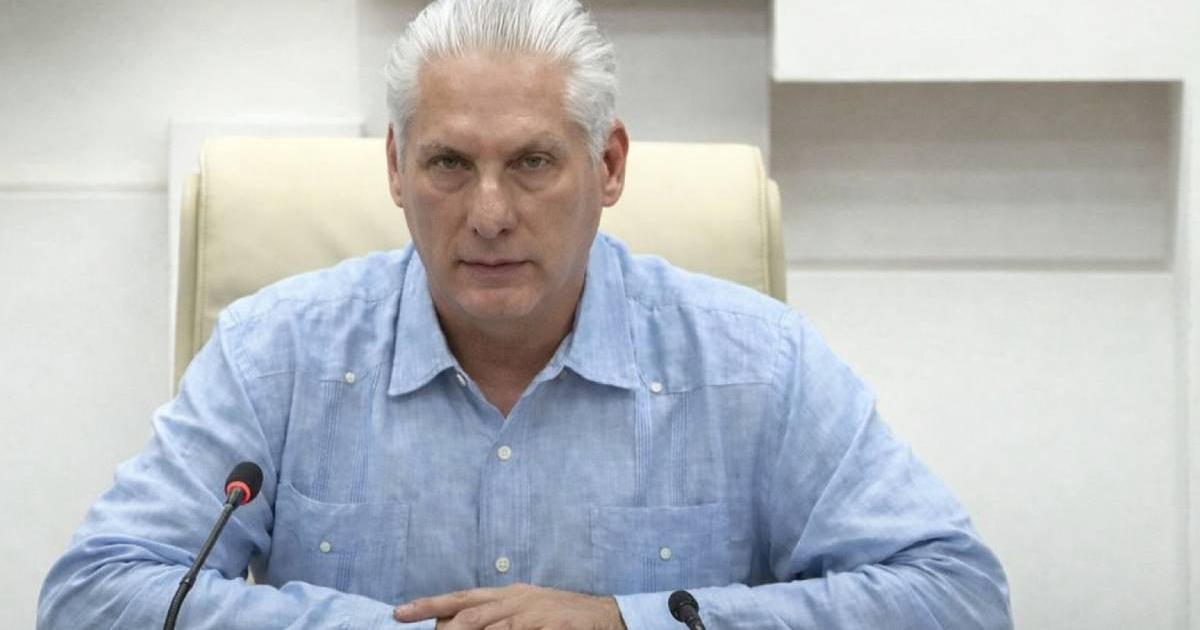
A Cuban-American named Carlos Castro Alvarez has penned an open letter to Miguel Díaz-Canel and "those who currently hold real power in Cuba," advocating for an "orderly, negotiated transition without traumatic disruptions." He offers himself as a mediator between the regime and all factions within the Cuban nation.
The letter, sent directly to CiberCuba's editorial team, is signed by an individual who describes himself as a Cuban who spent 36 years on the island and has lived over two decades in the diaspora, maintaining "real and living connections on both sides of the Florida Strait."
Rather than confrontational, the letter's tone is one of urgency.
"Cuba is not in crisis; Cuba is exhausted. Exhausted economically, socially, morally, and spiritually," Castro writes, reflecting the harsh reality faced by the population: power outages exceeding 20 hours daily in some areas, shortages of food and medicine, and a mass exodus of young people and professionals showing no signs of abatement.
Direct Appeal to the Government
The author directly challenges the government: "The question is not if change will come. The question is whether you will choose to be part of that change... or its last obstacle."
Castro presents himself as an "interlocutor, facilitator, or mediator" to open channels for dialogue, clarifying that he does not represent any hidden interests.
"I represent a conviction: Cuba needs to rediscover itself," he asserts, citing José Martí’s principle—"With all and for the good of all"—as the guiding philosophy of his proposal.
Timing Amid Diplomatic Shifts
The letter arrives during a period of unusual diplomatic activity. On March 13, Díaz-Canel publicly acknowledged that his government is engaged in talks with U.S. representatives, driven by pressure from the Trump administration amidst a severe energy crisis.
On that same day, Cuba released 51 prisoners, although the regime portrayed it as a "sovereign practice" without external coercion.
However, on April 22, Díaz-Canel categorically rejected any negotiation involving a regime change: "If the United States does not agree to negotiate on Cuban terms, there will be no negotiation."
This stance starkly contrasts with Castro Alvarez's call for an inclusive political transition.
A Different Approach in Exile
The letter is part of a tradition of open letters addressed to the ruler from various sectors. Opposition leader José Daniel Ferrer of the UNPACU demanded an immediate democratic transition in February, even suggesting a "surgical international action" by the United States as an alternative to non-violent change.
In January, Ferrer had already warned Díaz-Canel: "Move quickly, release political prisoners" before it’s too late.
What sets Castro Alvarez's letter apart is its moderate tone amidst a more confrontational context, at a time when the Cuban exile community is deeply divided over how to handle negotiations between Washington and Havana.
The author concludes his letter with a cautionary note summarizing the essence of the entire text: "History watches. The people wait. This time, immobility is not on your side. The decision is yours."
The letter does not specify whether Castro Alvarez has received any response from the regime, nor whether his offer of mediation has been communicated through official channels.
Meanwhile, Cuba's internal crisis continues to worsen, with a 9.2% drop in tourism in January 2026 and a reduction of over 40% in travel from Cubans in the United States.
Key Questions on Cuba's Political Transition
What does Carlos Castro Alvarez propose for Cuba?
Carlos Castro Alvarez proposes an "orderly, negotiated transition" for Cuba and offers himself as a mediator between the regime and various factions within the Cuban nation.
How has the Cuban government responded to calls for change?
The Cuban government, under Díaz-Canel, has rejected any negotiations that imply a regime change, insisting that talks must be on Cuban terms.
What is the current situation in Cuba?
Cuba is facing severe economic, social, and moral exhaustion, with long power outages, food and medicine shortages, and a mass exodus of young professionals.