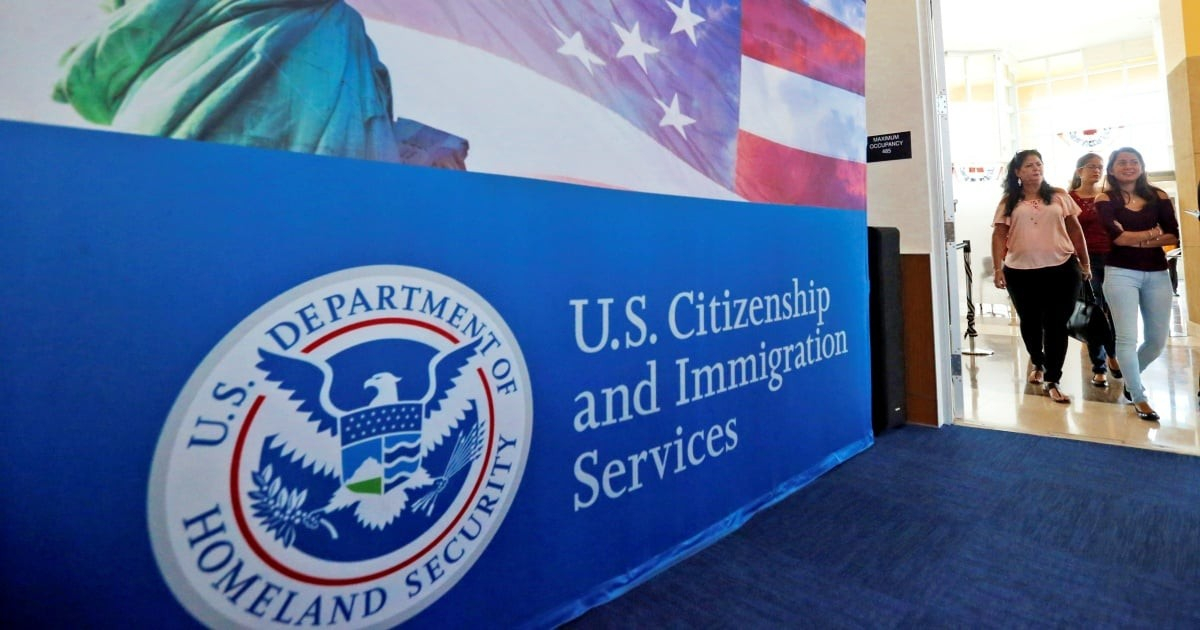
The U.S. Citizenship and Immigration Services (USCIS) has issued a warning that asylum seekers who fail to pay the new Annual Asylum Fee within the designated timeframe will face rejection of their application and, in certain instances, may be subject to removal proceedings.
This warning aligns with an interim final rule released by the Department of Homeland Security, set to take effect on May 29. The rule enacts the requirements of the H.R. 1 Reconciliation Act of 2025, often referred to as the "One Big Beautiful Bill Act," signed on July 4, 2025.
According to the official USCIS statement, "If a foreign national does not pay the annual fee within 30 days of notification, USCIS will reject their pending asylum application. Additionally, if the individual does not have legal status in the United States, USCIS will also initiate removal proceedings."
The fee, known as the Annual Asylum Fee (AAF), is set at $102 for the fiscal year 2026, an adjustment from the base $100 due to inflation.
Broader Implications of Non-Payment
This fee affects all applicants with pending applications for over a year, with no exceptions for financial hardship. Failing to pay the fee has repercussions beyond just the rejection of the asylum application.
USCIS will also deny any pending Form I-765 (Application for Employment Authorization) connected to the unpaid application. Those who have already received work authorization will have it revoked immediately.
The scope of this issue is vast, with nearly four million asylum applications pending across USCIS and immigration courts, with average wait times exceeding two years.
Additional Changes in Immigration Procedures
The rule introduces more changes affecting various immigration processes. USCIS will retain the filing fee for Form I-589 if rejected due to improper submission, directly impacting immigrants with pending cases.
Furthermore, the new regulation limits employment authorization for Temporary Protected Status (TPS) beneficiaries to one year or the remaining designation period, whichever is shorter. It also sets a minimum fee of $24 for Form I-102, which covers the Application for Replacement/Initial Arrival-Departure Document for non-immigrants.
The H.R. 1 legislation introduced these new fees to "boost funding for immigration enforcement operations and ensure that foreign nationals bear the cost of immigration services," according to the DHS.
Since October 1, 2025, USCIS has been sending formal notifications to affected applicants as part of the first phase of the annual fee implementation, amidst increasingly stringent immigration policies under the Trump administration.
Legal Challenges and Public Feedback
The implementation of these fees has sparked legal challenges. In the case of ASAP v. USCIS, filed in the District of Maryland, the courts mandated corrective actions for applicants whose cases were dismissed due to non-payment, establishing that the agency cannot penalize applicants without providing prior notice and a reasonable payment opportunity.
The public comment period on the interim rule will remain open until June 29, 2026. Any Form I-102 submitted without the correct fee will be rejected if postmarked on or after May 29, 2026.
The deadline for asylum seekers with pending cases to regularize their payment status is also on May 29, 2026, marking a critical period for millions awaiting resolution of their immigration cases in the United States.
Key Questions About USCIS Asylum Fee Changes
What is the Annual Asylum Fee (AAF)?
The Annual Asylum Fee (AAF) is a fee of $102 for fiscal year 2026, required from asylum seekers with pending applications for over a year, adjusted from a base of $100 due to inflation.
What are the consequences of not paying the Annual Asylum Fee?
Failure to pay the fee within 30 days of notification will result in the rejection of the asylum application and could lead to removal proceedings if the applicant lacks legal status in the United States.
What other immigration processes are affected by this rule?
The rule also affects employment authorization for TPS beneficiaries, limits it to one year, and sets fees for other forms, like Form I-102 for non-immigrants.