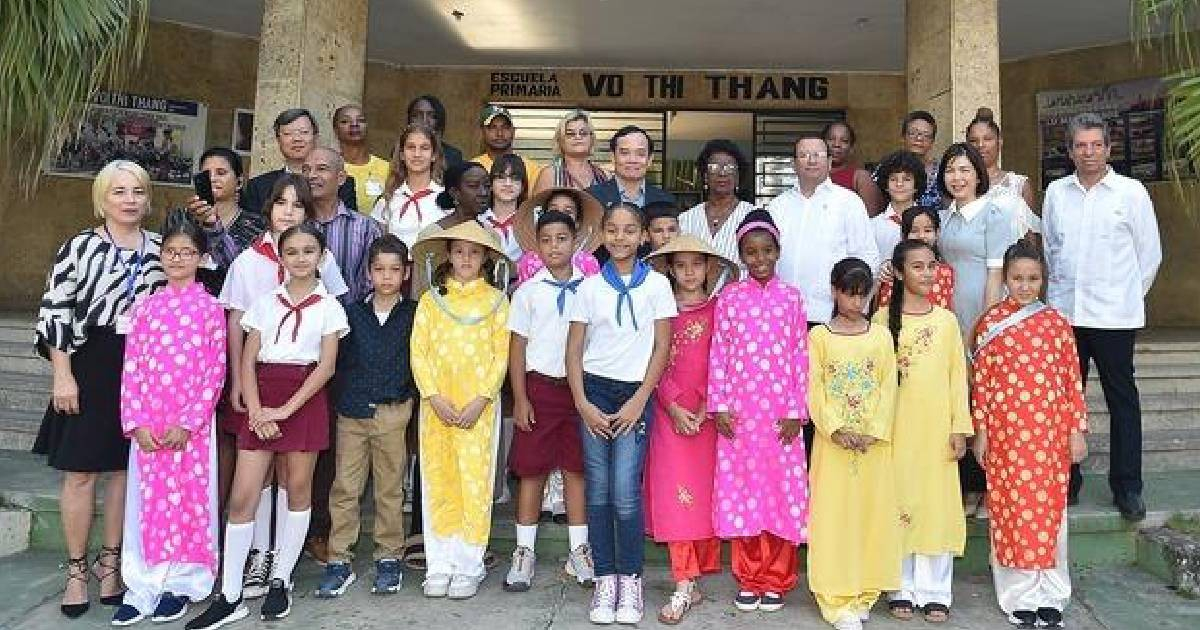
A mother has come forward with claims that her 11-year-old daughter endured continuous verbal and psychological abuse over three academic years at Vo Thi Thang Elementary School in Playa, Havana. This institution is often hailed by the Cuban government as a showcase of the national education system, as reported by theTOQUE.
The situation reached a breaking point on March 31 during a Spanish Language exam.
Drialis Yasmín Agüero Quesada, a sociologist and expert in Community Development, recounted that a teacher entered the classroom to show favoritism towards certain students. She became upset because the girl's essay did not echo a text about Che Guevara that the teacher allegedly dictated earlier.
"She aggressively approached my daughter, criticized her essay for being too short and not reflecting what she had said about Che. She abruptly seized the exam paper, forcing her to retake the test," the mother stated.
The young girl, whose mother is Cuban and father is Angolan, broke down in tears in the classroom. When another teacher inquired about the situation, the one in question reportedly said, "Let her cry; she's crying out of frustration."
Later, the teacher allegedly approached the girl in the playground and provocatively struck her with her arm in front of witnesses, according to the complaint.
This incident was not isolated. The mother had previously alerted the school administration in past years about the teacher's behavior, yet no effective action was taken. The teacher remained in charge of the same class from fourth through sixth grade.
A psychological evaluation conducted on April 3 by a specialist from Playa's Teaching Polyclinic—who has been treating the girl since fourth grade—confirmed that she suffers from complex post-traumatic stress disorder in a state of acute decompensation.
The report highlights that symptoms such as crying before school, abdominal pain, anxiety attacks, and refusal to enter the classroom have been present since fourth grade.
"The continuation of the child with the same teacher who has humiliated her over three years is a perpetuating factor that no psychotherapy can completely neutralize," the psychologist concluded.
After escalating the complaint to the Municipal and Provincial Education authorities and the Angolan Embassy, on April 24, the school administration informed Drialis Yasmín that the teacher was permanently removed from the group and prohibited from approaching her daughter.
This resolution came only after years of complaints, a psychological report documenting severe harm, and the diplomatic intervention of a foreign embassy.
The case also highlights how political indoctrination in Cuban classrooms can lead to coercion and punishment mechanisms.
Founded in 1968 by Fidel Castro as a symbol of Cuba-Vietnam solidarity, Vo Thi Thang serves 604 students and has hosted visits from high-ranking officials.
In October 2025, Díaz-Canel visited the school and presented a model of the Vietnam Military History Museum. In September 2024, Lis Cuesta and the Vietnamese First Lady donated educational materials there.
This incident is part of a broader decline in the Cuban educational environment. In November 2025, a teacher was murdered at a school in Guantánamo, and the same month, a fight between a student and a teacher was reported in Artemisa.
Understanding the Challenges in Cuban Education
What led to the teacher's removal at Vo Thi Thang School?
The teacher was removed following a series of complaints about her abusive behavior, a psychological report confirming the student's trauma, and intervention from the Angolan Embassy.
How does political indoctrination impact Cuban classrooms?
Political indoctrination can lead to pressure and punitive measures against students, creating an environment where dissenting views are not tolerated.
What broader issues are affecting Cuban schools?
There have been reports of violence, such as a teacher's murder in Guantánamo and altercations between students and teachers, indicating a wider deterioration in the educational environment.