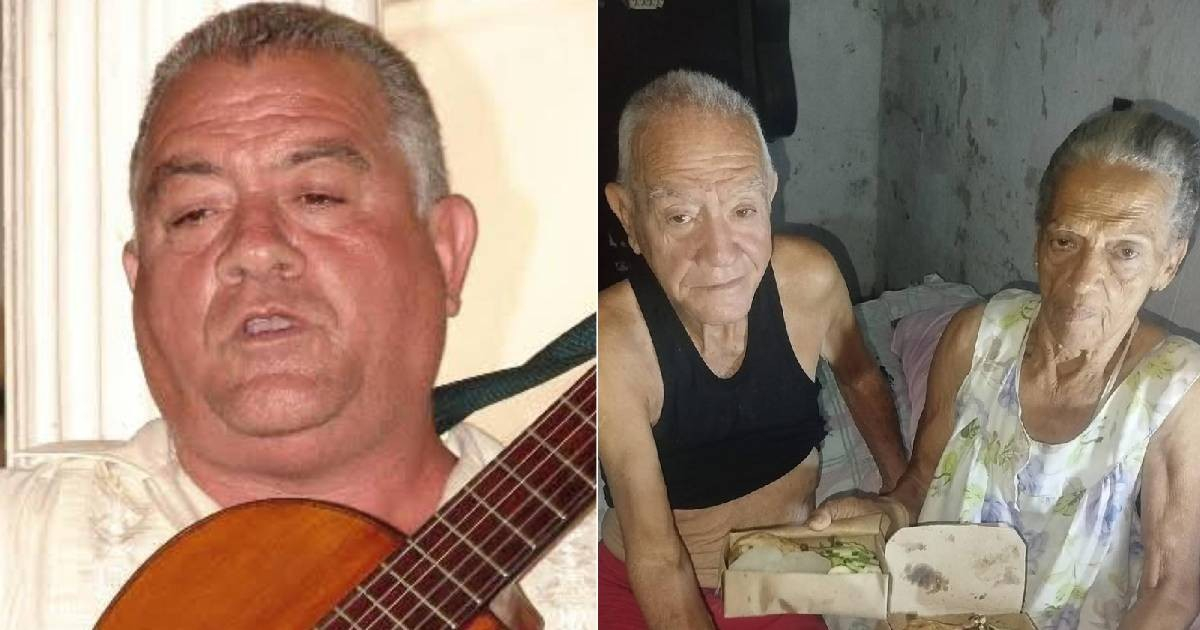
A photograph shared on Facebook by writer and academic Yanetsy Pino Reina has sparked outrage across Cuba and among its diaspora. The image features the renowned troubadour from Sancti Spíritus, José Ezequiel Cardoso, affectionately known as "Lalito," alongside his wife Matilde. Both appear frail and elderly, surrounded by crumbling walls and clutching food boxes. This stark contrast to an earlier picture of Lalito, robust and with his guitar, vividly illustrates the neglect that the Cuban regime imposes on its cultural creators.
Lalito, a founding member of the Trío D'Gómez established in 1994 with Carlos M. Gómez and Edelberto Rodríguez, dedicated himself to preserving the rich heritage of espirituano and Cuban trova music. Dubbed the "Encyclopedia of Troubadour Culture" and an "eternal chronicler of traditional espirituano music," Lalito also founded the duo Colonial in 1963 and was part of the Trío Cardoso with his father and brother Lázaro. Although illness forced him off the stage, he remains a living testament to the cultural legacy of Sancti Spíritus.
Outrage Over Institutional Neglect
Born in Sancti Spíritus in 1977, Pino Reina expressed her sorrow and anger on Facebook: "In Sancti Spíritus, there is much talk about culture, events are organized, awards are given, and speeches are made about the importance of preserving our traditions, yet in reality, things like this happen."
She left no room for doubt when assigning blame: "The overweight party leaders, government officials, the president of UNEAC, and the woman leading the music company—all are responsible for this neglect."
The Broader Crisis of Elderly Neglect
Pino described the situation as "structural violence," warning that it is a "slowly killing neglect, creeping in silently until it seems normal, until someone dares to name it."
Lalito's plight is not isolated. Just days earlier, international media highlighted the widespread abandonment of elderly Cubans during a period of heightened humanitarian crisis.
A survey conducted by the Independent Trade Union Association of Cuba (ASIC) among 506 retirees in five provinces, released last Sunday, showed that 98.8% feel abandoned by institutions and 99% claim their pensions do not meet basic needs. Cuba has 1,774,310 registered retirees, with a minimum pension of 1,528 Cuban pesos per month—less than 10 US dollars at the informal exchange rate. In March, the Ministry of Labor admitted that "there are no resources for the vulnerable."
Founded in 1961, UNEAC has been repeatedly criticized for its indifference to the dire conditions faced by senior artists. In January 2024, retired musicians from EGREM protested their meager pensions of 2,000 to 3,000 pesos, without receiving a public response from the organization.
The Legacy of Sancti Spíritus Troubadours
Sancti Spíritus is revered as Cuba's second most prominent province for troubadours, with a tradition dating back to 1910 and the founding of the first espirituano trio. This rich history is showcased at official ceremonies, yet its living legends endure poverty in silence.
In February 2025, the celebrated troubadour Eduardo Sosa passed away at 52 following a stroke, adding to a growing list of neglected names. An elderly graduate from the San Alejandro art school was seen selling drawings on the street to survive, a testament to the same neglectful pattern.
"I am not speaking of charity or pity," wrote Pino Reina. "I am speaking of dignity, moral coherence, and respect for those who built the cultural prestige that is still boasted about today."
Understanding the Crisis of Elderly Neglect in Cuba
What sparked the public outrage regarding José Ezequiel Cardoso?
A photograph shared on Facebook showing Cardoso and his wife in a state of neglect and poverty ignited the outrage, highlighting the broader issue of institutional neglect in Cuba.
How has the Cuban government responded to the plight of its elderly?
The Cuban government has acknowledged the lack of resources for vulnerable populations but has faced criticism for failing to address the widespread neglect of elderly citizens.
What role does UNEAC play in supporting Cuban artists?
UNEAC, founded to protect Cuban creators, has been criticized for its failure to support aging artists who face poverty and neglect.