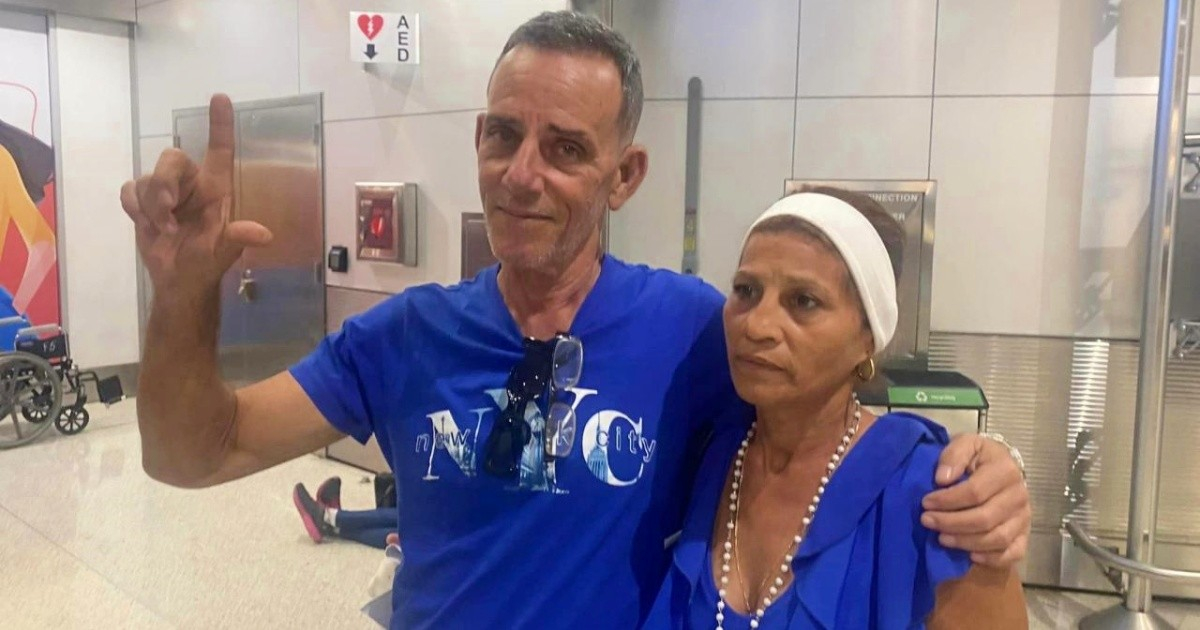
Eralidis Frómeta, the wife of Cuban independent journalist and former political prisoner Lázaro Yuri Valle Roca, expressed her distress in a Facebook post, revealing that they are living in complete abandonment in the United States, without documentation or work permits.
"We feel like we're still in Cuba, living in fear because we're undocumented. We can't take it anymore, not even a work permit. What was the point of fighting so hard and risking our lives? My husband and I are utterly abandoned and without protection," Frómeta expressed in her heartfelt post.
Frómeta pointed out that while many in Cuba once followed their actions, they seem to have lost their value to those supporters after leaving the island: "What good is it to have left Cuba if we can't survive here due to a lack of documents?"
Institutional Neglect and Lack of Support
In a subsequent post, Frómeta was even more direct, questioning the absence of support from human rights organizations: "I wonder where the human rights organizations are, as they fail to provide us with secure protection in the U.S."
She also lamented that the images of the repression they suffered "continue to circulate worldwide," while they remain without legal protection, summarizing their plight: "Cast aside and forgotten. We are no longer money-making machines at the expense of our pain and suffering."
From Imprisonment to Exile
Valle Roca was arrested on June 15, 2021, after filming and sharing a video of activists releasing pro-democracy leaflets from a rooftop in Havana, leading to his August 2022 conviction of five years for "continuous enemy propaganda."
He endured nearly three years in Cuba's high-security Combinado del Este prison, where he faced torture, beatings, and severe physical decline: his weight dropped from 176 to 117 pounds, he lost hearing and partial vision, and developed kidney stones and aortic sclerosis.
In June 2024, through Frómeta's efforts with the U.S. embassy in Havana, Valle Roca was forcibly exiled to Miami, arriving emaciated and confused.
Facing Deportation and Seeking Asylum
Their situation took a dramatic turn during the Trump administration: in March 2025, the Department of Homeland Security revoked their humanitarian parole and ordered them to leave the U.S. by April 24, under Executive Order 14165, which ended parole programs for Cubans, Haitians, Nicaraguans, and Venezuelans.
In response, the couple began seeking political asylum and reached out to congressmen, senators, Secretary of State Marco Rubio, and activist Rosa María Payá for support.
In May 2025, Human Rights Watch formally requested the U.S. government to protect 13 Cuban dissidents, including Valle Roca and Frómeta, from the threat of deportation.
Nearing a year after those efforts, Frómeta's posts reveal that the couple remains trapped in a legal limbo, their sacrifice turning into a bitter paradox: they fought against Cuba's dictatorship, endured imprisonment and torture, and now live in the U.S. with the same fear they felt on the island.
Frómeta put it bluntly in her statements to EFE last year: "If we are deported back to the country where we've been persecuted for so many years, they will feel more entitled to attack us."
Understanding the Struggles of Cuban Dissidents in the U.S.
What challenges are Lázaro Yuri Valle and Eralidis Frómeta facing in the U.S.?
They are living without legal documentation or work permits, facing the threat of deportation, and lack support from human rights organizations.
Why was Valle Roca imprisoned in Cuba?
He was arrested for filming and distributing a video of activists deploying pro-democracy leaflets, leading to a conviction for "continuous enemy propaganda."
How did the Trump administration's policies affect their situation?
Their humanitarian parole was revoked, and they were ordered to leave the U.S. by a specific date under an executive order that ended parole programs for certain nationalities.