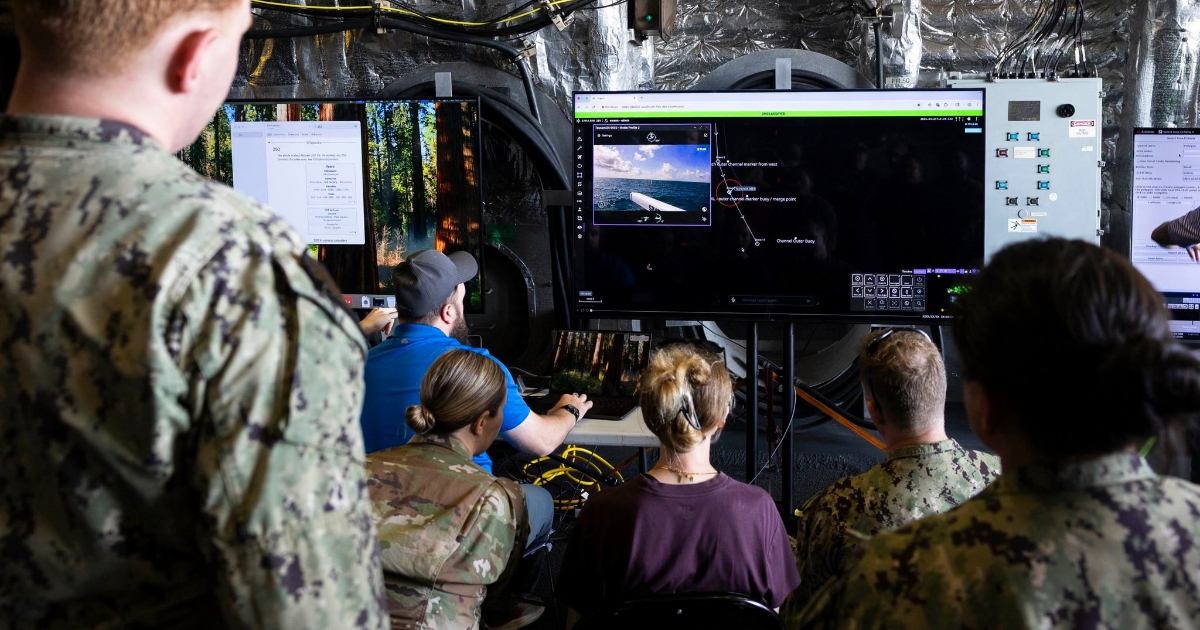
The United States has intensified its military presence near Cuba by launching the FLEX2026 exercise, a significant operation that coincides with an increased frequency of drone flights, intelligence aircraft, and naval activity around the island in recent weeks.
The U.S. Southern Command and the Fourth Fleet have officially confirmed the onset of these drills, detailing that the exercises are set to take place over seven days—from April 24 to April 30—in Key West.
This exercise integrates artificial intelligence, unmanned systems, and traditional naval forces in a cohesive environment, aiming to swiftly implement real operational capabilities in complex maritime scenarios.
"This is more than just experimentation," officials emphasized, indicating that the trials aim to rapidly deploy these technologies in operational settings to combat threats like transnational organized crime and enhance surveillance across vast Caribbean areas.
This development aligns with a series of military activities documented by CiberCuba since mid-January. Notably, high-altitude MQ-4C Triton drones, designed for long-duration surveillance missions, have been conducting operations in the region.
On April 16, one of these drones carried out an extensive mission around Cuba, including flights near Havana and the southern coast, displaying reconnaissance patterns typical of intelligence operations.
Subsequent activities included another Triton spotted north of the island in the Gulf of Mexico, signaling the ongoing nature of these operations. Additional aircraft like the RC-135 Rivet Joint, focused on electronic intelligence, and the P-8 Poseidon, used for maritime surveillance and anti-submarine warfare, have also been deployed.
More recently, the presence of an E-2D Advanced Hawkeye, an early warning aircraft capable of coordinating air and naval operations in real-time, along with MH-60R Seahawk helicopters, has been reported.
Together, these assets depict a multidomain surveillance environment encompassing air, sea, and advanced digital capabilities.
FLEX2026 also features unmanned surface vehicles (USVs), operated even by civilian contractors, highlighting the growing synergy between the military and the tech industry.
According to official U.S. Navy information, these maneuvers allow for the testing of a "full chain of action," which includes detecting, tracking, and intercepting targets, particularly vessels linked to drug trafficking.
On the naval front, the presence of the USS Wichita littoral combat ship strengthens the maritime component of the deployment, consistent with previous U.S. unit movements in the Caribbean since late 2025.
While Washington frames these operations as part of its fight against criminal networks, the context suggests a clear political dimension. This deployment follows weeks of U.S. pressure on the Cuban regime and amid Havana's internal warnings about potential confrontation scenarios.
In this context, the combination of active military exercises, advanced technology, and sustained presence around the island indicates a strategy of enhanced surveillance and operational readiness.
Beneath the official rhetoric, the message is unmistakable: Cuba's geopolitical environment is under constant scrutiny with increasingly sophisticated capabilities.
Key Aspects of U.S. Military Operations Near Cuba
What is the purpose of the FLEX2026 exercise?
FLEX2026 aims to integrate artificial intelligence, unmanned systems, and traditional naval forces to quickly implement operational capabilities in complex maritime scenarios and combat threats like transnational organized crime.
How long will the FLEX2026 exercise last?
The exercise is scheduled to occur over seven days, from April 24 to April 30, in Key West.
What types of aircraft are involved in the military operations near Cuba?
The operations include high-altitude MQ-4C Triton drones, RC-135 Rivet Joint aircraft for electronic intelligence, P-8 Poseidons for maritime surveillance and anti-submarine warfare, and the E-2D Advanced Hawkeye for real-time coordination.
Why is the U.S. increasing its military presence near Cuba?
While officially aimed at combating criminal networks, the increased presence also serves as a strategic surveillance and operational readiness measure amid heightened geopolitical tensions with the Cuban regime.