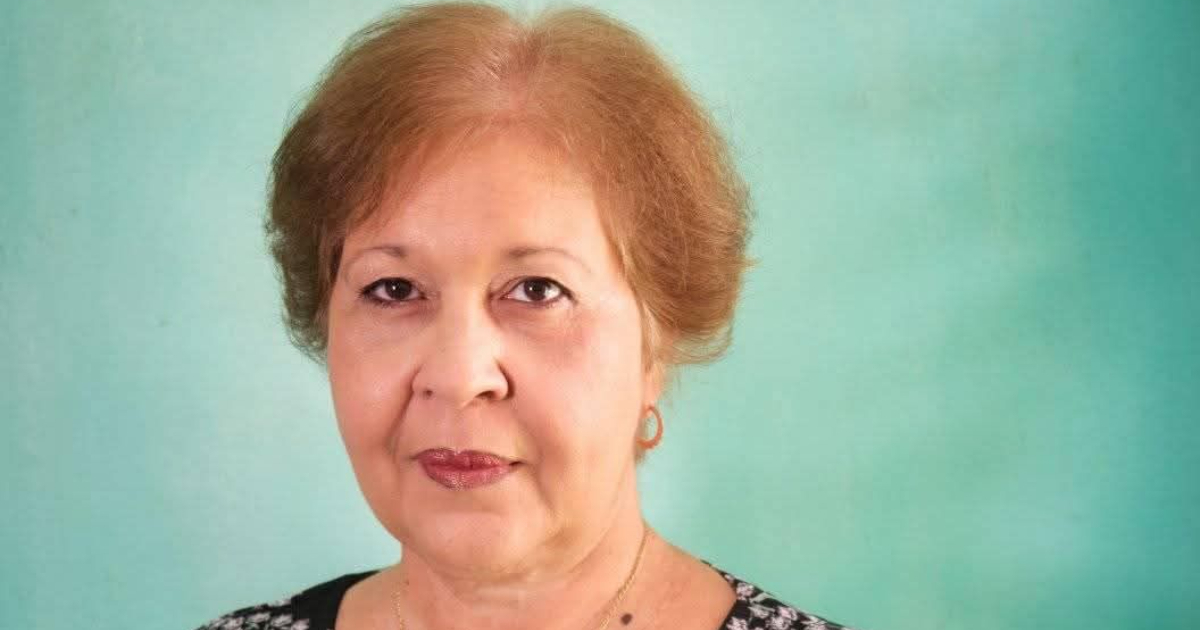
Cuban historian and scholar Alina Bárbara López Hernández took to Facebook to respond with biting sarcasm to the Cuban regime's criticism of the independent survey titled "Cuba: Political and Social Perspectives." She called on the Communist Party of Cuba (PCC) to release its own sociopolitical climate study conducted months before the July 11th protests.
Her statement came just a day after the regime blocked the independent survey launched on April 23 by a coalition of over 20 independent digital media outlets. Pro-government media had already dismissed it as "scientifically invalid" without reviewing the results.
"I think it's unfair to attempt an independent survey to analyze the current state of Cuban society without considering the PCC's extensive experience in such studies," López Hernández wrote, leaving little room for interpretation.
PCC's Secret Study and Unforeseen Protests
The heart of her sarcasm targets November 2020, when the PCC's Politburo, led by Raúl Castro, reviewed a "Study of the Sociopolitical Climate of Cuban Society" in preparation for the party's VIII Congress.
"Let’s remember that before the VIII Congress, the Politburo analyzed a 'Study of the Sociopolitical Climate of Cuban Society,' which surely reflected the reality, as less than three months later, the July 11 protests erupted," López Hernández noted.
This study was never made public. The VIII Congress took place from April 16 to 19, 2021, and just three months later, on July 11, 2021, Cuba experienced its largest protests since 1959, with massive demonstrations in over 50 cities chanting "Freedom!" and "Down with the dictatorship!"
Call for Transparency and Critique of Regime's Methods
López Hernández's implicit conclusion is damning: the PCC's "scientific" tool failed to predict—or prevent—the social upheaval, undermining the regime's criticism of independent methods.
The scholar went further, issuing a direct challenge: "I propose that this study be published to show the independent press, so daring, how real instruments are applied to scientifically measure opinions."
This post is part of a broader debate. As of April 26, the independent survey had amassed over 22,400 responses, with 58% from within Cuba using VPNs. The results were stark: 94% of participants expressed deep dissatisfaction with the current system, and Miguel Díaz-Canel received an average rating of 1.11 out of five.
Debate on the Impact and Reliability of the Survey
Comedian Ulises Toirac also acknowledged the civic importance of the survey while questioning its statistical reliability due to the lack of a representative demographic sample.
López Hernández had already defended the survey as a historic act breaking the state's monopoly on public opinion, while admitting it is "perfectible."
Expelled from UNEAC in 2024 for her dissent and detained for 12 hours on February 18, 2026, in Matanzas during a peaceful protest, the academic also faces charges of contempt, which she rejects as regime fabrications.
The survey remains open until May 1, 2026, and the regime has yet to respond to López Hernández's call to publish the sociopolitical climate study reviewed by the Politburo over five years ago.
Understanding the Independent Survey and Its Implications
What was the main criticism against the independent survey "Cuba: Political and Social Perspectives"?
The main criticism from the Cuban regime was that the survey was "scientifically invalid," a claim made even before the results were reviewed.
Why does Alina Bárbara López Hernández challenge the PCC to release its own study?
López Hernández challenges the PCC to release its study to expose the regime's supposed scientific methods and demonstrate transparency, contrasting the independent survey's findings with the PCC's undisclosed study.
What were the results of the independent survey?
The survey revealed that 94% of participants were very dissatisfied with the current system, and Miguel Díaz-Canel received a low satisfaction rating of 1.11 out of five.