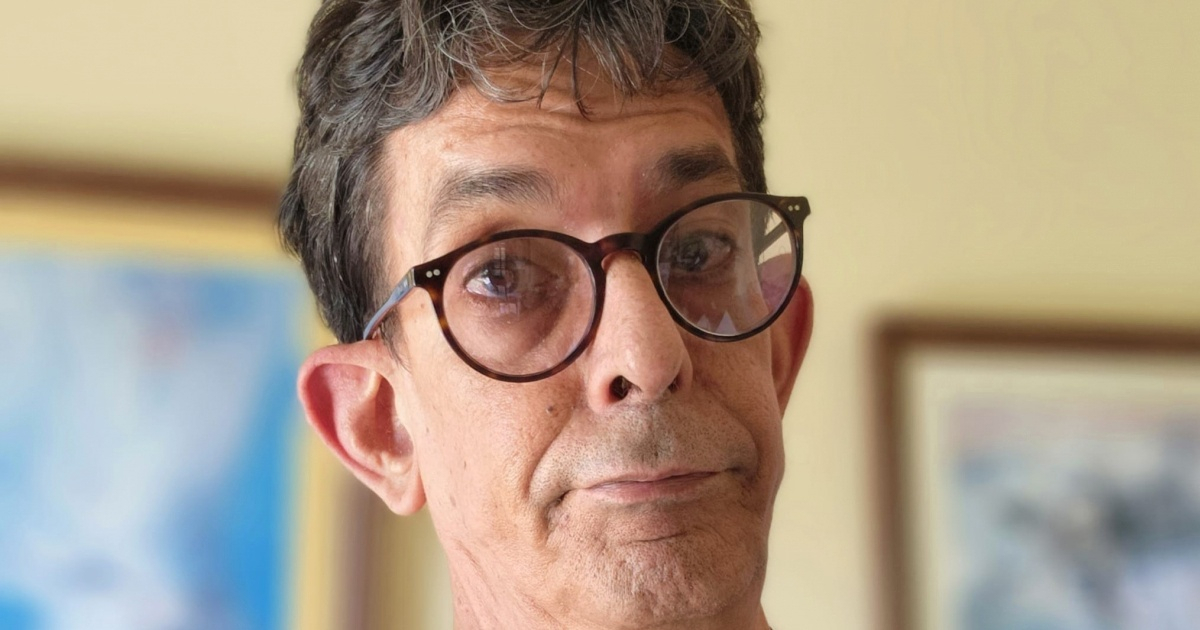
Cuban comedian Ulises Toirac recently took to Facebook to share his nuanced perspective on an independent survey regarding Cuba that, according to him, is causing "headaches" for the government. While acknowledging the survey's civic importance, he cautioned that its findings should not be deemed statistically reliable.
Toirac disclosed having a conversation with one of the survey's organizers before expressing his views publicly. He was forthright in his assessment: "It's extremely challenging for a survey organized (and executed) in this manner to provide trustworthy numbers for numerous reasons."
The Challenges of Conducting Reliable Surveys in Cuba
The comedian elaborated on the necessity of a demographically representative sample covering all population subgroups for a scientifically valid survey—something he deems unattainable under Cuba's current circumstances.
"This survey cannot achieve that due to reasons we understand: the government does not want people to participate, IP blocking, and...," he wrote, leaving the sentence unfinished.
The Cuban regime obstructed access to the survey platform from within the island, forcing participants to resort to virtual private networks to contribute.
Survey Results and Government Response
Despite the blockade, by April 26, the survey had garnered over 22,400 responses, with 58% originating from within Cuba. Launched on April 23, the survey is a collaborative effort by over 20 independent Cuban media outlets—including CiberCuba, elTOQUE, Rialta, Alas Tensas, and 14ymedio—and will remain open until May 1. It comprises 32 anonymous questions with anti-fraud controls, accessible at encuestascuba.net.
Preliminary results highlight a significant opposition to the current system: 75.1% of respondents support a transition to a liberal democracy with a market economy, 92% express deep dissatisfaction with the existing system, and Miguel Díaz-Canel faces overwhelming disapproval, with a 1.11 out of five rating from 93.7% of participants assigning him the lowest score.
Public Reaction and Civic Engagement
Despite his methodological reservations, Toirac did not dismiss the effort. "However, it's an excellent way to practice civility, understood as the exercise of opinion," he noted, adding that the survey allows for "pointing out extreme and intermediate points. Most angles of opinion."
He even shared the survey link in his post's comments, advising followers to copy it into their browser and use a VPN.
The post generated substantial debate. Some of Toirac's followers echoed his concerns, while others defended the survey's value.
"More than a survey, it's a thermometer," summarized one follower.
Another, Ines Casal, was more emphatic: "Cubans need to express and confront our opinions, criteria, ideas; something the dictatorship does not allow."
Historian Alina Bárbara López Hernández defended the survey's legitimacy, arguing that the government's blockade itself underscores the regime's informational monopoly breakdown.
Pro-government media, however, labeled the survey "scientifically invalid" even before any results were disclosed.
In the comments on Toirac's post, a follower also reported that a social worker had asked him to sign "for freedom," which turned out to be the signature sheet for the regime's official campaign, "Firma por la Patria," illustrating the current political tension surrounding these initiatives.
Understanding the Impact of the Cuban Survey
Why does Ulises Toirac doubt the survey's reliability?
Ulises Toirac doubts the survey's reliability because it lacks a demographically representative sample, which is crucial for a scientifically valid survey. He also points out the challenges posed by the Cuban government's opposition to the survey, such as IP blocking.
How has the Cuban government responded to the survey?
The Cuban government has blocked access to the survey platform from the island, forcing participants to use virtual private networks to respond. Pro-government media have also criticized the survey as "scientifically invalid."
What do the preliminary results of the survey indicate?
Preliminary results indicate a strong opposition to the current system, with 75.1% supporting a transition to a liberal democracy with a market economy, 92% expressing dissatisfaction with the current system, and Miguel Díaz-Canel receiving significant disapproval.