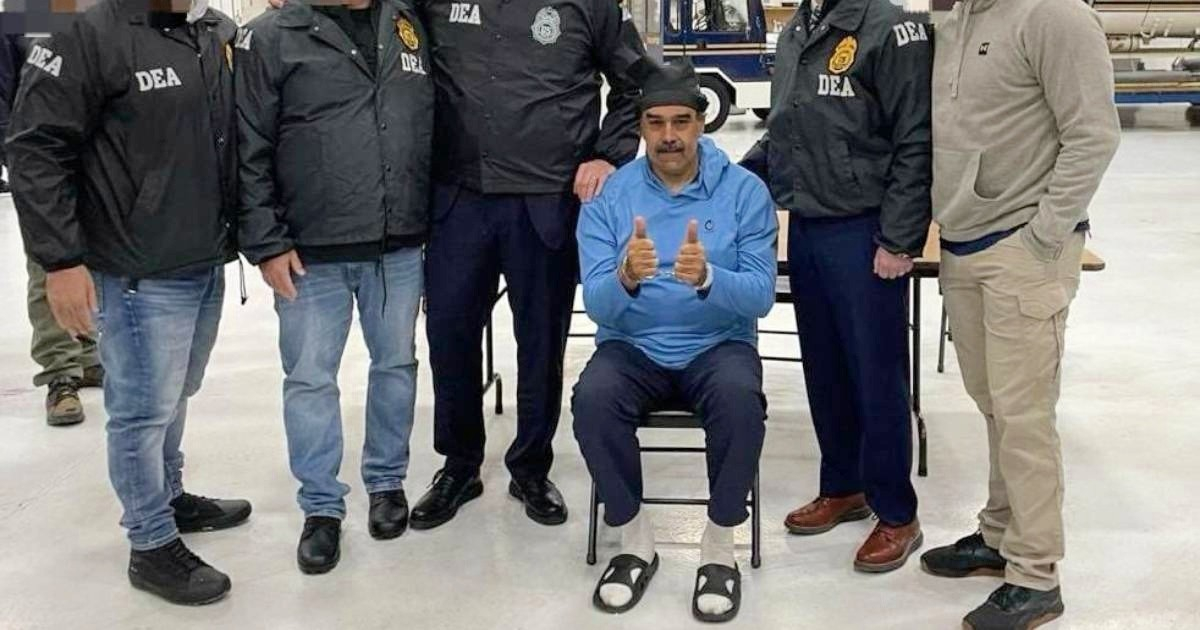
The federal trial against Nicolás Maduro in the United States, a significant and intricate legal battle involving a sitting head of state, might soon include a crucial component: the testimony of a man who once operated at the very core of chavismo's power.
This individual is Hugo Armando Carvajal Barrios, widely known as “El Pollo.” Formerly the chief of Venezuelan military intelligence, Carvajal has sought to reposition himself as a collaborator with U.S. authorities following his 2025 guilty plea to charges of drug trafficking and narcoterrorism.
The Potential Game-Changer: Carvajal's Testimony
According to CNN, Carvajal, despite his unassuming physical stature—standing at 1.60 meters and weighing 59 kilograms—played a pivotal role due to his extensive access to the inner workings of the chavista regime.
A potential shift in Carvajal's involvement in the case was highlighted in a letter he wrote to President Donald Trump in December 2025, a document obtained by CNN and initially disclosed by The Dallas Express.
In the letter, Carvajal presents himself as a remorseful former official eager to work alongside U.S. authorities. "I write to confess everything so that the United States can defend itself against the threats I witnessed for so many years," he stated.
Allegations of A Criminal Strategy
The letter contains serious accusations. The ex-general claims that Maduro's government deliberately used drug trafficking as a tactic against the United States.
"The drugs that reached your cities through new routes were not mere accidents of corruption or the work of independent traffickers; they were deliberate policies orchestrated by the Venezuelan regime against the United States," he wrote.
Additionally, Carvajal alleged the existence of a criminal network known as the Cartel of the Suns and accused chavismo of collaborating with the transnational gang Tren de Aragua to "flood the United States with criminals, drugs, and spies."
Hints of Ongoing Negotiations
While neither the Department of Justice nor Carvajal's defense team has officially confirmed any cooperation agreement, several factors suggest such negotiations might be underway.
One notable sign is the indefinite postponement of Carvajal's sentencing hearing. Renato Stabile, a lawyer experienced in federal drug cases, noted that it would be "highly unusual" for the proceedings to advance if the defendant were aiding the prosecution.
Additionally, Carvajal's absence from the Federal Bureau of Prisons database, despite being in federal custody, has been interpreted by some as another potential indication of ongoing discussions.
From Trusted Insider to Key Witness
Carvajal's transformation into a star witness is particularly significant given his past within the Venezuelan power structure.
For years, he was one of Hugo Chávez's most trusted allies. Through the Military Counterintelligence Directorate (DGCIM), an agency accused of torture and repression, Carvajal had access to sensitive information regarding security operations, intelligence, and alleged illicit networks.
His break with chavismo occurred in 2019 when he publicly supported opposition leader Juan Guaidó and fled the country, an action perceived in Washington as a symbolic blow to the regime.
Exile, Pursuit, and Extradition
Despite his role as a whistleblower, Carvajal remained a target of U.S. justice. Since 2008, Washington had sanctioned him for "materially assisting the drug trafficking activities" of the FARC.
In 2019, the Department of Justice formally indicted him, accusing him of attempting to smuggle 5.6 tons of cocaine into the U.S. and providing weapons and explosives to the Colombian guerrilla.
During his time in Spain, Carvajal lived in hiding for several years, even undergoing plastic surgery to alter his appearance. He was eventually captured and extradited to the United States in 2023, where he has been incarcerated since.
The Broader Political Context
The case against Nicolás Maduro unfolds amid heightened geopolitical tensions.
The Venezuelan leader was apprehended on January 3, 2026, in Caracas during a U.S. military operation and transferred to New York, where he remains detained alongside his wife, Cilia Flores.
Both have pleaded not guilty to charges including narcoterrorism, money laundering, and conspiracy to import cocaine, offenses that could result in life imprisonment.
The White House narrative has been straightforward. A spokesperson declared that "Nicolás Maduro orchestrated numerous crimes against the United States, including sending drugs and terrorists to our country to harm Americans," and added that he now "awaits justice in the Southern District of New York."
Given its complexity and the volume of evidence, the process could take one or two years before reaching trial.
A Testimony That Could Reshape the Trial
In this scenario, Carvajal's potential cooperation takes on critical importance. He is not just any witness, but someone who could provide insider details about the power structure, strategic decisions, and alleged illicit operations of the regime.
His willingness is evident in the letter to Trump: "I fully support President Trump's policy toward Venezuela, as it is a measure of self-defense based on truth... I am ready to provide further details on these matters to the U.S. government."
Nevertheless, key questions linger. It's unclear whether the U.S. president read the letter or if the Department of Justice has formalized any agreement with the ex-general.
What seems certain is that if Carvajal takes the stand, his testimony could become one of the most pivotal elements in the trial against Maduro, providing an internal perspective that the prosecution has long sought to substantiate in court.
Key Questions on the U.S. Trial Against Nicolás Maduro
Who is Hugo Armando Carvajal Barrios?
Hugo Armando Carvajal Barrios, known as "El Pollo," is a former chief of Venezuelan military intelligence who has become a potential key witness in the U.S. trial against Nicolás Maduro.
What are the charges against Nicolás Maduro?
Nicolás Maduro faces charges of narcoterrorism, conspiracy to import cocaine into the United States, and money laundering, among other related crimes.
Why is Carvajal's testimony significant?
Carvajal's testimony is significant because he had direct access to the inner workings of the chavista regime, and his insights could substantiate the prosecution's case against Maduro.