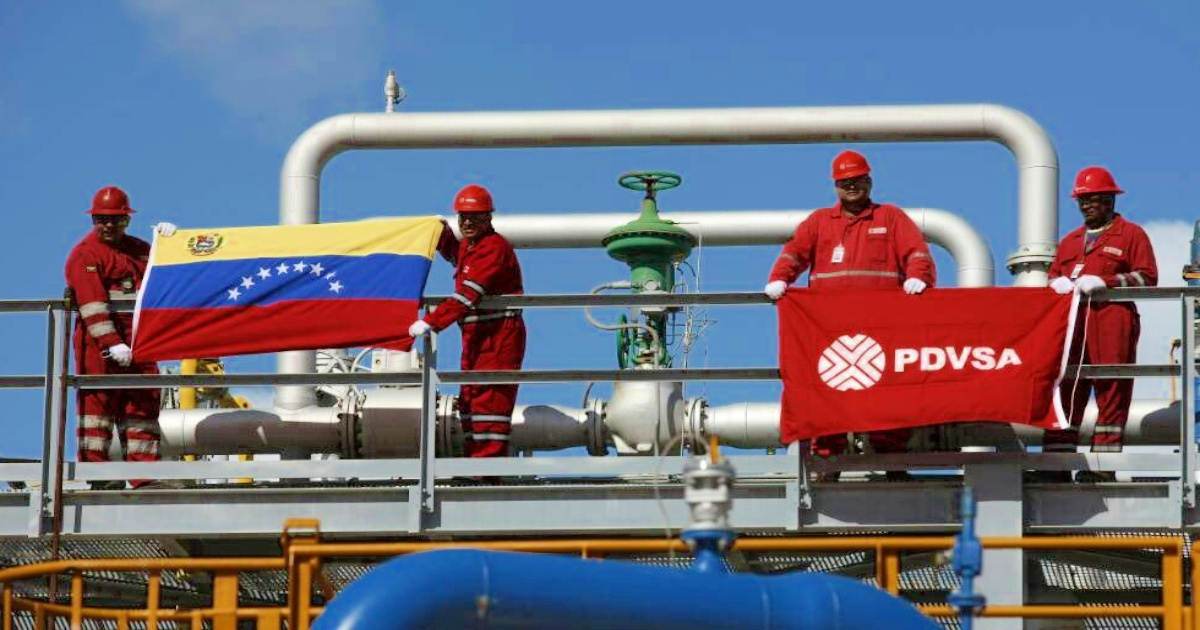
Major international oil companies are reviving their drilling operations and dusting off equipment that has been idle for years as Venezuela restructures its contracts to draw in foreign capital, according to a recent Reuters report.
In 2025, Chevron, Eni, and Repsol renegotiated their agreements with Venezuela's state-run PDVSA, and investments are set to ramp up significantly by 2026. This comes after the U.S. Treasury's Office of Foreign Assets Control (OFAC) issued general licenses permitting transactions with the Venezuelan firm.
"Companies are gearing up to resume operations," revealed a source with knowledge of the situation. "Drilling rigs that have sat unused for over five years are undergoing inspections and refurbishments."
A turning point was reached on January 3, 2026, when U.S. special forces apprehended Nicolás Maduro in Caracas. The interim government under Delcy Rodríguez embraced a drastically different approach, opening up to foreign capital and dismantling the state's absolute control over the oil industry.
Venezuela's New Approach to Oil Contracts
On February 1, the Venezuelan National Assembly passed a reform of the hydrocarbons law, allowing PDVSA to enter into direct contracts with private companies without requiring the formation of joint ventures.
Chevron, previously the largest foreign oil producer in Venezuela with an output of approximately 170,000 barrels per day (bpd) before sanctions tightened in 2019, aims to increase its production to 300,000 bpd by 2028.
Chevron's oil exports from Venezuela surged from 100,000 bpd in December 2025 to 300,000 bpd by March 2026. On April 15, the company expanded its stake in the Petroindependencia joint venture from 35.8% to 49%.
Expanding Partnerships and Investment
On April 16, Repsol signed an agreement with PDVSA to regain operational control of Petroquiriquire, which currently produces around 45,000 bpd, with plans to triple output to roughly 135,000 bpd within three years. "This underscores our commitment to Venezuela since 1993," stated Francisco Gea, Repsol's Director of Exploration and Production.
Eni and Repsol are planning a joint investment of $2 billion over five years in their ventures with PDVSA.
Numerous drilling rigs stored in eastern Venezuela and Lake Maracaibo are being transported to shipyards in Trinidad and Guyana for assessment and repairs. "We're talking about dozens of rigs and reviving hundreds of thousands of barrels of storage capacity," the source added.
Challenges and Opportunities Ahead
Chevron also announced over $100 million for upgrading facilities in Venezuela, as U.S. Energy Secretary Chris Wright forecasted a 30-40% growth in Venezuela's oil production during the first year following the issuance of new licenses.
PDVSA's production plummeted from two million bpd in 2016 to a mere 800,000 bpd by 2023 due to sanctions, underinvestment, and a massive exodus of skilled technicians. The company ended 2025 with 1.2 million bpd and aims to surpass that figure this year.
With the world's largest proven reserves of 303 billion barrels concentrated in the Orinoco Belt, Venezuela remains a strategic target for any global oil company.
However, Chevron CEO Mike Wirth cautioned this past Sunday, "You can't just flip a switch to restart production" without engineering, supply chains, and the return of emigrated skilled workers, adding that Venezuela "still has work to do" to attract substantial investments. Analysts estimate that $100 billion would be needed over a decade to reach peak historical production.
A primary license for Chevron set to expire in April 2026 could halt its activities if Washington doesn't renew it. "The ball is in Washington's court," warned a PDVSA executive.
Key Questions About Venezuela's Oil Industry Revival
What changes have been made to Venezuela's oil contract laws?
The Venezuelan National Assembly passed a reform allowing PDVSA to enter direct contracts with private companies without the need for joint ventures.
How has Chevron's oil production in Venezuela changed recently?
Chevron has increased its oil exports from Venezuela from 100,000 bpd in December 2025 to 300,000 bpd by March 2026 and plans to raise production to 300,000 bpd by 2028.
What investments are Eni and Repsol planning in Venezuela?
Eni and Repsol are planning a joint investment of $2 billion over five years in their joint ventures with PDVSA.
What challenges does Venezuela face in attracting oil investments?
Challenges include engineering, supply chain issues, and the need for skilled workers to return. Analysts estimate $100 billion is needed over a decade to reach peak production.