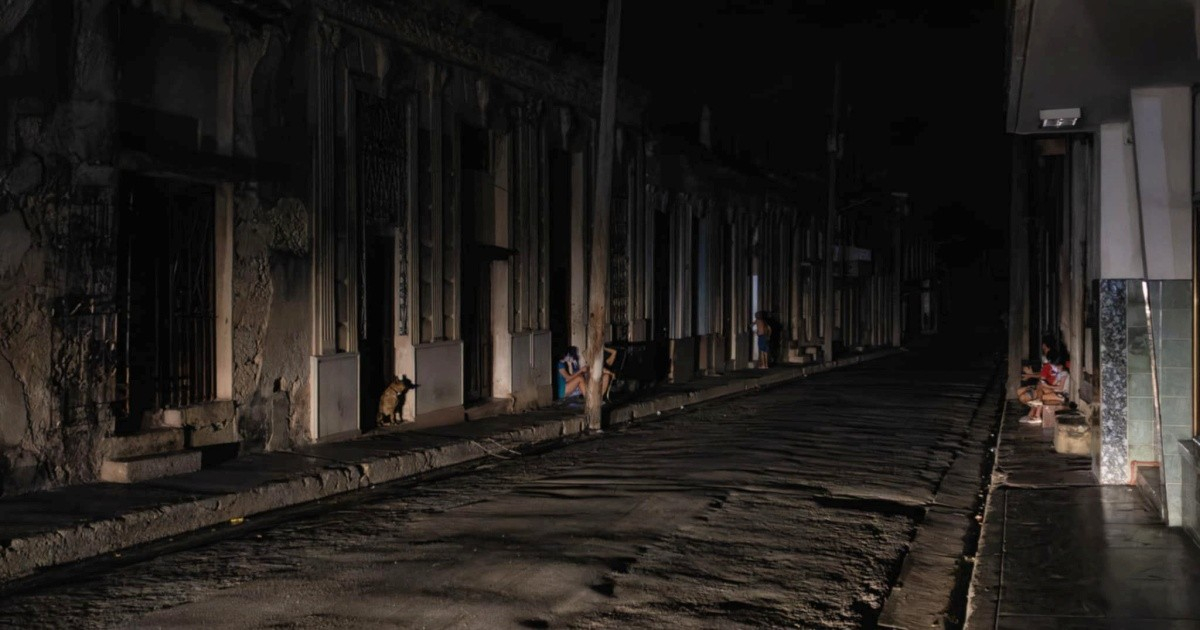
The National Electric System (SEN) in Cuba is grappling with a power generation shortfall that has surpassed 1,400 MW as of Monday, according to an official report from the Unión Eléctrica.
On Sunday, the maximum shortfall reached 1,426 MW at 8:20 PM, causing service disruptions that lasted the entire day, with persistent outages throughout the night.
For the peak hours on Monday, the Unión Eléctrica projected availability at a mere 1,675 MW, while the demand is expected to hit 3,100 MW. This results in a projected shortfall of 1,425 MW and an estimated impact of 1,455 MW.
By six o'clock this morning, 845 MW were already out of service, with demand peaking at 2,486 MW.
Fuel Supply Struggles and Economic Challenges
The situation has worsened in tandem with the depletion of fuel processed from a Russian shipment. In an interview published on April 21, Díaz-Canel acknowledged that the shipment "represents a third of what we require in a month" and "can meet our needs for about 10 days."
Energy Minister Vicente de la O Levy provided further clarity on April 22, stating, "With this shipment alone, we have enough until the end of this month," foreseeing the scenario that has now unfolded.
Those ten days have elapsed, and the shortfall is once again escalating significantly.
Unequal Relief Across Regions
The temporary relief was short-lived and unevenly distributed. Havana enjoyed approximately five consecutive days without power outages due to prioritized distribution of the Russian fuel between April 20 and 25. Meanwhile, other regions — particularly Holguín, Granma, Santiago de Cuba, and Moa — continued to endure blackouts of up to 24 hours daily during the same period.
Blackouts made a comeback in the capital on Saturday night, April 25, when an automatic frequency-triggered outage affected areas in Playa and Habana del Este, with Havana's power deficit surging again shortly after a brief respite.
Infrastructure Challenges and Renewable Energy Efforts
The system's active malfunctions include units 2 of the Ernesto Guevara De La Serna power plant, 4 of the Carlos Manuel de Céspedes plant, 2 of the Felton plant, and 5 of the Renté plant, with an additional 417 MW out of service due to thermal limitations.
The only partial relief comes from 54 solar photovoltaic parks, which contributed 4,102 MWh on Sunday with a maximum power output of 521 MW during daylight hours. However, without large-scale battery storage, this generation does not cover nighttime demand, when deficits are most severe.
Cuba's energy crisis stems from deep-rooted issues: the country requires between 90,000 and 110,000 barrels of oil daily but only produces around 40,000. Minister De la O Levy has admitted that Cuba needs eight fuel shipments monthly to meet its needs.
Díaz-Canel described the Russian oil shipment as "symbolic," a term that inadvertently encapsulates the gravity of the issue: symbolic gestures against a backdrop of decades-long structural collapse.
A second Russian tanker, the Universal, carrying 251,000 barrels of diesel — significantly less than the initial shipment's 730,000 barrels — is scheduled to arrive in the Caribbean by April 29. This may offer temporary relief, though it's insufficient to resolve the chronic shortage plaguing the Cuban people.
Understanding Cuba's Power Crisis
Why is Cuba experiencing such severe power shortages?
Cuba is facing severe power shortages due to a combination of structural issues, including insufficient domestic oil production and reliance on external fuel shipments, compounded by outdated infrastructure and maintenance challenges.
How does the Russian fuel shipment impact Cuba's energy situation?
The Russian fuel shipment provided temporary relief for about ten days but was insufficient to cover Cuba's monthly energy needs. It highlights the country's dependency on external sources and the inadequacy of current supplies.
What measures are being taken to address the power crisis?
Efforts to address the crisis include utilizing solar photovoltaic parks, but without adequate battery storage, these measures fall short of meeting nighttime demand. The Cuban government continues to seek external fuel shipments to alleviate the shortages temporarily.