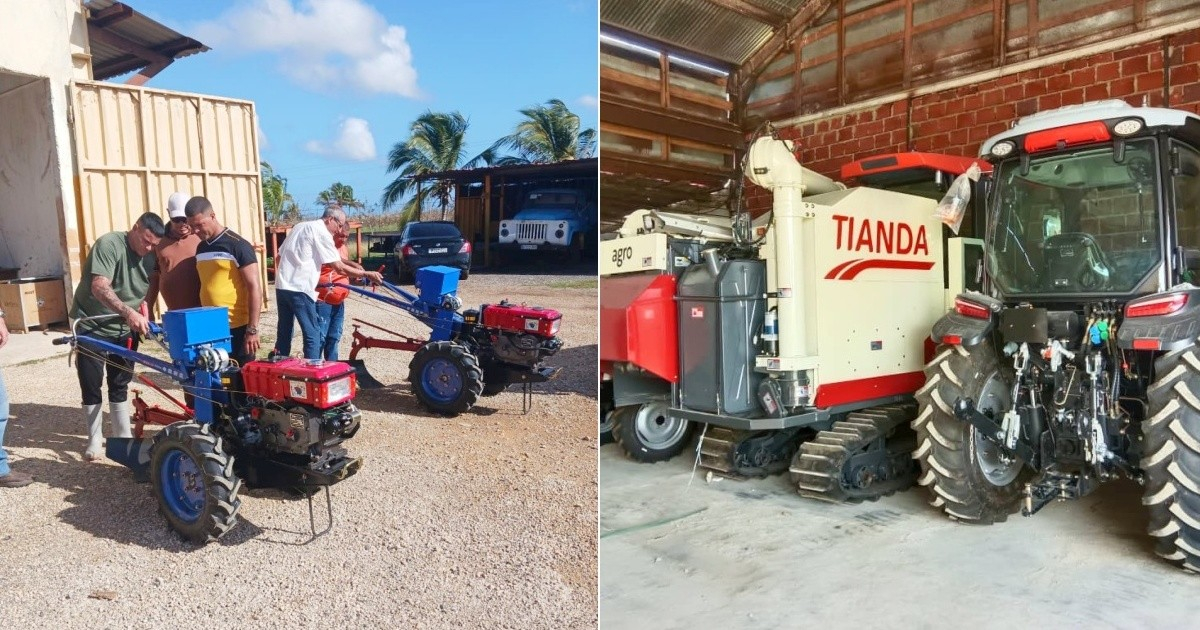
Cuban private company Habana Agro SURL has made a bold move by publicly accusing the Agricultural Engineering Research Institute, part of the Ministry of Agriculture, of deliberately creating obstacles that hinder Cuban producers from accessing modern agricultural equipment. This accusation was shared last Friday through social media channels.
Based in Havana, the company is involved in the import, assembly, and sale of agricultural machinery. They claim that the Institute's leadership interprets existing legal frameworks to their own advantage, thereby obstructing the validation process for new equipment that the company seeks to introduce.
As a direct response to these hindrances, Habana Agro SURL announced a temporary scale-back in their operations. They will now focus solely on importing, assembling, and selling equipment that is already validated or undergoing validation in Cuba. This strategy will hold until the necessary conditions are restored to ensure a transparent and productive validation environment.
The company's statement also highlighted that they had made numerous proposals for collaborative efforts, which included economic incentives for the Institute's employees. However, these proposals have consistently been ignored or rejected by the General Directorate.
Impact on Cuban Farmers
Central to the complaint is the significant negative impact on Cuban farmers. The barriers prevent them from acquiring cutting-edge equipment available at national currency prices, sometimes with payment facilities through banks, amidst a heavily dollarized economy.
Habana Agro SURL characterizes the situation as a blatant example of public officials whose actions disrupt essential collaborations between the private and state sectors. This, in turn, harms Cuba's national economy, its productive systems, and the agricultural community, all during a severe and enduring multifaceted crisis.
In their communication, the company reaffirmed its commitment to fostering constructive partnerships, whether or not they receive support from the country's leading institutions. They concluded with a strong statement of principles: "The Cuban private sector, by its own right, is an economic player deserving of its proper place within the economic, legal, and administrative framework of the country."
Context of Severe Food Crisis
This denunciation comes at a time of stark contradiction. The regime recently enacted Decree-Law 114, allowing partnerships between state and private entities, and last December, approved Decree 143 to end the Acopio monopoly, enabling private companies to participate in agricultural commerce.
Despite these reforms, state institutions continue to operate under a mindset of control and obstruction toward the private sector. This sector accounts for one-third of employment in Cuba and controls 55% of retail trade, yet remains excluded from strategic areas.
The backdrop is an unprecedented food crisis: since 2018, rice production has plummeted by 81%, root vegetables by 44%, eggs by 61%, and pork by a staggering 93.2%. Cuba relies on imports for 70% to 80% of its food, spending approximately $2 billion annually.
Understanding Cuba's Agricultural Challenges
What accusations has Habana Agro SURL made against the Agricultural Engineering Research Institute?
Habana Agro SURL has accused the Institute of intentionally creating barriers that prevent Cuban producers from accessing modern agricultural equipment by interpreting legal norms to suit their interests.
How has Habana Agro SURL responded to these challenges?
The company has decided to temporarily limit its operations to importing, assembling, and selling only the equipment already validated or in the process of validation, until conditions improve for a more transparent validation process.
What is the broader impact of these state-imposed barriers on Cuban farmers?
These obstacles prevent farmers from obtaining high-quality equipment at national currency rates, affecting their productivity amid a highly dollarized economy, thus exacerbating the country's food crisis.