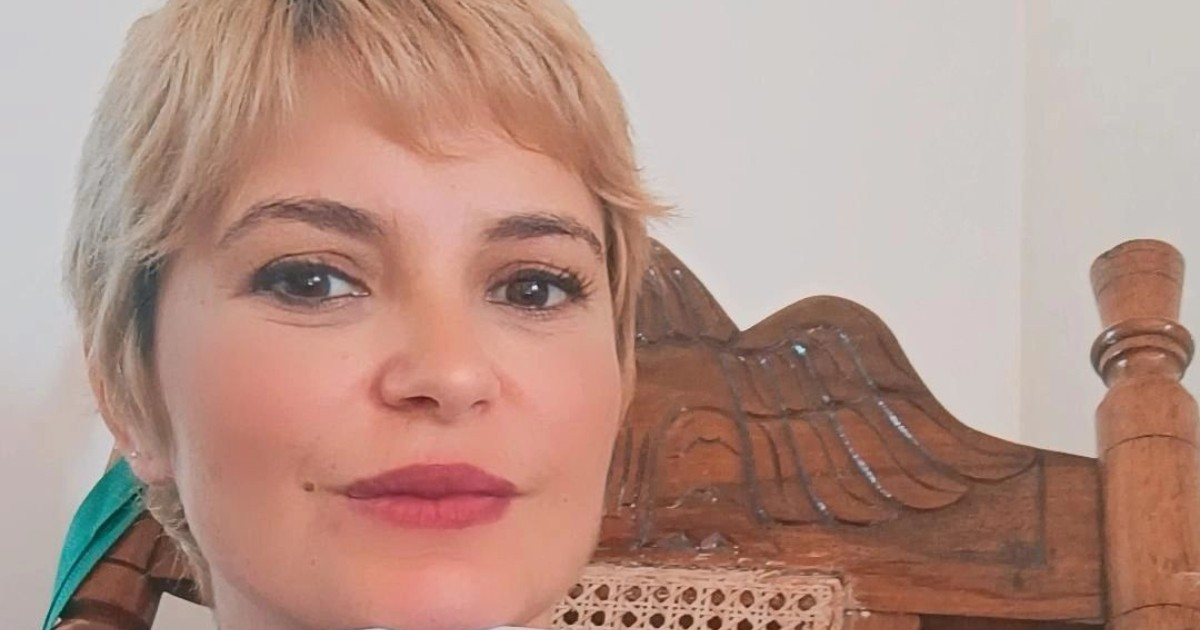
Spanish propagandist Ana Hurtado Martínez, living in Havana and married to a son of the late Cuban general Senén Casas Regueiro, recently penned an article for the state-run outlet Cubadebate titled "Cuba, a Dictatorship?" In it, she refutes the characterization of Cuba's political system as a dictatorship, attributing that label to what she terms the "dominant perspective" of Europe and the United States.
"When discussing dictatorship, it's crucial to understand from which perspective the term is being used. The global dominant view—primarily shaped by Europe and the United States—defines political terms according to their own idea of freedom," Hurtado asserts in her article.
Challenging Western Democracies
To bolster her argument, Hurtado cites cases such as the imprisonment of rapper Pablo Hasél in Spain and the U.S. naval base at Guantánamo, aiming to question the liberties within "so-called Western democracies."
She defends Cuba's one-party system by appealing to the legacy of José Martí and the Cuban Revolutionary Party as historical precedents for unity, claiming that "the existence of a single party does not necessarily mean there's a dictatorship," because in Cuba "there is a distinction of roles, participation exists, and freedom of thought is not denied."
The Reality of Cuban Politics
Hurtado even goes so far as to claim that "the Armed Forces and the Ministry of the Interior are nothing more than the people in uniform," asserting that "no human condition excludes participation in Cuban politics."
The documented reality starkly contradicts these assertions. Cuba's own 2019 Constitution declares in Article 5 that the Communist Party is the "superior leading political force of society and the State," devoid of party pluralism and genuine separation of powers.
The Cuban Observatory for Human Rights recorded 357 repressive actions in July 2025 alone—the year's highest month for repression—including 68 arbitrary detentions. Amnesty International documented torture, mistreatment, and forced disappearances of political prisoners on the island that year.
A Marriage Tied to Power
Hurtado's profile is deeply intertwined with her connection to the regime's elite. Details about her secretive marriage and ties to the Castro regime reveal that she wed Lieutenant Colonel Senén Casas, son of General Senén Casas Regueiro—who served as Chief of the General Staff, First Deputy Minister of the FAR, and Minister of Transport, considered Raúl Castro's right-hand man until his death in 1996. The son was raised within the Castro family circle and was childhood friends with Alejandro Castro Espín, Raúl's son with significant influence within the regime.
This isn't the first time Hurtado has acted as a mouthpiece for the regime in official media. Back in August 2025, she authored an article for Telesur about Cuba's supposed "oil sovereignty," which was debunked by the regime's own data showing structural reliance on Venezuelan and Mexican imports amid daily blackouts.
What Hurtado writes from Havana contrasts starkly with the lived experiences of Cubans: a report on political repression and social collapse in Cuba in 2025 highlights decades of systematic erosion of rights and freedoms that no propagandistic article can erase.
Understanding Cuba's Political Landscape
What is Ana Hurtado's stance on Cuba's political system?
Ana Hurtado argues that Cuba's political system should not be labeled a dictatorship, attributing such claims to a Western-dominated narrative.
How does Hurtado defend Cuba's one-party system?
Hurtado defends Cuba's one-party system by referencing José Martí's legacy and asserting that the presence of a single party does not equate to a dictatorship.
What evidence contradicts Hurtado's claims?
The Cuban Constitution positions the Communist Party as the leading political force, lacking true political pluralism, and reports of human rights abuses undermine Hurtado's claims of freedom and participation.