Moscow has accused Washington of exerting "aggressive and demonstrative pressure" on Cuba with the intention to "intrude blatantly into the island's internal affairs" and to "undermine Cuban statehood," according to statements made by Maria Zakharova, the spokesperson for the Russian Foreign Ministry, during a press briefing reported by Reuters.
Zakharova emphasized, "In the face of the deliberate and malicious escalation against Cuba, we reaffirm our solidarity with the Cuban government and its people. We reject the use of extortion and threats in foreign policy, which also applies to the current aggressive and demonstrative pressure from Washington on Havana."
These remarks come amid heightened tensions between the United States and Russia over the invasion of Ukraine, Operation Epic Fury in Iran, and the future of the Cuban regime, all of which are interconnected on the international stage.
In mid-March, Donald Trump claimed, "It would be an honor to take Cuba," and later in Miami Beach, on March 27, he added, "Cuba is next, but pretend I didn't say it." According to a USA Today report in April, the Pentagon has discreetly expedited the planning of military operations on the island.
However, Russia's support reveals a significant gap between rhetoric and real capability. Moscow has pledged to "continue providing humanitarian aid to Cuba during this challenging period of artificially stoked confrontation," though fuel shipments fall significantly short of the island's needs.
The Cuban Minister of Energy acknowledged that Cuba distributes only 800 tons of diesel daily, half of the 1,600 tons required, with the nation needing eight fuel tankers each month.
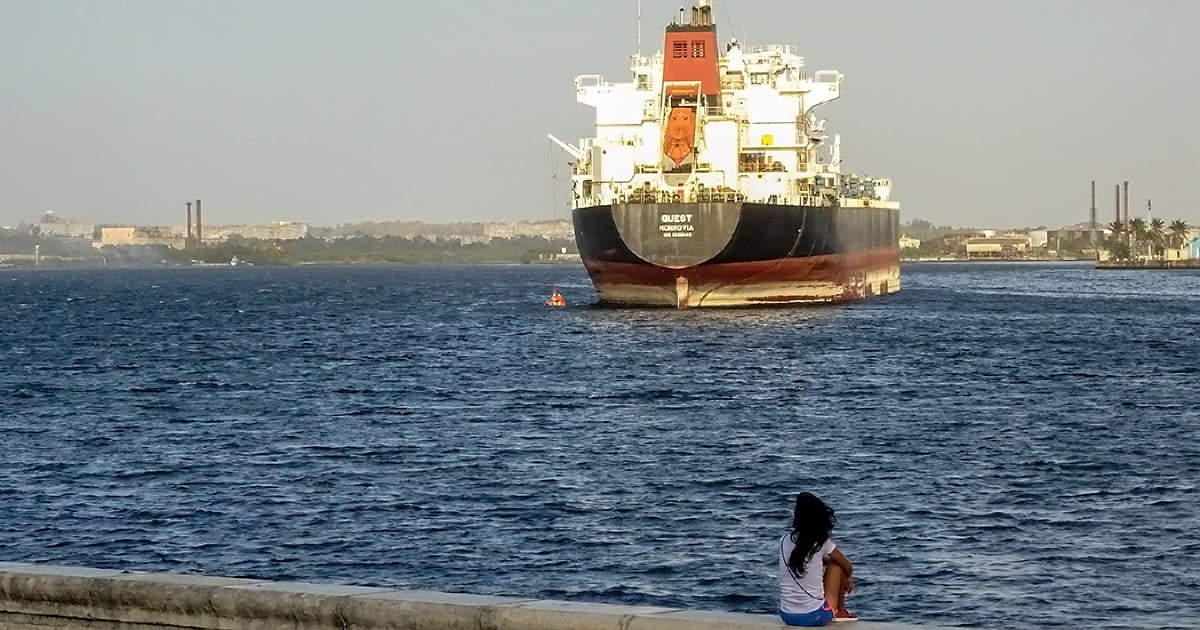
The Russian tanker Anatoly Kolodkin arrived at the port of Matanzas in late March with 730,000 barrels of crude oil. The national distribution of fuel began on April 17 following its refining at the Camilo Cienfuegos Refinery, but this shipment barely covers seven to ten days of the island's energy supply.
A second vessel, the Universal—sanctioned by the U.S., the European Union, and the United Kingdom—was approaching the Caribbean, escorted by a Russian frigate, carrying 251,000 barrels of diesel with an expected arrival this Tuesday.
Yet, not all shipments reach their destination: the tanker Sea Horse, carrying around 200,000 barrels intended for Cuba, was diverted to Trinidad and Tobago in March after the issuance of a license by the Office of Foreign Assets Control (OFAC) that explicitly excluded Cuba from transactions involving Russian oil.
Russian Deputy Minister Alexander Pankin acknowledged the logistical hurdles, describing the delivery of a tanker with oil to Cuba across the Atlantic as "almost an adventure," though Russia has left the door open for additional shipments if necessary.
On the military front, Foreign Minister Sergey Lavrov sidestepped any commitments in response to Trump's threats, stating he would not "play the seer" regarding potential consequences.
Concern in Havana has grown following these comments, which contrast with the military cooperation agreement signed between the two countries in March 2025 and ratified by Putin as law in October of that year.
Zakharova concluded her remarks with a statement summarizing Moscow's official stance: "We have always stood by Cuba in its struggle for independence, in its right to live by its own rules, develop on its path, and defend its own interests."
Key Issues in U.S.-Cuba-Russia Relations
What are the main accusations made by Russia against the U.S. regarding Cuba?
Russia accuses the U.S. of exerting aggressive pressure on Cuba to interfere in its internal affairs and undermine its sovereignty.
How has Russia responded to the situation in Cuba?
Russia has expressed solidarity with Cuba, pledging humanitarian aid, though actual fuel shipments have been insufficient to meet the island's needs.
What military actions are involved in the U.S.-Cuba-Russia dynamic?
The U.S. has been planning military operations in Cuba, while Russia maintains a military cooperation agreement with the island.