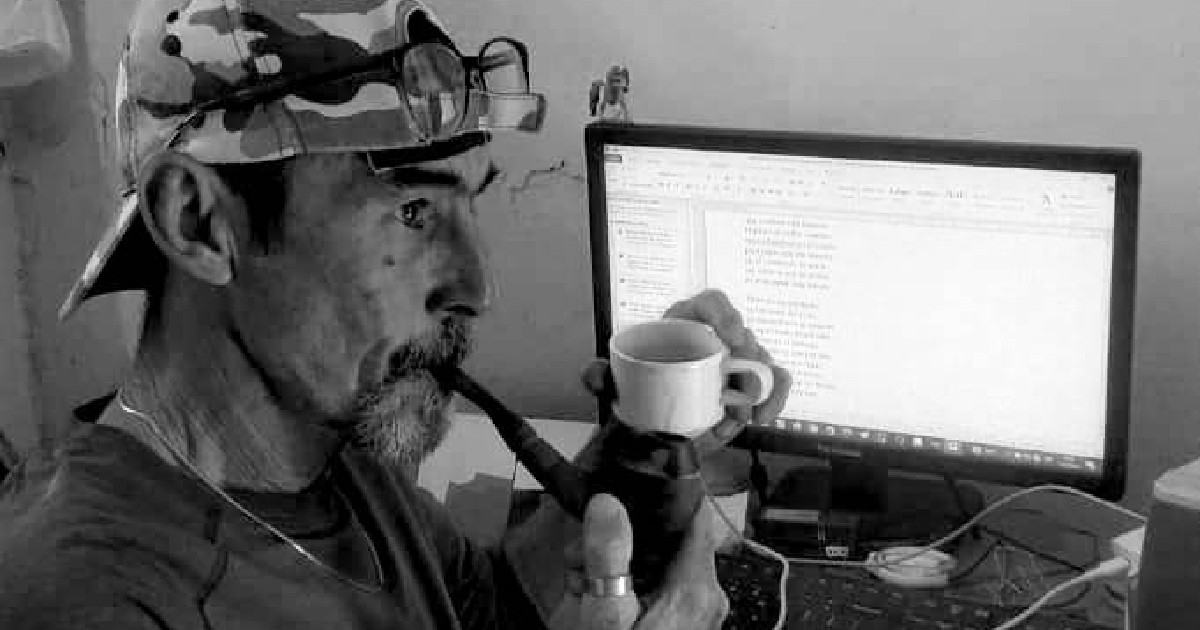
On Monday, Cuban writer Jorge Luis Veleta Mederos shared a poignant poem titled "A Nation Where Poets Flee" on his Facebook page. The elegy delves into themes of exile and the spiritual depletion of a nation, sparking an emotional response from fellow creators and resonating with interpretations of Cuba's ongoing migration crisis.
The poem begins with a stark diagnosis: "A nation where poets flee / is a nation without a soul." From this opening line, Veleta Mederos crafts a sustained metaphor about Cuba's cultural hemorrhage, where each departure represents "a river of blood diverted to silence, / another anemic wound on the flag."
The lyrical piece doesn't shy away from the personal aspect of exile. Veleta Mederos writes, "Every verse the poet writes far from home / is a gravestone, / a well of solitude between childhood and the man / who has already lost his corner, his guitar, and his spirit." This captures the fractured identity between one's origins and the exile experience.
The Political Undertones of Cultural Erosion
The poem takes on a distinctly political tone when it declares: "A nation without poets is a nation without a name. / And it is not a dead nation, but a defeated one / that learned to say homeland with borrowed lips / and to bloom on lands that do not understand its bones." This imagery of a "defeated" nation seems to point directly at the regime's role in Cuba's cultural depletion.
Veleta Mederos also questions the plight of the exiled poet, caught between nostalgia and the impossibility of return: "Ask the poets why they die far away / and you will know from the side where the nation bleeds." This condemnation, the poem clarifies, "is not hatred nor oblivion, / but that futile tenderness returning like a dog / to lick a door where no one lives."
Responses and Reflections from Fellow Writers
In the comments, writer Alexander Jimenez del Toro responded with his own sonnet, serving as an autobiographical counterpoint. Speaking in the first person, he narrates his final departure: "I said goodbye to the neighborhood, the people, / my fleeting footprint on the road, / the anemic bread, bitter wine, / and walked slowly over the bridge."
The sonnet progresses to a complete rupture: "I separated the root from my body, / I no longer know where I lost the keys, / I forgot the song, burned the ships / of eternal return to my country." The closing lines encapsulate the existential tear of the emigrant: "I packed poetry in my suitcase, / I left, as some souls depart, / still clinging to the body."
Historical Context of the Cuban Exodus
This trauma has unprecedented historical dimensions. Between 2021 and mid-2024, over 860,000 Cubans have arrived in the United States, marking the largest exodus in the island's history. In March of this year, fears of another mass departure grew as the crisis worsened.
Psychologist Roxanne Castellanos Cabrera has highlighted the devastating emotional consequences of exile—guilt, loneliness, despair—particularly affecting children and the elderly left behind.
Among the creators who have died far from Cuba are poet Reinaldo García Ramos, who passed away in Miami in August 2024; writer Armando de Armas in October 2024; and poet Orlando Rodríguez Sardiñas "Rossardi" in December 2024.
The dilemma faced by Cuban writers, whether to stay or leave with the nation packed in their suitcase, encapsulates the same collective tragedy that Mederos expresses in his final verse: "No country is dead if invaded, / it dies if its poets stop invading it." Although Mederos never explicitly names the country he refers to—the true essence of poetry is to suggest rather than state—the elements are there to connect the dots between the concrete reference and the lyrical work.
Jorge Luis Mederos, known in Cuban literary circles as "Veleta," is part of the literary group "El Club del Poste" in Santa Clara. His notable works include: Romanza del malo, El tonto de la chaqueta negra, Otro nombre del mar, and El libro de otros. His frequent Facebook posts offer a profound lyrical incision into the country's social reality.
Understanding Cuba's Cultural and Migration Challenges
Why are so many Cuban poets and writers leaving the country?
Cuban poets and writers often leave due to the cultural and political restrictions imposed by the regime, which stifle creative expression and lead to a sense of spiritual depletion and exile.
What impact does the exodus have on Cuba's cultural landscape?
The exodus results in a significant cultural hemorrhage, as the departure of poets and writers weakens the nation's cultural soul and identity, leading to a loss of artistic and intellectual vitality.