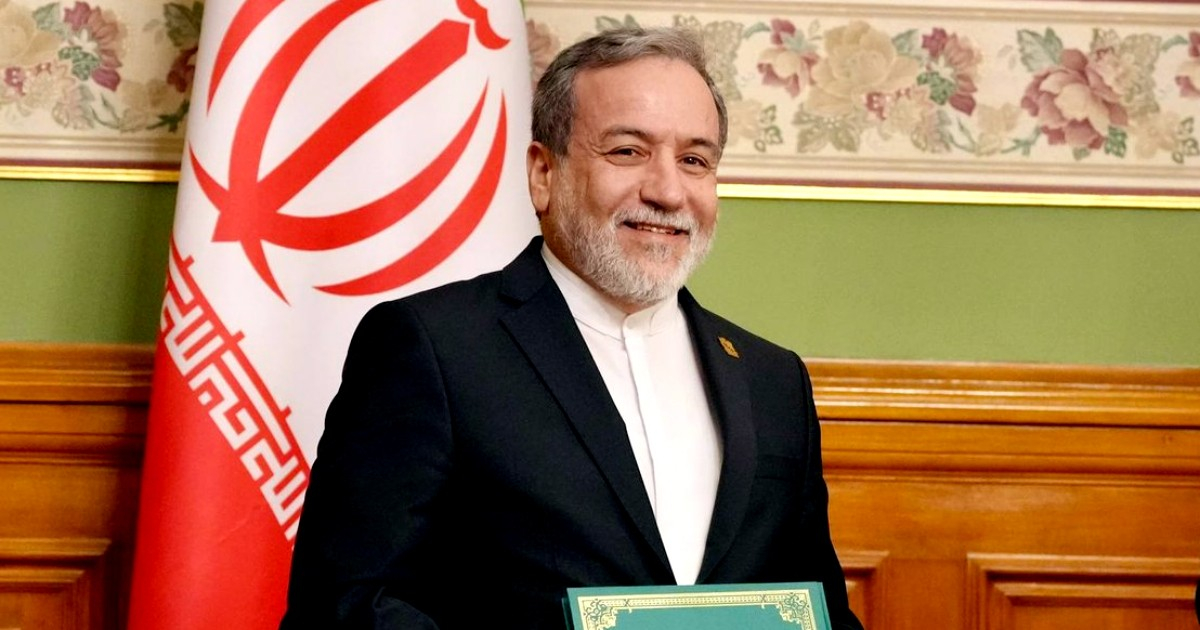
Iranian Foreign Minister Abbas Araqchi departed Islamabad on Saturday following extensive discussions with top Pakistani officials, opting not to wait for the arrival of U.S. government envoys who had announced plans to visit Pakistan's capital on the same day.
Araqchi arrived in Islamabad on Friday night and subsequently headed to Oman, the next stop in his diplomatic tour that will also include Russia, according to Pakistani diplomatic sources cited by EFE.
From the outset, Iran made it clear that the trip did not include any meetings with U.S. representatives. Iranian spokesperson Esmaeil Baqaei was unequivocal: "There is no scheduled meeting between Iran and the U.S."
During his visit, Araqchi held talks with Pakistan's Chief of Defense Forces and key mediator between the parties, General Asim Munir, as well as with Prime Minister Shahbaz Sharif and Foreign Minister Muhammad Ishaq Dar.
In these discussions, Iranian officials expressed their "complete reservation" regarding U.S. demands and emphasized their insistence on "lifting the blockade and halting U.S. attacks."
The administration of President Donald Trump had announced that his son-in-law Jared Kushner and special envoy Steve Witkoff would travel to Islamabad on Saturday to negotiate with Iran, claiming they had received an Iranian request to resume face-to-face negotiations and had identified "some progress" on Tehran's part.
However, Iranian authorities firmly denied this account, maintaining from the start that "there will be no direct meeting with the U.S. delegation."
This incident is part of a deeply stalled negotiation process that began with Operation Epic Fury, launched on February 28, 2026, by the U.S. and Israel against Iranian nuclear and military facilities. The operation conducted over 13,000 airstrikes, destroyed more than 5,000 targets, and eliminated Supreme Leader Ali Khamenei.
In response, Iran closed the Strait of Hormuz on March 4 using mines, drones, and missiles, crippling naval traffic by 97% and causing the price of Brent crude to soar from $67 to over $126 per barrel.
After 38 days of operations, a ceasefire was agreed upon on April 7, 2026, but subsequent peace negotiations have failed to make progress.
The first round of talks in Islamabad, led by Vice President JD Vance alongside Witkoff and Kushner, lasted 21 hours without reaching an agreement.
Following this impasse, Trump ordered a selective naval blockade against Iranian ships and deployed more than 10,000 troops, a dozen warships, and three aircraft carriers operating together for the first time since 2003. The blockade costs Iran approximately $500 million daily.
A second round of talks scheduled for April 21 and 22 was canceled due to Iran's refusal, which conditioned its participation on lifting the blockade and releasing frozen assets.
Despite the tense situation, EFE reported that Araqchi's presence in Islamabad is "in any case a step forward in the context of peace negotiations," which remain in a precarious state of limbo.
Key Questions on Iran-U.S. Negotiation Standoff
Why did Abbas Araqchi leave Islamabad without meeting U.S. envoys?
Abbas Araqchi left Islamabad as Iran had no intention of meeting U.S. representatives, as clearly stated by Iranian spokesperson Esmaeil Baqaei.
What was Operation Epic Fury?
Operation Epic Fury was a military initiative launched on February 28, 2026, by the United States and Israel targeting Iranian nuclear and military facilities, resulting in extensive airstrikes and the elimination of Iran's Supreme Leader Ali Khamenei.
What impact did the Strait of Hormuz closure have?
Closing the Strait of Hormuz disrupted naval traffic by 97% and significantly increased Brent crude oil prices from $67 to over $126 per barrel.