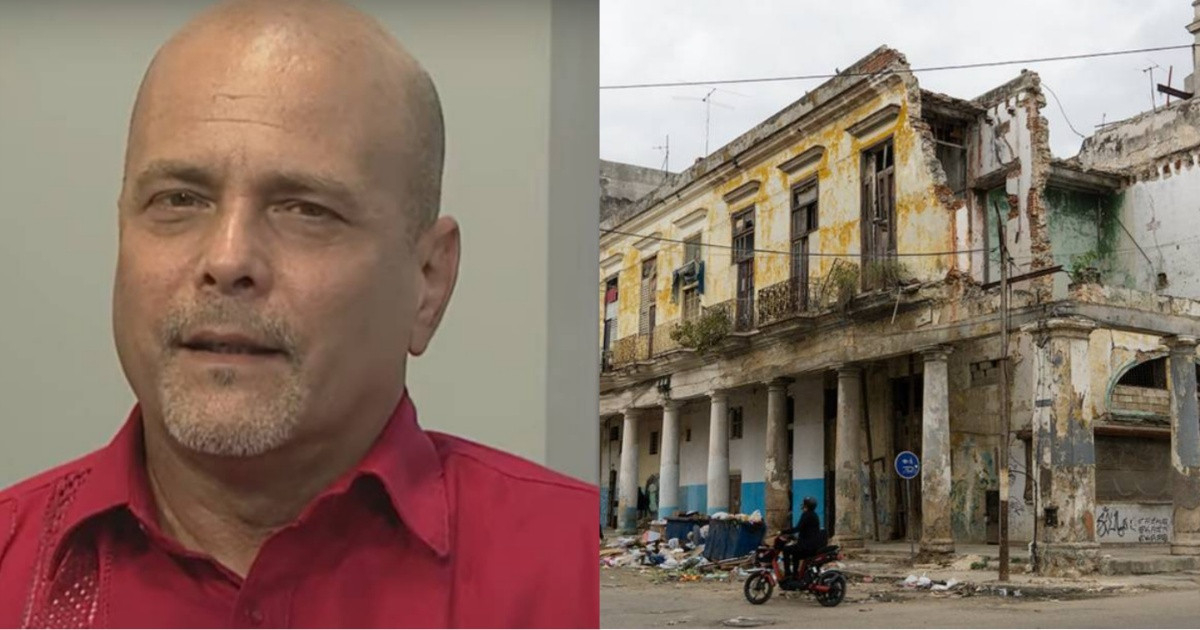
A post on Friday by Gerardo Hernández Nordelo, the national coordinator of the Committees for the Defense of the Revolution (CDR), aimed at promoting the pro-government campaign #MySignatureForTheHomeland, quickly became a platform for dissent. Dozens of Cubans used the opportunity to voice their opposition to the regime's initiative, demanding free elections and decrying the widespread hunger and poverty plaguing the island.
Hernández took to Facebook to share an image bearing the slogan "My signature is for a Cuba without war and without blockade!", in an attempt to rally support for the declaration "Girón is today and forever," issued by the PCC on April 19th to commemorate the 65th anniversary of the victory at Playa Girón.
The most striking response came from a user named Elexys Álvarez Molina, whose comment encapsulated the sentiments of many: "My signature is not to uphold dictatorships, eternal governments, or family dynasties. My signature is for the people. For our families, for our neighbors, for the old man selling peanuts on the corner who deserves to live with dignity."
Álvarez went further, challenging the system's legitimacy: "Because hunger isn't a symbol of resistance. Hunger hurts. And pride doesn't fill stomachs," he asserted.
He concluded his commentary with a direct dare to the regime: "And if they truly say the people support them, let them prove it: free elections, without fear. Let the people speak for real. Because the homeland isn't a government. The homeland is its people."
Voices of Dissent Emerge
Other users echoed this rejection with equally candid messages. Darian Díaz stated, "my signature is for a Cuba without dictators or Castros, my signature is for the people to no longer be oppressed by dictators."
Isbel Gómez declared that her signature "is for a free Cuba without dictatorship and without communism," while Jorge Luis López questioned, "How can we live in peace if the dictatorship doesn't allow us to work honestly or in peace? How can you ask for peace against someone who kills our children?"
Arialys Diaz was blunt in her criticism: "What is this person talking about if there's no peace in Cuba, there's nothing? The only things that exist are misery, hunger, and need."
Official Campaign Faces Backlash
Presented by the PCC as a "spontaneous initiative" of civil society, the #MySignatureForTheHomeland campaign is organized through PCC structures, utilizing workplaces, universities, and mass organizations such as the CDR.
Cuban leader Miguel Díaz-Canel was the first to sign on April 20th at the Museum Memorial of Ciénaga de Zapata, Matanzas, asserting that "we sign the unequivocal declaration that the Cuban Revolution will never negotiate its principles."
The goal is to collect millions of signatures before May 1st.
Independent analysts regard the campaign as a smokescreen intended to distract from the economic crisis, marked by prolonged power outages, food and medicine shortages, and a 23% GDP contraction since 2019.
Residents of Cárdenas collectively resisted signing despite pressure and threats, while activist José Daniel Ferrer of the Patriotic Union of Cuba (UNPACU) publicly urged people not to sign, labeling the campaign as support for oppressors.
Hernández, released in December 2014 after being sentenced to two life terms in 2001 for conspiracy to commit espionage and involvement in the shootdown of Brothers to the Rescue planes in 1996, has led the CDR since 2020 and actively uses social media for regime propaganda.
The widespread response to his post underscores that the campaign, rather than showcasing popular unity, has become a venue for denouncing 67 years of dictatorship.
Cuban Campaign Controversy: Frequently Asked Questions
What is the #MySignatureForTheHomeland campaign?
The #MySignatureForTheHomeland campaign is a pro-government initiative organized by the PCC, aiming to gather support for a declaration against war and blockades, while promoting the Cuban Revolution's principles.
How have Cubans responded to the campaign?
Many Cubans have used the campaign to express their opposition to the regime, demanding free elections and highlighting the issues of hunger and poverty on the island.
Why do independent analysts view the campaign as a distraction?
Analysts believe the campaign is a tactic to divert attention from Cuba's severe economic crisis, characterized by food and medicine shortages, power outages, and a significant GDP drop.