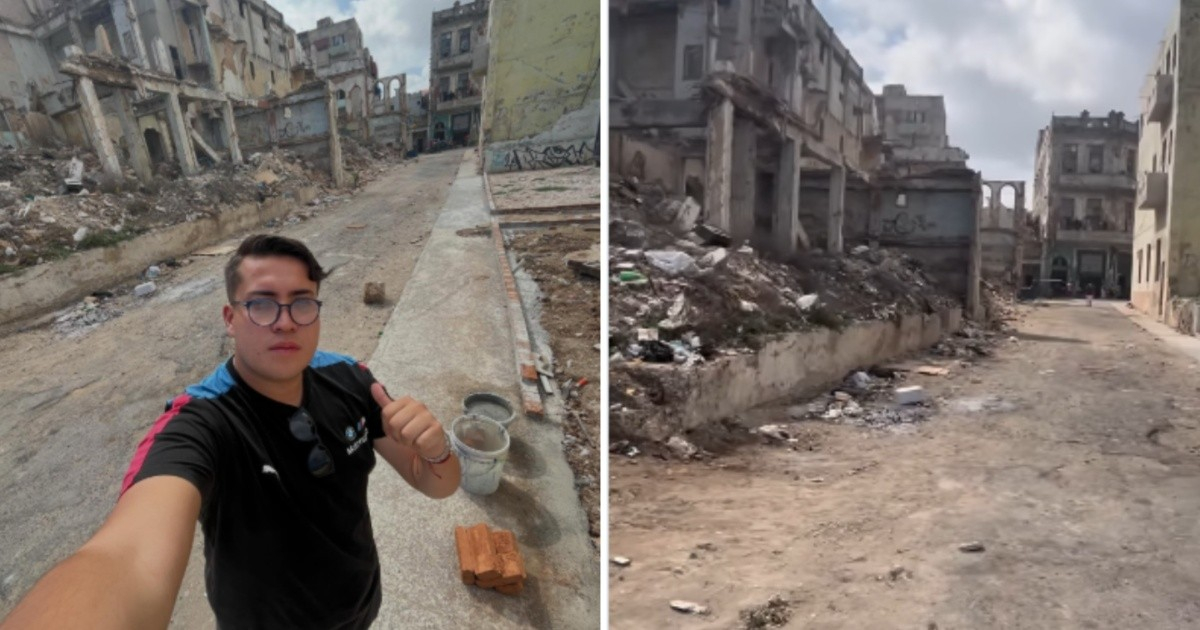
Colombian journalist and political activist Daniel Maldonado arrived in Cuba last Thursday, determined to capture the reality of nations under socialist regimes. His initial photographs from the island starkly contradict statements made by Colombian President Gustavo Petro.
Maldonado, who contributes to the media outlet El Artículo in Colombia's Congress and is currently a law student, shared on Instagram: "Today I embarked on documenting those countries that supposedly thrive under socialism. I started with Cuba, the country that President Gustavo Petro claims is better off than Miami, USA. These are my first impressions."
This post was a direct response to a speech Petro delivered in January 2026, where he stated: "Living in Cuba amidst the culture is far superior to being in Miami amid endless traffic without its own culture, merely imitating Havana."
During that same speech, the Colombian leader described Miami as "a phantom" and "the sequins of capitalism," asserting that Havana ranks among the world's most beautiful cities while predicting that Miami and Dubai will eventually vanish as mere capitalist illusions.
Petro also called on Colombian migrants in countries like the United States, Chile, and Argentina to return, claiming they are "treated like slaves and dogs chased through the streets."
The Grim Reality of Cuba’s Crisis
The Cuba that Maldonado set out to document is in the midst of one of its most severe crises in recent history.
As of April 2026, the island is experiencing power shortages up to 1,945 MW, with blackouts lasting between 18 to 24 hours daily in eastern provinces such as Holguín, Granma, and Santiago, impacting 55% of the national territory.
These electricity cuts have directly affected access to water, leaving over 200,000 residents in Havana without potable water due to pump system failures.
In the past 18 months, Cuba has endured seven total collapses of its electrical grid, a crisis exacerbated by the cessation of Venezuelan oil supplies since December 2025, following the capture of Nicolás Maduro in January of this year.
The food situation is equally dire. Cuban rice production meets just 36% of the national demand, and the monthly rationing only covers 30% to 40% of the population's caloric needs.
In informal markets, a carton of eggs costs 5,000 Cuban pesos, while the average salary in the country is around 4,000 pesos per month, equivalent to about 16 USD. Food inflation in these markets exceeds 250% year-on-year.
The human toll of the crisis is severe: 12% of Cuban children under five suffer from growth delays due to malnutrition, and infant mortality rose by 15% in 2025, according to UNICEF data.
Cuba's GDP has plummeted by 23% since 2019, with a forecast decline of -7.2% for this year.
Contrasting Narratives: Maldonado’s Mission
Maldonado's journey is part of a wider movement among Latin American journalists and activists who are documenting Cuba's reality firsthand to contrast it with narratives from regional leftist leaders.
Petro, who has visited the island at least five times since taking office in August 2022, reiterated in January that "when one truly visits Havana, they discover a stunning city, among the world's finest, unlike the photos shown in the media." Yet, the images Maldonado is sharing from Cuba tell a vastly different story.
Understanding the Cuban Crisis: Key Questions
What is the current electricity situation in Cuba?
Cuba is facing significant power shortages with deficits reaching up to 1,945 MW. Blackouts can last from 18 to 24 hours daily, affecting over half of the country.
How is the food crisis impacting Cuban citizens?
The food crisis is severe, with rice production fulfilling only 36% of demand. Rationing provides just 30% to 40% of caloric needs, and food inflation in informal markets exceeds 250% annually.