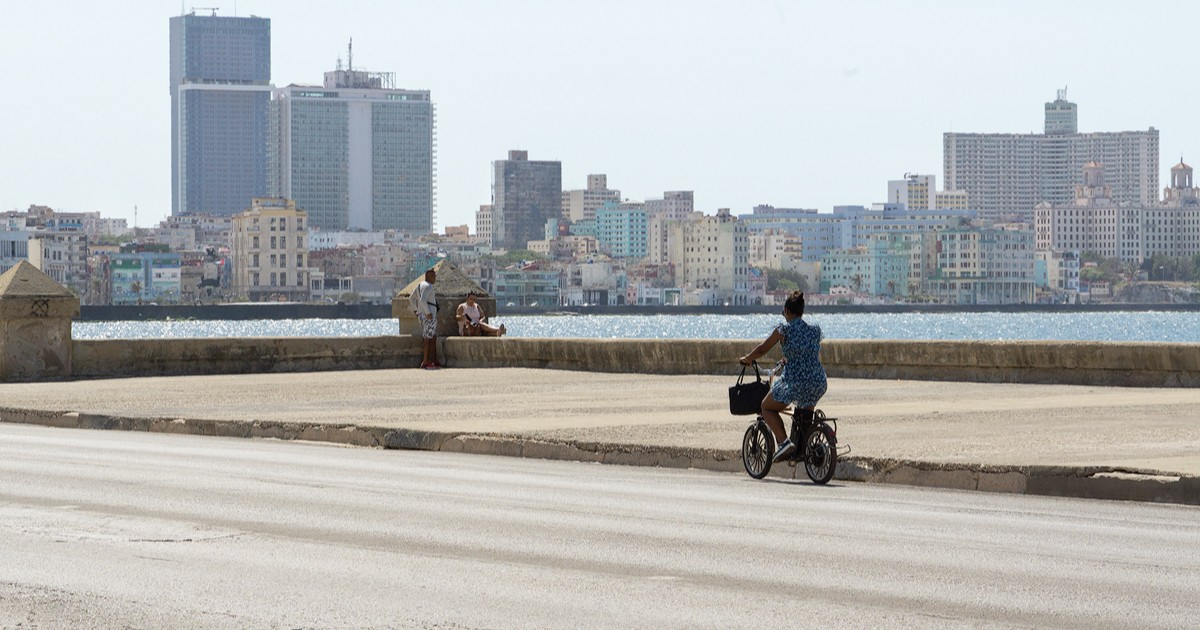
On Thursday, Cuba experienced a power shortfall of 1,333 MW at 8:10 PM, surpassing the anticipated deficit, while Havana marked its fifth consecutive day without blackouts due to generation shortages. This stark difference underscores the significant inequality within the national electrical grid.
The Electric Union attributed Thursday's worsening conditions to "the failure to activate the Melenos Barge and the shutdown of the Mariel Fuel Engines," leading to interruptions lasting 17 hours and 49 minutes nationwide.
By Friday morning at 6:00 AM, the system's availability was 1,885 MW, against a demand of 2,026 MW, with 260 MW already disrupted and an estimated 650 MW expected to be affected by midday.
The outlook for Friday night's peak remains bleak: the Electric Union projects an availability of 1,940 MW compared to a demand of 3,100 MW, resulting in a deficit of 1,160 MW and a projected shortfall of 1,190 MW.
Challenges and Limited Relief
Ongoing issues include outages in units 1 and 2 of the Ernesto Guevara De La Serna Thermoelectric Plant, unit 6 of the Nuevitas Plant, unit 2 of the Felton Plant, and units 3 and 5 of the Renté Plant, with other units undergoing maintenance limiting thermal capacity by 293 MW.
As a modest relief, the 54 photovoltaic solar parks generated 3,820 MWh on Thursday with a peak output of 536 MW, though they only operate during daylight without storage capabilities for nighttime demand.
Havana's Temporary Respite
The disparity between Havana and the rest of Cuba has a clear reason: Russian crude oil, which arrived at the Matanzas port on March 31 aboard the Anatoly Kolodkin tanker with 730,000 barrels, was refined at the Camilo Cienfuegos plant. Distribution began on April 17 at a rate of 800 tons of fuel oil daily, half of the 1,600 needed.
President Díaz-Canel acknowledged in an Opera Mundi interview that this shipment covers only a third of the monthly requirement, "sufficient for about 10 days." Energy and Mines Minister Vicente de la O Levy was more blunt on Wednesday's Roundtable: "This single ship will last us until the end of the month."
Díaz-Canel also admitted that Cuba went four months without receiving any fuel: "Four months, four months without receiving anything, operating on our reserves from January through April."
Regional Disparities and Public Outcry
While Havana enjoys a temporary reprieve, provinces like Holguín, Granma, and Santiago de Cuba report blackouts lasting up to 24 hours daily. In Moa, outages exceed 18 hours, and in Bartolomé Masó, Granma, residents endure entire days without electricity.
Cuban citizens express their frustration on social media: "Why has the capital been without blackouts for days while the provinces remain the same or worse? Don't we deserve a better life?" questioned one resident in response to a post by Deputy Foreign Minister Carlos R. Fernández de Cossío, who attributed the "relative relief" to the energy embargo.
A second Russian vessel, the Universal, carrying 251,000 barrels of diesel, is expected to arrive in the Caribbean on April 29. However, Cuba requires eight fuel tankers monthly, and from December 2025 to April 2026, only one has been received.
Understanding Cuba's Power Crisis
What is causing the power outages in Cuba?
The power outages are primarily due to insufficient power generation, exacerbated by technical issues like the failure to activate certain power sources and the shutdown of engines, leading to prolonged interruptions.
Why is Havana not experiencing blackouts?
Havana has avoided blackouts due to the distribution of Russian crude oil, refined and supplied to the city, providing temporary relief from the widespread energy shortages affecting the rest of the country.
How are solar parks contributing to Cuba's energy supply?
Cuba's photovoltaic solar parks contribute by generating electricity during daylight hours, though their impact is limited as they lack storage capacity to meet nighttime demand.