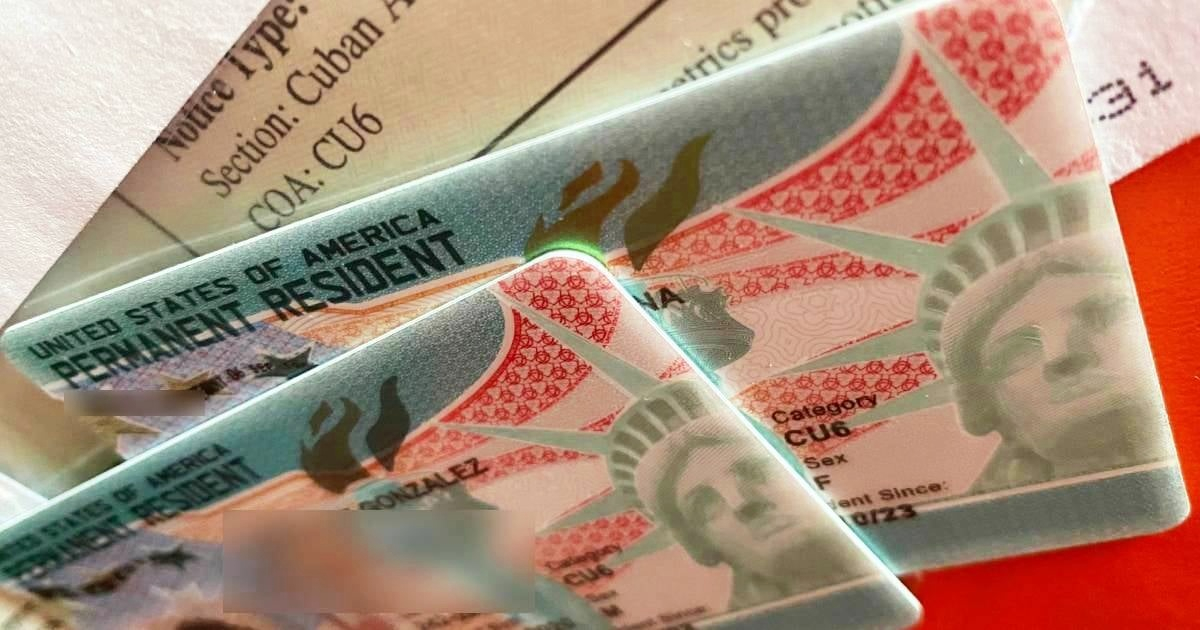
The United States Citizenship and Immigration Services (USCIS) has launched a comprehensive crackdown on immigration fraud, announcing a retroactive review of green cards and other immigration benefits granted during the Biden administration. Those found to have obtained these benefits fraudulently may face serious repercussions.
USCIS Director Joseph Edlow revealed this initiative on April 19 on the social platform X, stating: "At USCIS, we've declared an all-out war on immigration fraud. We're delving into past cases to reassess those who were granted green cards and other benefits during the Biden administration, a period marked by lax verification processes. Now, with stringent checks in place, we're revisiting these old cases."
In an interview with One America News, Edlow issued a stern warning: "Stop now, because we are going to find you. Even if you believe you've gotten away with it, we're going back. Be prepared to face the consequences."
Understanding the Scope of the Review
The scope of this review is significant. During the fiscal year 2024, around 1.4 million immigrants received green cards, marking a 92% increase from 2020, when approximately 707,000 were issued, according to the Migration Policy Institute.
Since January 2025, USCIS has referred nearly 33,000 cases to its Fraud Detection and National Security Directorate, representing a 138% increase compared to previous averages. Out of over 21,000 completed investigations, 65% indicated signs of fraud. The agency has also conducted over 7,000 home visits and more than 26,000 social media checks.
Conditions That Could Lead to Green Card Revocation
Several circumstances could lead to a green card being revoked. Immigration laws cite reasons such as fraud or falsehoods in applications, failure to disclose criminal records, serious crimes, and abandoning residency.
For those who have held a green card for less than five years, USCIS warns on its official page that "you may be placed in removal proceedings at any time" if it is determined that the holder was not eligible when approved.
For individuals with over five years of residency, the government must notify them, and the case is resolved before an immigration judge. Only an immigration judge can formally revoke status.
Fraud, however, is a timeless factor and can lead to revocation at any moment. Attorney Haim Vásquez, a former prosecutor now practicing in Dallas, Texas, explains, "If the revocation is due to fraud, the government must prove the reason before an immigration judge. If fraud is present, there is no defense against the government's decision, and the immigrant faces deportation.
Potential Impacts of Extended Absences
Long absences from the U.S. present another independent risk. According to USCIS and the Customs and Border Protection (CBP), an absence exceeding 180 days can disrupt continuous residency and trigger a status review upon re-entry, as reported by Infobae.
Those planning to be away for more than 12 months must secure a re-entry permit using Form I-131 before leaving. Without this document, the green card becomes invalid for direct entry, and the holder must apply for a returning resident visa at the appropriate consulate.
Attorney Jaime Barrón, from Dallas, Texas, suggests two possible interpretations of USCIS's announcement: "Either the government genuinely aims to review benefits granted during the previous administration to identify potential fraud, or it intends to take a stringent stance to deliberately uncover flaws."
Key Questions About Green Card Revocation
What are the main reasons a green card might be revoked?
The main reasons include fraud or misrepresentation in the application, failure to disclose criminal records, committing serious crimes, and abandoning residency.
How does an extended absence affect my green card status?
An absence of over 180 days can disrupt continuous residency and trigger a status review on re-entry. Exceeding 12 months requires a re-entry permit to maintain green card validity.
What should I do if I plan to be outside the U.S. for more than a year?
You need to apply for a re-entry permit using Form I-131 before leaving the U.S. Without it, you must apply for a returning resident visa at a consulate to re-enter.