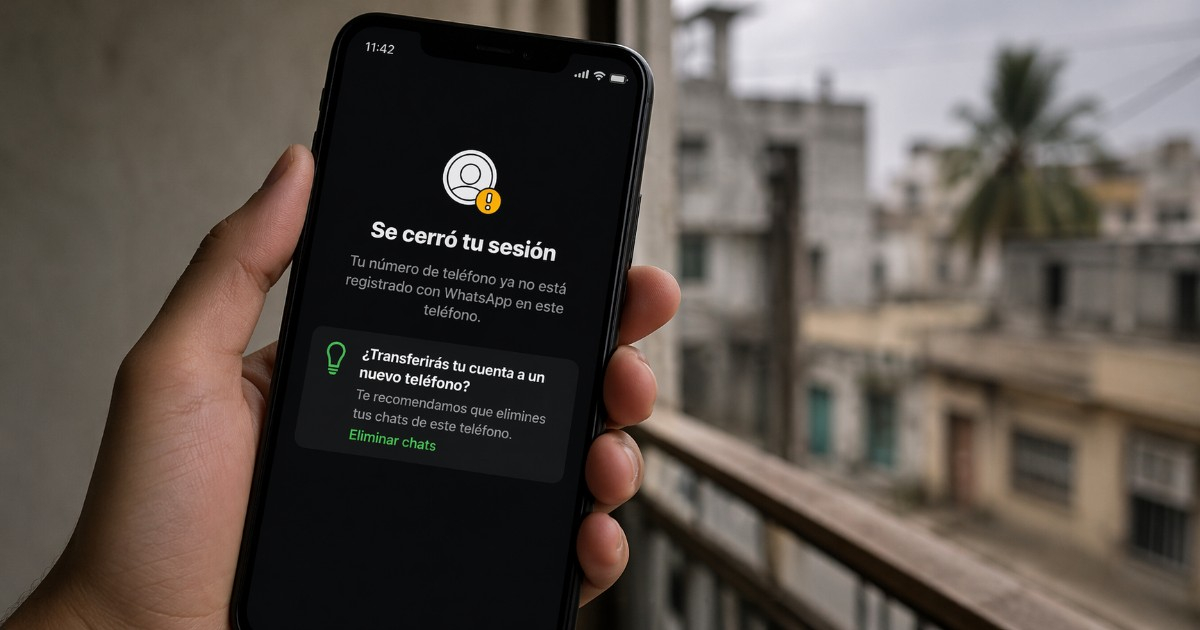
In a recent crackdown on dissent, Cuba's state-run telecommunications company, ETECSA, cut off the phone lines of prominent Christian activist Anna Sofía Benítez Silvente, known as Anna Bensi, along with her mother, as well as those of evangelical pastor David Espinosa and his wife, Laidy García. This coordinated digital repression targeted young dissidents in Cuba.
The disconnection occurred between 10:20 and 10:23 PM on Wednesday night. Just hours later, at around 2:00 AM, Anna Bensi's WhatsApp account was deactivated for the second time that night, shortly after she had regained access at 5:00 PM the previous day.
"I'm connected via hotspot. This needs to be said," David Espinosa posted on social media, highlighting the disruption that affected his family in the dead of night.
Persistent Harassment by Cuban Authorities
This is not an isolated incident of the Cuban government using such tactics against these activists. Anna Bensi remains under house arrest with a travel ban, a state that has persisted for weeks, yet the authorities continue to apply pressure on her and those close to her.
Amid this ongoing harassment, Pastor David Espinosa has been summoned by the Ministry of the Interior (MININT) for the fifth time, which the victims describe as part of an intimidation campaign targeting young believers who dare to voice their dissent.
Coercion and International Attention
Efforts to coerce the activists have also been reported. Anna Bensi recounted an incident where regime agents attempted to recruit her by saying, "That dream can come true, Sofía. We can help you," a ploy she publicly denounced.
The international community has taken notice of their plight. Supporters assert that Anna Bensi's only "crime" has been defending her beliefs and faith, actions that the Cuban regime appears determined to suppress through any means necessary, including communication control.
Time and again, ETECSA has proven to be the regime's go-to tool for silencing critical voices, acting as the enforcer of a repression strategy that meshes surveillance, service disruption, and psychological pressure against those who challenge the government.
Frequently Asked Questions about Digital Repression in Cuba
How does ETECSA contribute to the Cuban government's repression?
ETECSA acts as the Cuban government's tool for silencing dissent by cutting off telecommunications services and assisting in surveillance efforts against opposition figures.
Why are young Christian activists in Cuba targeted?
Young Christian activists are targeted because they openly express their faith and opposition to the government, challenging the regime's control and policies.
What are the consequences of digital repression for activists?
Digital repression leads to isolation, limits activists' ability to communicate and organize, and creates a climate of fear and intimidation.