A comprehensive investigation has uncovered one of the most significant immigration frauds in recent U.S. history, revealing a scheme that exploited vulnerable migrants with false promises of legalization for years.
Legacy Imigra, an agency based in Orange County, Florida, was dismantled following a probe into a multi-million dollar scam primarily targeting undocumented individuals.
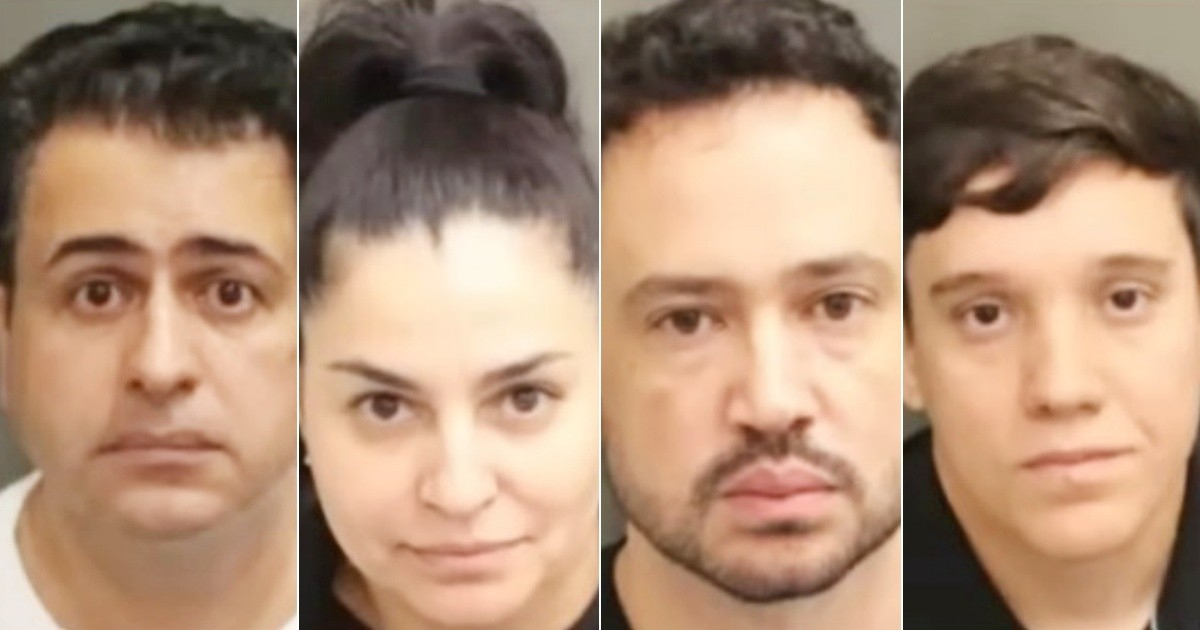
Four individuals have been arrested in connection with the operation.
Massive Financial Scam Exposed
The sheriff's office reported that the company "scammed hundreds of undocumented immigrants out of millions of dollars," potentially amassing over $20 million in just three years.
During a press briefing, Orange County Sheriff John Mina provided a detailed account of how the agency operated. "Their business model was essentially a scheme of manipulation, deceit, lies, and extortion," he stated. "Most of their clients, predominantly Brazilian nationals, were left far from achieving their dream of becoming Americans," he added.
Arrests and Legal Proceedings
The crackdown resulted in the arrest of the agency's founder, Vagner De Almeida, his wife Juliana Colucci, and two partners: Lucas Felipe Trindade Silva and Ronaldo Decampos. They face severe charges, including organized crime, organized fraud, extortion, and unauthorized practice of law.
Fox 35 reported that investigators allege the accused "ran a fraudulent immigration office" and "posed as lawyers, extorting applicants by withholding immigration documents."
Sheriff Mina emphasized a critical aspect of the case: the arrested individuals were not licensed attorneys. While acknowledging that some legitimate services may have been provided, he suggested this could have been a tactic to build trust and attract more victims.
Deceptive Practices and Victimization
Investigations have unveiled a systematic pattern of deceit. Reports indicate the agency used social media and personal recommendations to attract clients, many desperate to regularize their immigration status.
Once ensnared in the system, victims were subjected to numerous fraudulent practices, such as:
- Creating email accounts in victims' names without their consent.
- Submitting fraudulent or incorrect immigration applications.
- Charging exorbitant fees for invalid processes.
- Withholding personal documents to demand extra payments.
"Legacy created email accounts in victims' names without their knowledge or consent and then withheld documents, telling victims they wouldn't receive their documentation unless they paid additional money," Mina explained.
Telemundo 51 corroborated these methods, adding that victims were relentlessly pressured to hand over more money under the threat of losing their immigration files.
Spread of Victims Across States
To date, at least seven victims have come forward, hailing from Florida, South Carolina, Connecticut, and New Jersey, reporting individual losses ranging from $2,500 to $26,000. However, authorities believe the actual number is significantly higher.
"Agents believe the total number of victims could reach into the hundreds," the sheriff's office noted.
Fear of deportation may be deterring many affected individuals from reporting the fraud. Nevertheless, authorities have indicated that those who assist in the investigation might be eligible for immigration protections, such as special visas allowing them to remain in the country as the case progresses.
Initial Reports and Ongoing Investigation
The case came to light in September when a Florida Bar attorney alerted authorities after receiving multiple complaints about the agency. The grievances shared a common theme: Legacy Imigra falsely claimed to have qualified attorneys and charged hefty fees for fraudulent services.
This prompted a joint investigation by the Orange County Sheriff's Office, Homeland Security Investigations, and the Florida Attorney General's Office.
Interestingly, neighboring businesses did not suspect criminal activities, although the agency's presence caused inconveniences. Witnesses interviewed by News 6 described a constant flow of employees and clients. "Suddenly, one day, we had nowhere to park," recounted Dr. Stefannia Ezzi, who owns a nearby business.
Another local merchant, Mazen Ban, remembered workers "flooding" the parking area every morning, dressed in formal attire as if attending a special occasion.
No one imagined the scale of the fraud they were witnessing.
Upon learning of the accusations, a neighbor commented, "They're targeting a sector of the community already facing difficulties and then taking advantage of them."
Authorities consider this case as one of the most significant immigration frauds in recent U.S. history, not just because of the financial losses—over $20 million—but also due to the harm inflicted on individuals seeking legal opportunities. The scam resulted in financial losses, interrupted immigration processes, and shattered dreams. Many victims believed they were moving towards legalization, only to find their cases were invalid.
The investigation remains ongoing, with more victims expected to come forward in the coming months, potentially expanding the fraud's scope.
Meanwhile, the detainees remain in custody, awaiting trial.
Understanding the Florida Immigration Fraud Case
What was the primary method used by Legacy Imigra to attract clients?
Legacy Imigra primarily used social media and personal recommendations to attract clients desperate to regularize their immigration status.
How did the authorities become aware of the fraud?
The fraud was uncovered after a Florida Bar attorney alerted authorities in September, following multiple complaints about the agency's false claims of having qualified attorneys.
What charges are the arrested individuals facing?
The arrested individuals are facing charges including organized crime, organized fraud, extortion, and unauthorized practice of law.