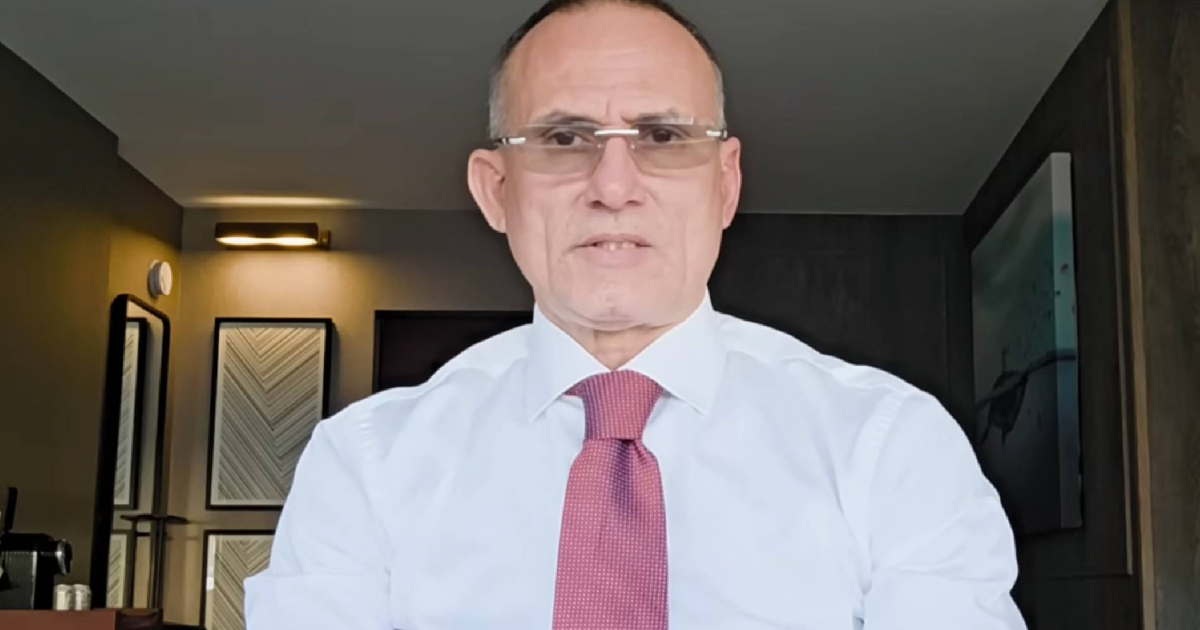
Cuban dissident José Daniel Ferrer took to social media to emphasize the role of the Cuban people in challenging the oppressive regime, reinforcing his recent calls for citizens to resist participating in government-led initiatives.
In his post, Ferrer revealed that he receives daily inquiries from the island asking when former U.S. President Donald Trump will "end the criminal regime that oppresses our nation." Addressing these concerns, he asserted that dismantling the system does not hinge on external forces.
"This infamous tyranny ends when those Cubans who do nothing for freedom and endure the oppression and poverty imposed by the tyranny stop providing the support that sustains it," Ferrer wrote.
Actions That Sustain the Regime
The leader of the Patriotic Union of Cuba (UNPACU) highlighted actions he believes support the regime, such as signing petitions, attending events, joining groups, working for or purchasing from entities that the regime relies on.
He emphasized that it's not about taking additional actions but rather ceasing to act in ways that benefit the regime. "You don't even have to take action, just stop doing what the tyranny needs you to do," he pointed out.
Consistent Advocacy Against Regime-Endorsed Initiatives
Ferrer has maintained this line of argument in recent weeks. On April 20, alongside activist Yamilka Lafita Cancio, known as Lara Crofs, he urged people not to participate in the official campaign "My Signature for the Homeland," promoted by the Cuban regime, summing up his stance with the slogan: "No signatures in favor of tyranny."
In this context, the duo highlighted that such initiatives aim to legitimize the system through citizen participation, while exerting pressure on workers and students.
Ferrer’s Perspective on U.S. Policy Toward Cuba
Ferrer has also been vocal about his views on U.S. policy toward Cuba. In March, he appealed to President Trump for any negotiations with Havana to not only focus on economic opening but also lead to "the end of tyranny and an immediate transition to democracy."
He had previously warned Trump and Senator Marco Rubio of the dangers of allowing the Castro leadership to remain in Cuba as part of any potential deal, fearing it might provoke further crises.
Most recently, on April 21, Ferrer responded to German Chancellor Friedrich Merz's remarks opposing military intervention in Cuba, asserting that the dire situation on the island should be assessed based on the real conditions faced by its citizens.
The Need for Internal and External Pressure
Overall, Ferrer's statements consistently reflect his position: support for international pressure on the regime, but with a strong insistence that genuine change in Cuba demands both political transition and the active involvement of its own citizens. His renewed message stirs debate between those advocating for increased external pressure led by Washington and Ferrer's belief that even in this scenario, change in Cuba requires direct citizen engagement.
Understanding Ferrer's Stance on Cuba
What does José Daniel Ferrer believe is necessary for change in Cuba?
Ferrer believes that while international pressure is important, genuine change in Cuba requires the active involvement of its citizens in resisting the regime's demands.
How does Ferrer view the role of the United States in Cuba's political landscape?
Ferrer advocates for U.S. engagement with Cuba that leads to the end of the regime and a transition to democracy, rather than merely focusing on economic relations.
What actions does Ferrer discourage Cubans from taking?
Ferrer discourages Cubans from participating in actions that support the regime, such as signing petitions, attending events, or working for regime-backed entities.