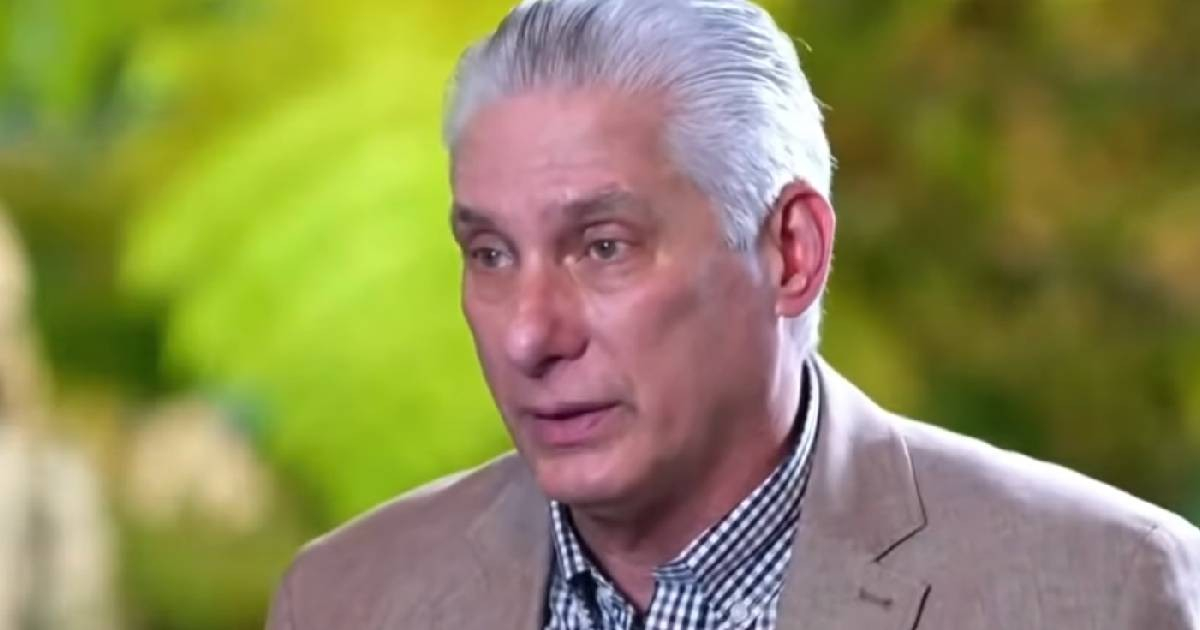
In a decisive move, Cuban leader Miguel Díaz-Canel firmly rejected any negotiations with Washington that would require alterations to Cuba's political system. He warned that any insistence from the United States on such preconditions would halt any potential dialogue.
This statement was made during an exclusive interview with Brazilian journalist Breno Altman for the "20 Minutos" program on Opera Mundi. The interview, conducted in Havana, was released today, just two days before a deadline set by the Trump administration on April 10 expires.
When directly asked if Cuba would consider the "regime change" terms openly advocated by the U.S., Díaz-Canel was unequivocal: "Absolutely not. That is not on the table. Our internal issues are not up for discussion with the United States in any negotiation."
Pressed on whether this stance means there would be no negotiations since the U.S. will not negotiate on Cuban terms, the Cuban leader was even more explicit: "There is no negotiation. No negotiation at all."
Díaz-Canel emphasized that if talks fail, the blame would lie with Washington: "If one side does not support dialogue, does not support conversation, and wants to impose conditions, it breaks the conversation, it breaks the negotiation."
The regime's stance is in direct opposition to Secretary of State Marco Rubio, who has argued that "Cuba's economy needs change, and that economy cannot change unless its government system changes too."
On April 10, a U.S. State Department delegation arrived in Havana—the first official U.S. government flight to Cuba since 2016—demanding the release of high-profile political prisoners such as Luis Manuel Otero Alcántara and Maykel Osorbo. They also issued a two-week ultimatum, which is set to expire this Friday, April 24.
Despite the firm stance on Cuba's political system, Díaz-Canel acknowledged that talks with the U.S. are indeed happening, albeit in "a very preliminary, very initial phase." He reiterated a willingness to engage in dialogue, provided it is based on mutual respect for Cuba's sovereignty, without preconditions, and on equal terms.
The interview comes amid an unprecedented energy crisis in Cuba. Díaz-Canel revealed that the island went four months without receiving any imported fuel: "Four months, not a single drop," he stated, attributing the shortage to Executive Order 14380 signed by Trump on January 29, 2026, which labeled Cuba as "an unusual and extraordinary threat."
Regarding the possibility of military intervention, Díaz-Canel admitted the risk but assured that Cuba is preparing defensively: "We do not promote war, we do not encourage war, but we are not afraid of war if we must defend the revolution and the country's sovereignty and independence."
Weeks earlier, Deputy Foreign Minister Anayansi Rodríguez Camejo had echoed this sentiment: "Cuba's political system is not negotiable. It is not part of the negotiation table. Neither the president's nor any official's position is negotiable."
Understanding the Cuba-U.S. Negotiation Standoff
What are the main reasons for the stalled negotiations between Cuba and the U.S.?
The primary reason for the stalled negotiations is the U.S. insistence on regime change in Cuba, which the Cuban government categorically rejects as a condition for dialogue.
How has the energy crisis in Cuba impacted the political negotiations?
The energy crisis, exacerbated by sanctions, adds pressure on Cuba, but it has not led to a change in their negotiation stance, as the Cuban government remains firm on its political sovereignty.