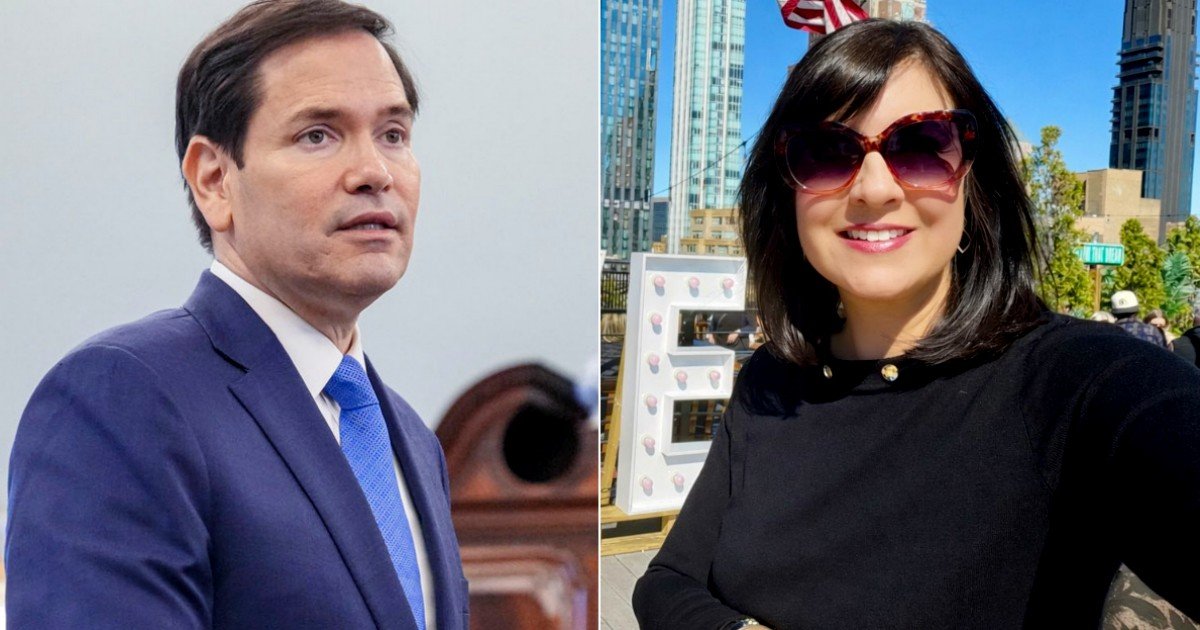
Republican Representative Nicole Malliotakis, serving New York's 11th district and daughter to a Cuban mother, expressed on Tuesday during Fox Business's "Varney & Co." that Marco Rubio is the most suitable figure at this moment to assist in liberating Cuba.
Malliotakis described ongoing talks between Washington and Havana as "critical," referring to the U.S. State Department's negotiations with the Cuban regime aimed at achieving structural reforms.
Having experienced her maternal family's loss of home and business due to the Castro regime's expropriations, the congresswoman reiterated her stance on social media platform X, directly tagging the Secretary of State: "@SecRubio is the right person at the right time to help free Cuba."
Her remarks coincide with a period of heightened diplomatic activity. On April 10, a high-ranking U.S. State Department delegation arrived in Havana—the first official American flight since Obama's 2016 visit—to demand tangible reforms from the Cuban government.
According to media reports, the U.S. demands included the release of political prisoners, internet accessibility via Starlink, economic and political reforms, compensation for properties seized in 1959, and the withdrawal of foreign intelligence operatives.
The Cuban government acknowledged this meeting through its official newspaper, Granma, describing it as "on equal terms" while emphasizing the need to end the so-called "energy blockade," without accepting U.S. conditions.
Rubio's Role in Diplomatic Dialogues
Meanwhile, mid-April saw Díaz-Canel admit he hadn't spoken directly with Rubio, labeling the talks as being in a "very preliminary" stage.
Marco Rubio has been pivotal in crafting this maximum pressure policy. On April 1, he told Fox News, "You can't fix their economy unless you change their government system," and dismissed New York Times reports in March suggesting negotiations focused solely on removing Díaz-Canel without altering power structures, calling them "fake news."
Geopolitical Context and Implications
The geopolitical backdrop of these negotiations is unprecedented. The capture of Nicolás Maduro in January 2026 denied Cuba 80-90% of its Venezuelan crude oil imports, and Mexico halted its oil shipments on January 9, exacerbating the island's severe energy crisis.
Simultaneously, Rubio's team and Venezuelan opposition leader María Corina Machado began talks in Chicago on Tuesday for a three-phase transition in Venezuela: stabilization, economic recovery, and free elections by late 2026, a model being closely watched as a potential template for Cuba.
Malliotakis's firm stance is longstanding. On January 30, she declared that Cuba's communist regime must be dismantled for endangering U.S. national security and oppressing its people. In February, she joined other Cuban-American congress members in urging the Justice Department to indict Raúl Castro for the 1996 shootdown of Brothers to the Rescue aircraft.
FAQs on U.S.-Cuba Relations and Marco Rubio's Role
What are the key demands of the U.S. in talks with Cuba?
The U.S. has requested the release of political prisoners, internet accessibility through Starlink, economic and political reforms, compensation for properties seized in 1959, and the removal of foreign intelligence operatives.
What role has Marco Rubio played in these negotiations?
Marco Rubio has been instrumental in shaping the U.S. policy of maximum pressure on Cuba. He has advocated for systemic governmental changes as a prerequisite for economic improvements on the island.
How has the geopolitical landscape affected Cuba?
The geopolitical situation is challenging for Cuba, with the capture of Nicolás Maduro cutting off a major source of oil, and Mexico ceasing its oil shipments, worsening the energy crisis on the island.