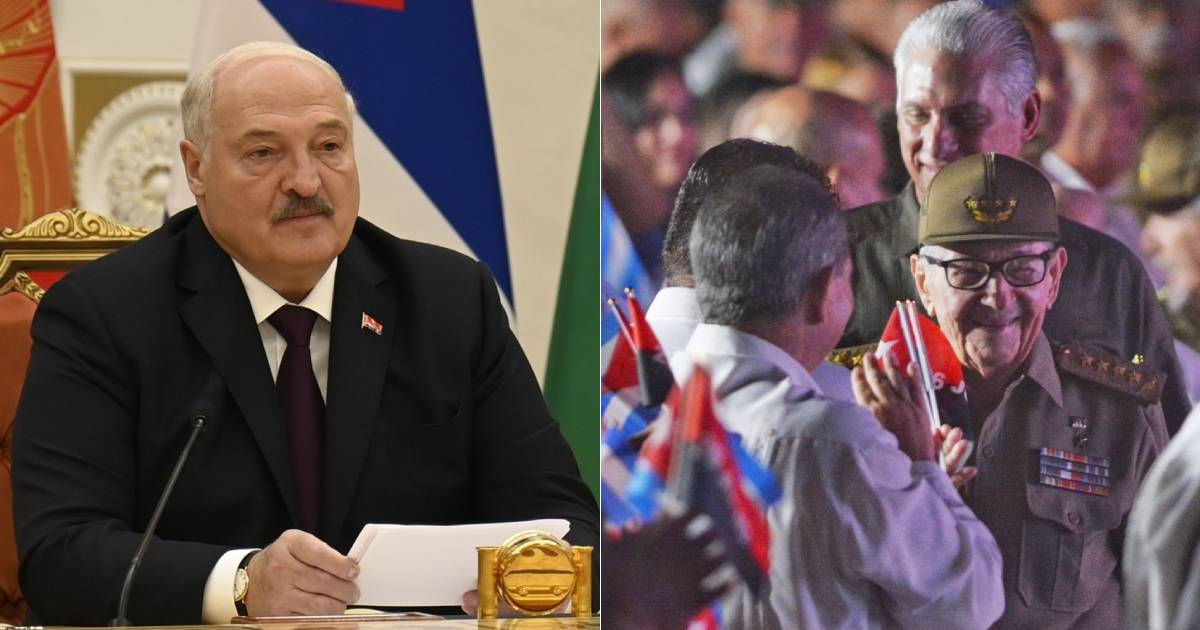
The authoritarian leader of Belarus, Aleksandr Lukashenko, issued a stark warning to the United States on Monday regarding the potential fallout of a military intervention in Cuba. In an interview with Russian state media outlet RT, he asserted, "If you meddle in Cuba and initiate a conflict with the Cubans, history shows it won't end well for you."
These remarks come amidst escalating tensions between Washington and Havana, following a series of increasingly hostile statements from President Donald Trump aimed at the Cuban government.
Lukashenko emphasized that there will always be nations willing to quietly support Cuba in the event of a conflict, highlighting the unpredictability of how such events might unfold. He questioned the strategic logic of any military action, given Cuba's proximity: "Cuba is right in the U.S.'s backyard, not far from Donald Trump's home. Do they really need it? Certainly not."
Calls for Diplomatic Engagement
In the same interview, Lukashenko urged the Trump administration to foster "normal relations" with countries like Cuba, Mexico, Nicaragua, and Venezuela. He also called for the release of Nicolás Maduro, who was reportedly captured by U.S. special forces in Caracas on January 3, 2026. "There's no need to admit mistakes. Just reverse course and free this man; make a deal with Venezuela," he stated.
Accusations of Dictatorship
Lukashenko accused Trump of being "the real dictator," arguing that while he lacks the resources to impose his will, Trump possesses them and dictates terms to nations like Venezuela and Cuba, as well as attempts to do so with Iran and China.
Military Cooperation and Rising Tensions
The Belarusian leader's warnings are set against a backdrop of increased military collaboration between Minsk and Havana. Notably, the twelfth meeting of the Cuba-Belarus Joint Commission on Technical-Military Cooperation took place in Minsk in April 2026, following the modernization of Cuban Revolutionary Armed Forces' air defense systems by a Belarusian company in May 2025.
U.S.-Cuban tensions have intensified since Maduro's capture, particularly due to the deaths of 32 Cuban soldiers who were protecting him. This incident disrupted the flow of 26,000 to 35,000 barrels of Venezuelan oil per day to Cuba, exacerbating an energy crisis marked by power outages lasting up to 20 hours daily.
On January 29, 2026, Trump signed Executive Order 14380, labeling the Cuban government an "extraordinary threat" to national security and imposing tariffs on countries supplying oil to Cuba. By March 28, he declared Cuba as the next target, asserting, "It will fail soon, and we'll be there."
In response, the Cuban regime issued its own warnings: on April 16, Díaz-Canel urged preparations akin to those in 1961, while on April 18, the deputy foreign minister affirmed Cuba's readiness to defend against any aggression.
Concluding his statements, Lukashenko, who has ruled Belarus since 1994 and under whose regime over a thousand political prisoners remain detained, summed up his stance by saying, "I'm not an emperor like Trump or Putin expecting universal adoration."
FAQs on U.S.-Cuba Relations and Potential Conflicts
What are the implications of a U.S. invasion of Cuba?
A U.S. invasion of Cuba could lead to significant geopolitical tension and potential military conflicts, drawing in allies of Cuba and resulting in economic and humanitarian repercussions.
How has Belarus supported Cuba militarily?
Belarus has enhanced its military cooperation with Cuba, including the modernization of Cuba's air defense systems and holding joint technical-military meetings.
What has been the impact of the U.S. sanctions on Cuba?
U.S. sanctions have intensified Cuba's economic difficulties, leading to severe energy shortages and prolonged power outages, further straining the island's already fragile economy.