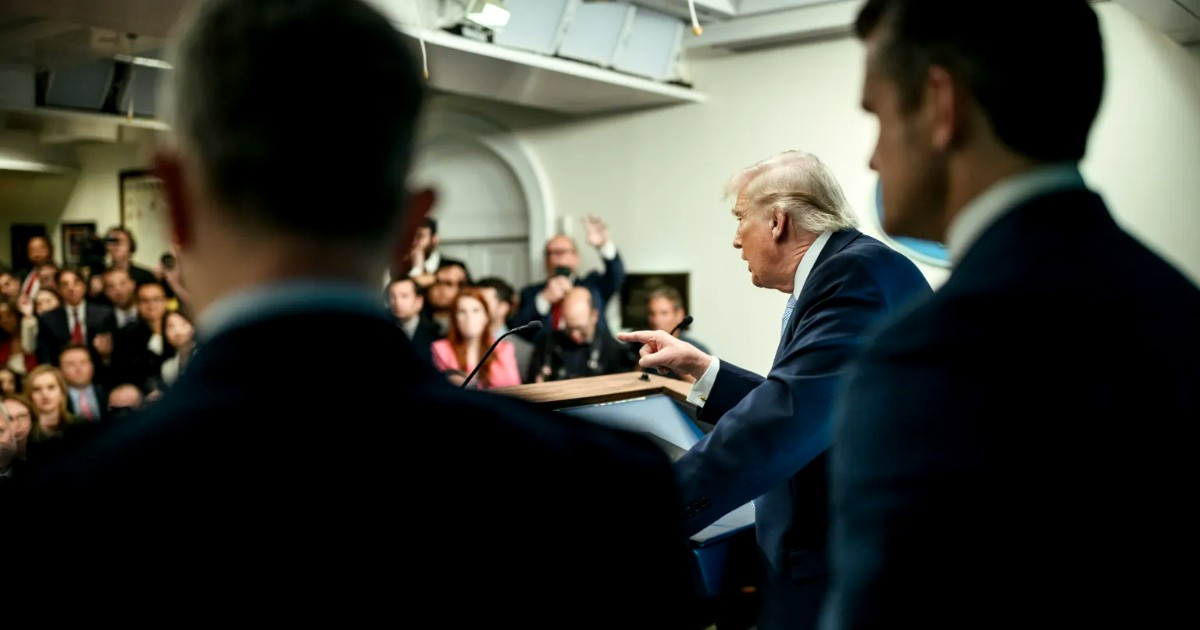
On Sunday, President Donald Trump delivered his most forceful warning yet to Iran during an interview with Fox News. He stated emphatically, "If Iran doesn't sign this deal, the entire country will be blown up," labeling the situation as Tehran's "final chance."
In a roughly 20-minute phone conversation with correspondent Trey Yingst, Trump emphasized that critical infrastructures would be targeted, saying, "Bridges and power plants will be attacked if Iran doesn't agree to this deal."
The President described the proposal as straightforward, declaring, "This is a very simple agreement." He was adamant about avoiding what he sees as former President Barack Obama's mistakes, who, Trump claims, gave Iran cash while allowing them to continue their nuclear program. This criticism refers to the 2015 nuclear deal and the $1.7 billion payment made by the Obama administration.
The accord demanded by Washington involves the full and immediate reopening of the Strait of Hormuz and the surrender of the highly enriched uranium buried after Operation Midnight Hammer in June 2025, which decimated Iran's nuclear facilities in Fordow, Natanz, and Isfahan.
Trump also announced that special envoys Jared Kushner and Steve Witkoff would head to Islamabad, Pakistan, on Monday — possibly staying until Wednesday — to attempt to finalize the agreement with Pakistani mediation.
This declaration comes amid heightened tensions. On the same day, Iran completely closed the Strait of Hormuz in response to the U.S. naval blockade of its ports, declared on April 12 after the collapse of 21-hour negotiations in Islamabad.
The closure of the Strait, through which a critical portion of the world's oil passes, has caused Brent crude prices to soar from $67 to over $126 since Iran began restricting passage in March.
The conflict took a dramatic turn in late February with Operation Epic Fury, a 38-day joint offensive by the U.S. and Israel, reportedly destroying 90% of Iran's missile capabilities and 95% of its drones, hitting over 13,000 targets.
During this operation, Supreme Leader Ali Khamenei was killed along with 49 senior regime officials.
Since March 26, Trump has issued multiple ultimatums, extending them as diplomatic progress appeared possible. On April 16, Pakistan announced significant progress in negotiations, and Trump claimed Iran had agreed to halt its nuclear program, though a final agreement has not yet been reached.
In March, the U.S. sent Iran a 15-point plan demanding the total dismantling of its nuclear program and a 20-year moratorium. Iran's 10-point counterproposal was deemed "not serious" by Trump, partly because its Farsi version included uranium enrichment, directly contradicting Washington's zero-enrichment demand.
"If they don't comply, the United States will destroy every power plant and every bridge in Iran," Trump reiterated, making it clear that the window for diplomacy is closing fast.
Key Questions Surrounding U.S.-Iran Tensions
What is the significance of the Strait of Hormuz in this conflict?
The Strait of Hormuz is a crucial passage for global oil transport, and its closure by Iran has caused significant increases in oil prices worldwide, escalating tensions further.
What were the outcomes of Operation Epic Fury?
Operation Epic Fury was a joint U.S.-Israel offensive that reportedly destroyed the majority of Iran's missile and drone capabilities, significantly weakening its military strength.
Why is Trump's approach to Iran different from Obama's?
Trump criticizes Obama's approach for providing Iran with cash and allowing nuclear progress. In contrast, Trump demands complete nuclear dismantlement and has issued severe threats to enforce compliance.