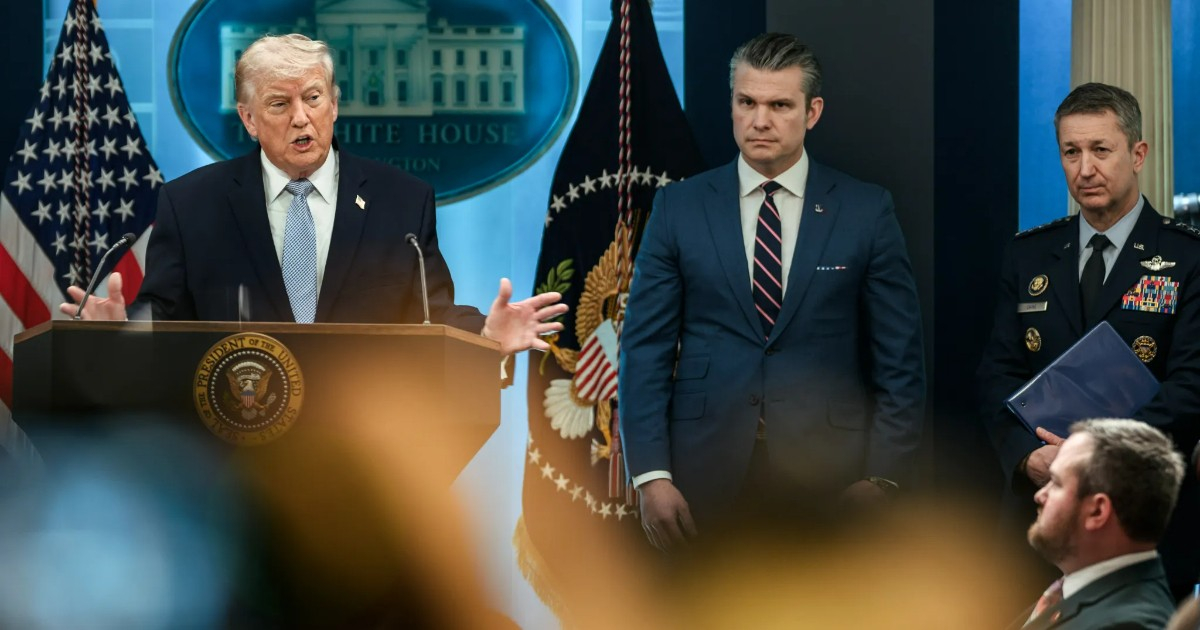
On Sunday, Donald Trump issued a stark warning, threatening to obliterate every power plant and bridge in Iran if the regime refuses to accept the deal proposed by Washington. This message, shared on his social media platform Truth Social, sent shockwaves across the globe less than 72 hours before the bilateral ceasefire is set to expire on April 22.
This warning follows an incident where Iranian forces fired on a French ship and a British cargo vessel in the Strait of Hormuz on Saturday. Trump condemned the action as "a complete violation of our ceasefire agreement."
The former president's words left little room for ambiguity: "We are offering a very fair and reasonable deal, and I hope they accept it because if they don't, the United States will destroy every power plant and bridge in Iran. No more Mr. Nice Guy!"
The Potential Fallout of Trump's Threats
Such rhetoric paints a dire picture, raising concerns even among those who oppose the ayatollahs' regime. 90 million Iranians could face severe repercussions, potentially losing access to electricity, clean water, operational hospitals, and communication networks.
Trump pushed the narrative further: "They will fall quickly, they will fall easily, and if they don't accept the deal, it will be my honor to do what needs to be done, something that other presidents should have done with Iran over the past 47 years. It's time for the Iranian killing machine to come to an end!"
Diplomatic Efforts and the Ceasefire Clock
Meanwhile, Trump announced that his representatives are heading to Islamabad, Pakistan, on Sunday to negotiate with the Iranian delegation on Monday, which might serve as the final diplomatic attempt before the ceasefire deadline.
The clock has been ticking since April 8, when a two-week truce mediated by Pakistan was agreed upon, contingent on the reopening of the Strait of Hormuz.
Previous negotiations in Islamabad from April 10 to 12 ended unsuccessfully: Washington demanded a complete dismantling of Iran's nuclear program and a 20-year moratorium on uranium enrichment, whereas Tehran offered only a five-year pause and sought $270 billion in compensation.
Economic Impact and International Reactions
On April 16, Trump claimed that Iran had agreed to halt its nuclear program, but two days later, the regime reinstated strict control over the Strait and fired upon foreign vessels.
Trump also highlighted that the closure of the Strait costs Iran $500 million daily, while asserting that the United States "loses nothing."
The European Council described the threat to destroy Iranian civil infrastructure as "illegal and unacceptable," echoing the concerns of various analysts who view it as a potential violation of international humanitarian law.
Understanding the Implications of Trump's Threats
What triggered Trump's latest threats against Iran?
The threats were triggered by Iranian forces firing on a French ship and a British cargo vessel in the Strait of Hormuz, an action Trump labeled as a violation of the ceasefire agreement.
What is the significance of the Strait of Hormuz in this conflict?
The Strait of Hormuz is a strategic waterway, crucial for global oil transportation. Its closure has significant economic implications, costing Iran $500 million daily, as highlighted by Trump.
What are the potential consequences of Trump's threats for Iranian civilians?
If carried out, Trump's threats could leave 90 million Iranians without essential services like electricity, clean water, and operational hospitals, severely impacting civilian life.