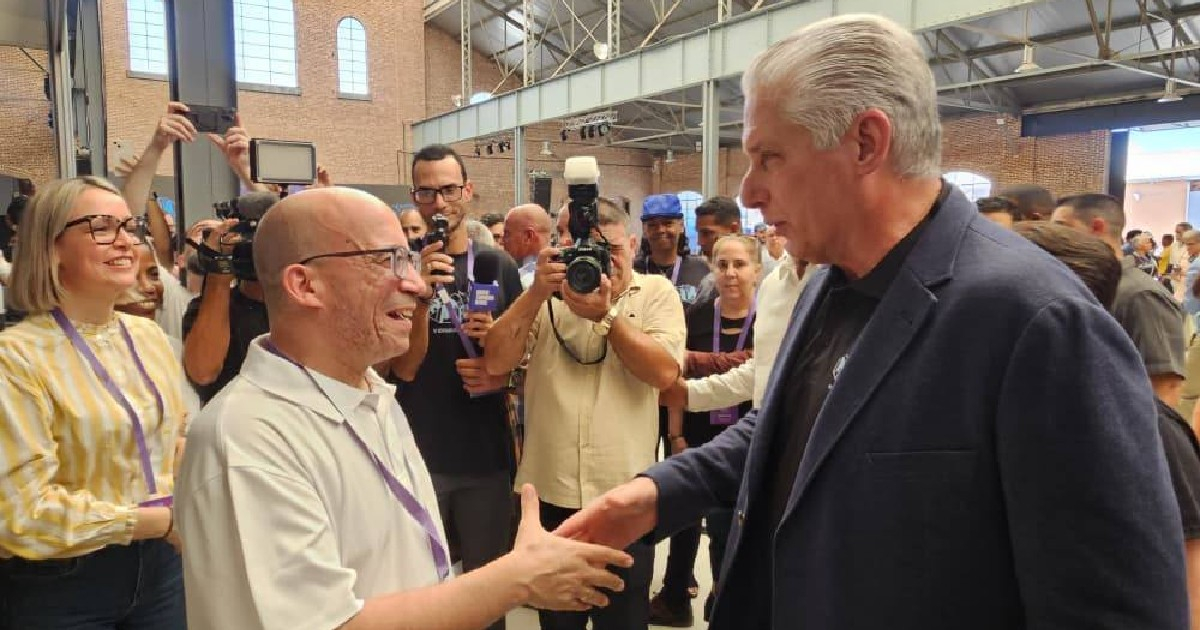
Cuban President Miguel Díaz-Canel made an appearance at the IDEAS Multimedios booth during the V International Patria Colloquium in Havana, where he exchanged pleasantries with staff from the regime's primary digital propaganda outlet, urging them to assert Cuba's "truth" in today's media landscape.
During this encounter, which was eagerly reported by Cubadebate—the flagship of the IDEAS group—Díaz-Canel commended the Fidel Soldado de las Ideas site for promoting the "thoughts of the historic leader" and suggested enhancing its search features for better visibility. He also praised their audiobook projects on the dictator's legacy and collaborations with international media like Al Mayadeen and Sputnik, natural partners in this event which gathers leftist communicators from around 25 countries to counter what they term "media aggression" against Cuba.
"There's a revolutionary, media, and humanist militancy," the president noted, evidently pleased with the efforts of those whom everyday Cubans view as specialists in misinformation.
While Díaz-Canel applauded his propagandists, Cubans took to social media with sarcasm that no audiobook on Fidel could quiet. "If they produced sweet potatoes and bananas with the same vigor they lie and waste time, at least hunger wouldn't be so rampant in Cuba," quipped one netizen, pointing to a populace surviving on meager wages, often going days without food. Others were more blunt: "All they do is manipulate and, of course, misinform," "When will we have press freedom?" "So many ideas, yet no actual production—this is how the country is run."
The divide between the self-congratulatory colloquium and the harsh reality on the island is stark. Cuba ranks 165th out of 180 countries in the 2025 World Press Freedom Index by Reporters Without Borders, scoring just 26.03 out of 100, making it the second worst in Latin America. Díaz-Canel himself has been listed as a press predator by the organization following the crackdown after July 11, 2021.
The Cuban Constitution mandates state ownership of all media, effectively rendering independent journalism clandestine. Harassment and violence against those daring to practice independent and critical journalism are constant on the island. Official media, however, always receive warmth and praise from the authorities.
This pattern repeats with each edition. At the IV Patria Colloquium in 2025, Díaz-Canel distinguished a resilient real Cuba from a virtual Cuba of hate and fake news. During the III Colloquium in 2024, he downplayed domestic protests by comparing them to other nations. Earlier this year, he labeled state media as an "ideological trench" and "worthy companion of the Revolution." Meanwhile, in May 2025, Meta blocked Razones de Cuba's Instagram and Facebook accounts for community standard violations.
"At the expense of a hardworking people. Meanwhile, it's all meetings, tales, and lies," another netizen summarized. It's challenging to find a more accurate depiction of the V International Patria Colloquium.
Key Questions About Cuban Media and Freedom
What did Díaz-Canel praise during his visit to Cubadebate's stand?
Díaz-Canel praised the website Fidel Soldado de las Ideas for promoting the thoughts of Fidel Castro and recommended improvements to its search features to enhance visibility. He also applauded audiobook projects and partnerships with international media like Al Mayadeen and Sputnik.
How does Cuba rank in the World Press Freedom Index?
Cuba ranks 165th out of 180 countries in the 2025 World Press Freedom Index by Reporters Without Borders, with a score of 26.03 out of 100, making it the second worst in Latin America.
What challenges do independent journalists face in Cuba?
Independent journalists in Cuba face constant harassment and violence due to the state's monopoly on media, which effectively makes independent journalism illegal. The Cuban Constitution declares all media as state property.