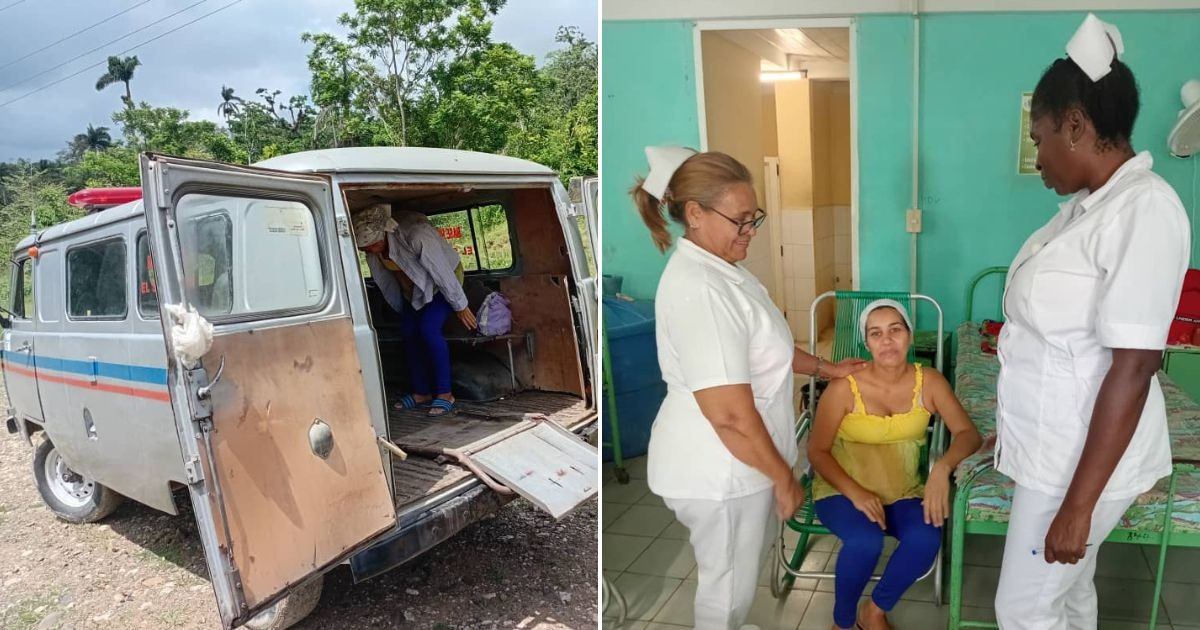
An experienced medical team, under the leadership of Dr. Yaciel Montoya Sierra, the municipal health director of El Salvador, embarked on a challenging journey through difficult terrain to rescue Yelenis Martínez Pantoja. Yelenis, a 26-year-old woman, was 26 weeks into a high-risk twin pregnancy in the mountainous community of Oasis, located in the El Salvador municipality of Guantánamo province.
Living in an area devoid of proper roads, Yelenis faced significant obstacles in accessing the specialized medical attention she desperately needed.
After her rescue, Yelenis was admitted to a maternity home in Guantánamo, where she is receiving constant care and specialized monitoring. Twin pregnancies are automatically classified as high-risk and are considered "valuable" within the Cuban health system.
At the time of reporting, Yelenis's condition is stable and she is not in immediate danger, with hopes that she will successfully carry her pregnancy to term and return home with her newborn twins.
Yelenis expressed her heartfelt gratitude, saying, "I am thankful that they came to get me due to my health condition and the mountainous area where I live."
Challenges and Achievements in Maternal Care
The rescue operation was reported by journalist Daniel Martínez Balón and broadcasted by Radio Guantánamo. Images from the scene depict the use of a Soviet-made UAZ-452 ambulance with Cuban registration B 242702, highlighting the deteriorating state of medical transport vehicles in the area.
The El Salvador municipality currently has 156 pregnant women, with 55 of them classified as high-risk. Due to these rescue and monitoring efforts, both maternal and infant mortality rates have remained at zero in 2026 so far.
This operation took place just a week after a similar mission in the same region. On April 8, a team comprising the Integrated Medical Emergency System of Guantánamo, the Cuban Red Cross, and the Maternal-Child Care Program transported another woman pregnant with twins from the El Dajao community, also within El Salvador municipality, using all-terrain vehicles.
These incidents underscore a recurring pattern in a province where over 82% of the land is mountainous, leading to many communities lacking roads, electricity, and basic services.
Stark Contrast with National Health Statistics
The disparity with the national health situation is striking. Maternal mortality in Cuba climbed to 56.3 per 100,000 live births by July 2025, nearly double the rate of 37.4 in 2024. Infant mortality also rose to 8.2 per 1,000 live births in the first half of that year, the highest level in 25 years, according to official data confirmed by Health Minister José Ángel Portal Miranda.
FAQs on High-Risk Pregnancies and Medical Access in Guantánamo
What challenges do pregnant women face in Guantánamo's mountainous areas?
Pregnant women in these areas often lack access to proper roads and medical facilities, making it difficult to receive necessary prenatal care and emergency medical attention.
How does the Cuban health system classify twin pregnancies?
Twin pregnancies are automatically categorized as high-risk within the Cuban health system and require specialized monitoring and care.
What is the current state of maternal and infant mortality in Cuba?
As of July 2025, Cuba's maternal mortality rate reached 56.3 per 100,000 live births, and the infant mortality rate rose to 8.2 per 1,000 live births, marking a significant increase from previous years.