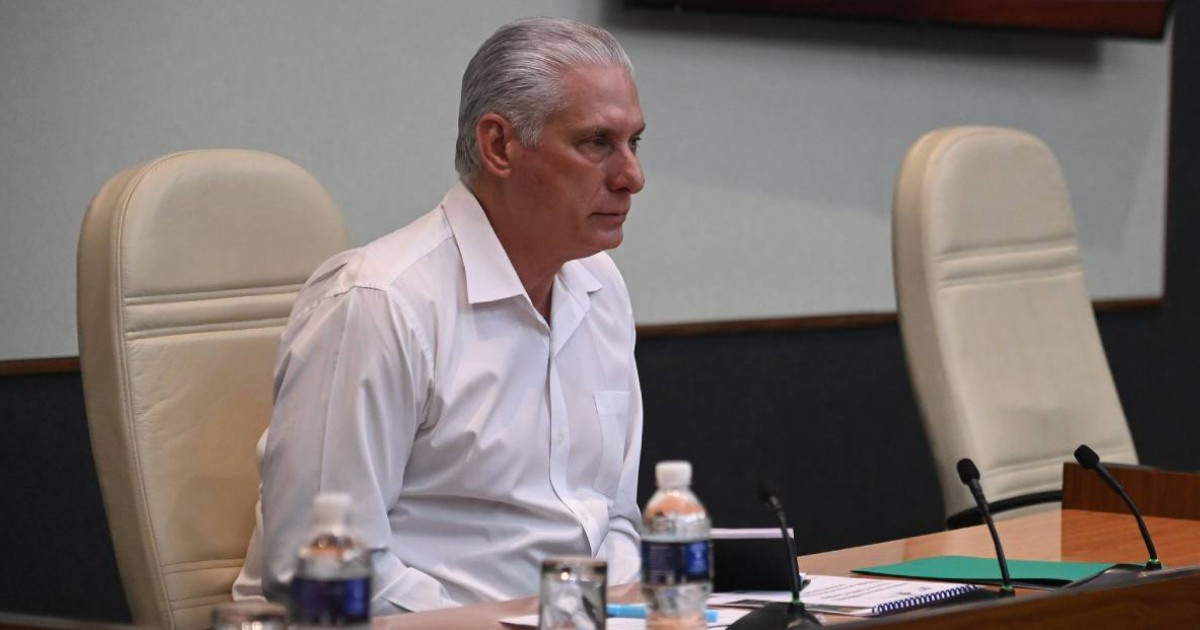
On Tuesday, Miguel Díaz-Canel convened with Cuban scientists and experts to discuss renewable energy projects related to the country's energy transition. Despite the regime's portrayal of this meeting as progress, it primarily rehashed longstanding initiatives while the island continues to endure power outages lasting up to 25 hours a day.
Key Discussion Points from the Meeting
Renewable Energy Initiatives: The primary focus was harnessing available resources and technology to generate energy from renewable sources. The regime touts these projects as "short-term solutions."
Role of Universities in Energy Transition: The National Group of Universities for Renewable Energy Sources and Energy Efficiency (GNUFRE), formed in 2019, now includes all higher education institutions in Cuba. However, most remain closed to students due to the ongoing fuel crisis.
Biogas Projects from Animal and Industrial Waste: Proposals were made to finalize and operationalize biogas projects across the country using waste from pigs, livestock, and industry. Cuba reportedly has an estimated potential of over 491 million cubic meters of biogas annually.
Biomethane Development for Transportation (Project Martí): Dr. Manuel Alejandro Rubio Rodríguez, GNUFRE coordinator and professor at the Central University "Marta Abreu" of Las Villas, introduced Project Martí. This initiative is Cuba's first experience in producing biomethane for transportation, utilizing covered lagoon biodigesters.
Utilizing Forest Biomass (Chips and Pellets): A proposal was discussed to enhance the solid biofuel value chain, prioritizing its use in ovens, cooking, construction material production, and steam generation, based on the national Bioenergy Atlas.
Domestic Biogas Applications: Projects like the Managuaco biogas network, which uses livestock waste and a Cuban biodigester for home use, and La Pastora, a hybrid rubber membrane biodigester, were presented.
Transforming the Sugar Industry into an Energy Source: The Sugar Cane project drew significant attention, with Rubio suggesting that a revamped sugar industry could be a flexible, sustainable base for electricity generation during the energy transition. This comes as the 2024-2025 sugar harvest yielded less than 150,000 tons, the lowest since before 1899.
Incentives and Normative Framework: The regime claims to be drafting regulations to incentivize participation in the solid biofuel value chain, aligning with tax exemptions approved in February 2026 for renewable investments.
Nationwide GNUFRE Expansion: Established in response to the 2014 Renewable Energy Policy, GNUFRE is also involved in drafting the Energy Transition Law, which is still under consultation.
Focus on Immediate Solutions: The meeting emphasized initiatives with the potential for immediate impact, such as heat production, amidst a backdrop of a 1,900 MW electricity generation deficit in March 2026.
This meeting occurs as Cuba faces its most severe electrical crisis in recent memory, with multiple total system collapses in 2026 and only 1,145 MW of generation capacity against a peak nighttime demand of 3,000 MW.
A report from the Security for Transition Project estimates that $8 billion in renewable energy investments are needed to meet 93.4% of Cuba's electricity demand—an amount the bankrupt regime is far from being able to raise.
Ultimately, the meeting reiterated ideas the regime has been discussing for over two decades without tangible results: promoting renewables, leveraging biogas, modernizing the sugar industry, and involving universities.
The repetition of familiar diagnoses and proposals amidst an unprecedented electrical crisis highlights the lack of real implementation and effective investment. Rather than progress, the meeting felt like the government is merely "reinventing the wheel," repeating theoretical solutions while millions of Cubans continue to endure prolonged power outages and a teetering energy system.
Understanding Cuba's Energy Challenges
Why is Cuba facing such severe power outages?
Cuba is experiencing severe power outages due to an outdated energy infrastructure, insufficient generation capacity, and a lack of investment in renewable energy solutions. The country's economic challenges further exacerbate these issues.
What is the potential of renewable energy in Cuba?
Cuba has significant potential for renewable energy, particularly in solar, wind, and biogas. However, realizing this potential requires substantial investment and infrastructure development, which the current regime struggles to provide due to financial constraints.
What role do universities play in Cuba's energy transition?
Cuban universities are involved in research and development initiatives for renewable energy, but their potential is limited by resource shortages and institutional closures resulting from the ongoing fuel crisis.