The Food Monitor Program (FMP) released a report on Wednesday titled "Economic Paralysis and Food Survival in Cuba," highlighting dire levels of food insecurity across five provinces: Havana, Matanzas, Cienfuegos, Guantánamo, and Santiago de Cuba.
This report provides anonymous accounts from residents in these areas, detailing lives reduced to mere survival, characterized by hunger, uncertainty, and moral exhaustion.
Current Crisis Compared to the Special Period
The quantitative data from the study underlines this harsh reality. According to the FMP, 78% of respondents believe the ongoing food crisis—ongoing since 2019—is worse than the Special Period of the 1990s. Only 12% feel the earlier crisis was tougher, while 10% did not respond.
"In the last two months, rice prices jumped from 200 to 300 pesos, which is a brutal blow. Proteins or salad? Every day is a surprise," one testimony collected by the FMP describes.
Survival Strategies and Societal Impact
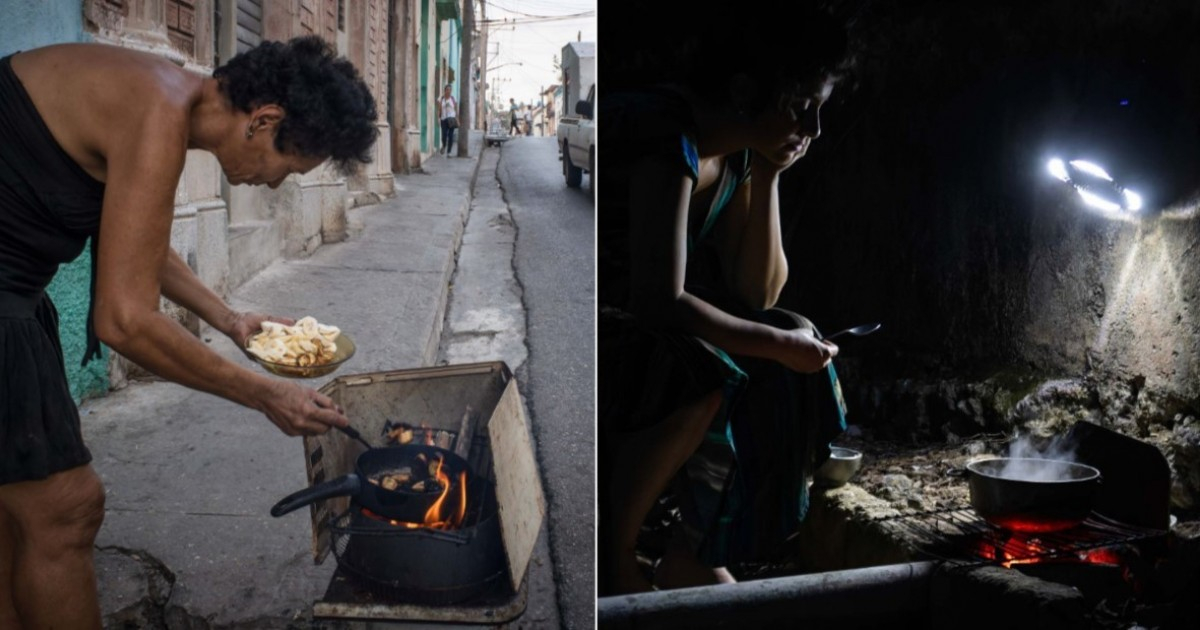
Survival tactics include skipping meals, stretching rice over several days, cooking with charcoal or wood, bartering, and turning to the informal market.
The study analyzed a sample of 2,508 households across various provinces and age groups, lending significant credibility to its findings and confirming a widespread perception of crisis among the populace.
"We spend less time at home to eat less. Sometimes if I have breakfast, I skip lunch," another testimony reveals.
One voice captures the extent of the decline: "I settle for a bit of rice, a small spoonful to last another day, and a little bit of beans that aren't enough for a full meal."
Impact of "Zero Option" Policy
The report also notes the effects of the "Zero Option," an extreme contingency plan announced by Díaz-Canel in February 2026, involving severe rationing and enforced local self-sufficiency.
Historically, the current crisis is perceived as worse than the Special Period in critical areas like food access, state support, social equality, public services, and psychosocial well-being. Only in terms of legal restrictions do respondents view the 1990s as more severe.
"Zero Option was the final blow, but one we saw coming," notes one interviewee.
Energy Collapse and Food Distribution
Despite promises to ensure seven pounds of rice per person per month under this plan, testimonies collected by the FMP suggest this commitment is not met in reality.
The food deterioration is exacerbated by an unprecedented energy collapse, with power outages lasting up to 25 hours a day and an electricity deficit of 1,885 megawatts recorded in March 2026, hindering food refrigeration and distribution.
Cuba imports 70% to 80% of its food, and domestic production has plummeted: root vegetables fell 44%, eggs 43%, and milk 37.6% as of January 2025.
Chicken exports from the United States decreased by 21% in value in February 2026.
Institutional Trust and Social Fabric
The FMP also documents a complete lack of trust in institutions: most Cubans surveyed believe improvement is only possible through systemic change outside existing structures, aligning with previous findings showing 94% of Cubans do not trust the government to resolve the crisis.
The social fabric has also deteriorated. "The old values, like sharing what little you had with your neighbor, are gone. Now everyone looks out for themselves," laments one testimony.
These findings lead to a stark conclusion: the current crisis not only surpasses the Special Period in public perception but does so more broadly and deeply, affecting both material conditions and the psychological state of the population.
The FMP report concludes with a poignant question that encapsulates the severity of the situation: "To what extent can a society endure when survival becomes the only possible horizon?"
Understanding Cuba's Food Crisis
What is the "Zero Option" policy in Cuba?
The "Zero Option" is an extreme contingency strategy announced by Díaz-Canel in 2026, involving severe food rationing and enforced local self-sufficiency in response to the food and economic crisis.
How does the current crisis compare to Cuba's Special Period?
The current food crisis is perceived as more severe than the Special Period of the 1990s in terms of food access, state support, social equality, public services, and psychosocial well-being, although legal restrictions were viewed as harsher in the past.
What are some survival strategies used by Cubans during this crisis?
Cubans are employing survival strategies such as skipping meals, stretching rice supplies, cooking with alternative fuels like charcoal, bartering, and relying on the informal market to cope with the food shortage.
What is the role of energy shortages in Cuba's food crisis?
Severe energy shortages, with power outages lasting up to 25 hours daily, significantly impede the refrigeration and distribution of food, exacerbating the food crisis in Cuba.