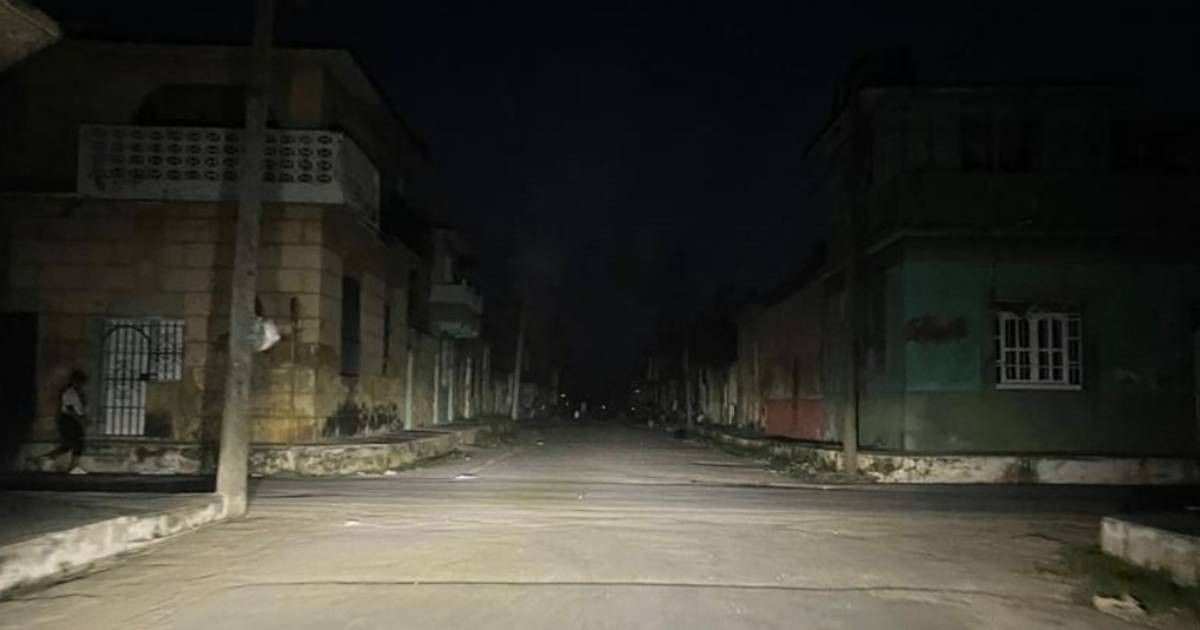
Amidst relentless blackouts and an energy crisis pushing daily life in Cuba to the brink, a recent international report raises a crucial question: Can Cuba emerge from its electrical collapse by investing in renewable energy?
A study from the Transition Security Project (TSP), affiliated with the British think tank Common Wealth, suggests that with an investment of approximately $8 billion, Cuba could fulfill up to 93.4% of its electricity needs. This funding, the analysis indicates, could significantly reduce the island's reliance on imported fossil fuels, which are the main culprits behind the blackouts affecting millions of Cubans today.
The report, authored by researcher Kevin Cashman and highlighted by The Guardian, arrives at a pivotal moment. Since the beginning of the year, Cuba has faced a dramatic decrease in oil supply due to measures from Washington that have made exports to Cuba more expensive or limited. The consequence has been a prolonged emergency scenario.
Current Energy Crisis in Cuba
In March alone, the national electrical grid collapsed three times. In many parts of the country, power outages stretched up to 25 hours daily, impacting over 60% of the territory. Hospitals operating at critical capacity, halted transportation, stagnant industries, and homes plunged into darkness: for roughly 10 million Cubans, the crisis has transformed from a statistic into a daily struggle.
Within this context, the report outlines several energy transformation scenarios. The most ambitious plan—creating a grid entirely reliant on renewable sources—would necessitate a $19.2 billion investment. However, experts believe that with less than half of that amount, around $8 billion, it would be feasible to nearly eliminate dependency on imported oil.
Potential Benefits of Renewable Energy
Even a more modest plan, costing $5 billion, could cut that dependency to just a fifth of the current electricity generation, marking a substantial improvement in the system's stability.
The proposed model primarily focuses on solar energy, which could supply about three-quarters of Cuba's electricity. Wind energy would contribute around one-fifth, with the remaining power coming from sources like hydroelectric and bioenergy.
Cuba has already taken initial steps in this direction. Authorities have announced plans to install over 1,000 megawatts of solar energy with Chinese support, and record-breaking days of solar generation have been reported. Nonetheless, these advancements are still insufficient to address the structural fragility of the electrical system.
Economic Impact and Financial Challenges
Beyond supply, the economic impact could also be significant. The report suggests that electricity costs could be nearly halved—from the current 14.3 cents per kilowatt-hour to about 6.5 cents with an $8 billion investment, easing the burden on an already strained economy.
Nevertheless, the primary hurdle remains financing. The study's authors argue that such investment should be considered part of international climate financing, a way to support vulnerable countries in their energy transition.
Meanwhile, in Cuba, the reality is stark: families endure entire nights without electricity, food spoils, hospitals rely on generators, and there is a growing sense of exhaustion.
The report offers a glimpse of what could be possible, yet also starkly contrasts with the current situation experienced by millions of Cubans left in the dark.
Understanding Cuba's Renewable Energy Potential
What is the main cause of the current energy crisis in Cuba?
The energy crisis in Cuba is primarily due to its heavy reliance on imported fossil fuels, which have become more expensive and limited due to recent measures by Washington.
How much investment is needed to significantly reduce Cuba's dependency on fossil fuels?
An investment of around $8 billion could significantly reduce Cuba's dependency on imported fossil fuels, potentially covering up to 93.4% of its electricity needs with renewable energy sources.
What renewable energy sources are proposed for Cuba's energy transformation?
The proposed model focuses on solar energy, which could provide about three-quarters of the country's electricity, complemented by wind, hydroelectric, and bioenergy sources.