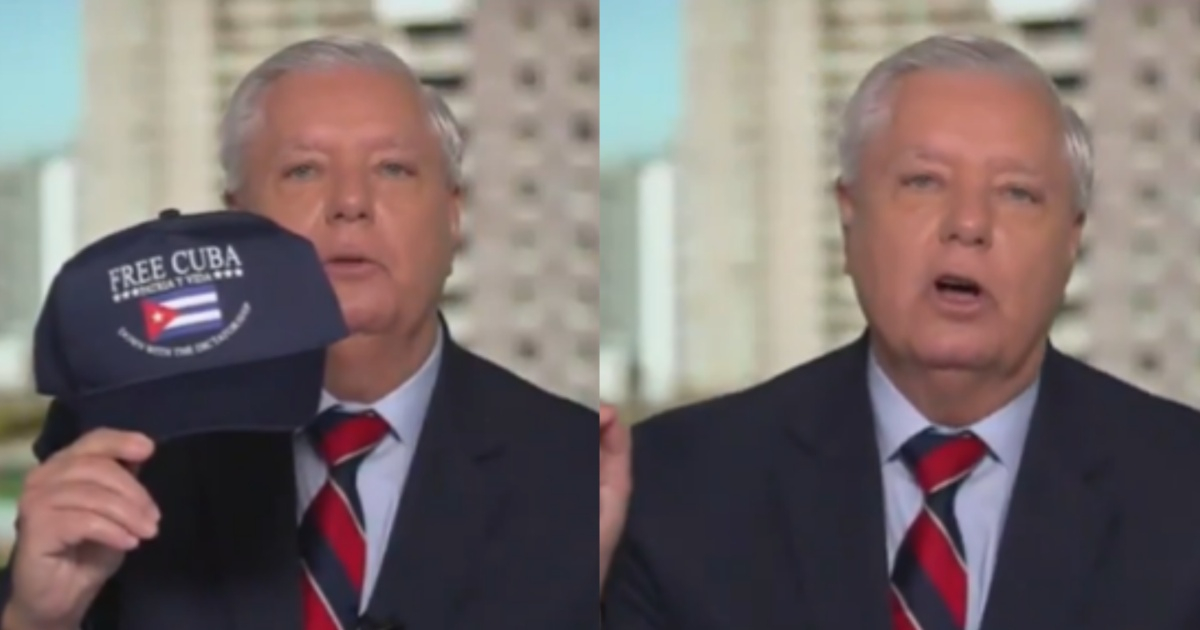
On Monday, Republican Senator Lindsey Graham issued a bold message to the Cuban people via his profile on X, urging them to overthrow the communist regime and align themselves with President Trump and the United States. This statement was in response to remarks made by Miguel Díaz-Canel during an interview with NBC.
Graham's post was a counter to the Meet the Press account, which had aired Díaz-Canel's statement: "If we need to die, we will die" to prevent a supposed U.S. invasion. The senator questioned how many Cubans Díaz-Canel truly represents, before making his appeal: "To our Cuban friends: oust the communists and join President Trump and the United States. That would be the best decision you could ever make."
Historic Interview Sparks Controversy
The interview with journalist Kristen Welker, recorded at Havana's José Martí Memorial and aired on Sunday, marked the first time a Cuban leader appeared on U.S. television since Fidel Castro's 1959 interview on the same program. During the 53-minute conversation, Díaz-Canel rejected all of Washington's demands—such as the release of political prisoners, multiparty elections, and a free press—asserting that respect for Cuba's political and constitutional system was non-negotiable.
When asked if he would resign to save Cuba, he retorted with irritation: "Do they ask that question to Trump?" He added that "resignation is not part of our vocabulary."
Republican Outrage and Graham's Consistent Rhetoric
The interview ignited a wave of reactions among Republican lawmakers. Senator Rick Scott criticized NBC for giving a platform to Díaz-Canel, whom he labeled a brutal and illegitimate communist dictator. Cuban-American Congresswoman María Elvira Salazar referred to Díaz-Canel as a "dictator designated by the Castros."
Graham's message is part of an ongoing rhetorical escalation throughout 2026. In early March, he declared on Fox News: "Cuba is next. They will fall. This communist dictatorship in Cuba has its days numbered."
U.S. Pressure on Cuba Intensifies
A few days later, Graham appeared on television wearing a cap with the phrase "Free Cuba" and proclaimed: "Stay tuned! This is Ronald Reagan Plus." This pattern of statements aligns with the Trump administration's strategy, which on January 29th issued an executive order declaring the Cuban regime an "extraordinary threat" to national security and imposed over 240 new sanctions since January.
The pressure reached new heights following the U.S. capture of Nicolás Maduro on January 3rd, which deprived Cuba of between 26,000 and 35,000 barrels of Venezuelan crude oil daily, further exacerbating the island's severe energy crisis.
In January, Graham had already warned regime leaders on X: "Call Maduro and ask him what to do… If I were you, I'd be looking for a new place to live."
Understanding the U.S. and Cuba Relations
What prompted Lindsey Graham's statement to the Cuban people?
Lindsey Graham's statement was a response to Miguel Díaz-Canel's comments during an NBC interview, where Díaz-Canel expressed readiness to die to prevent a U.S. invasion.
Why did the interview with Díaz-Canel spark controversy?
The interview was controversial because it was the first appearance of a Cuban leader on U.S. television since 1959, and Díaz-Canel rejected demands for political reform, provoking strong reactions from U.S. lawmakers.
How has the U.S. increased pressure on Cuba recently?
The U.S. has increased pressure by imposing over 240 new sanctions and through actions like the capture of Nicolás Maduro, which cut off significant oil supplies to Cuba.