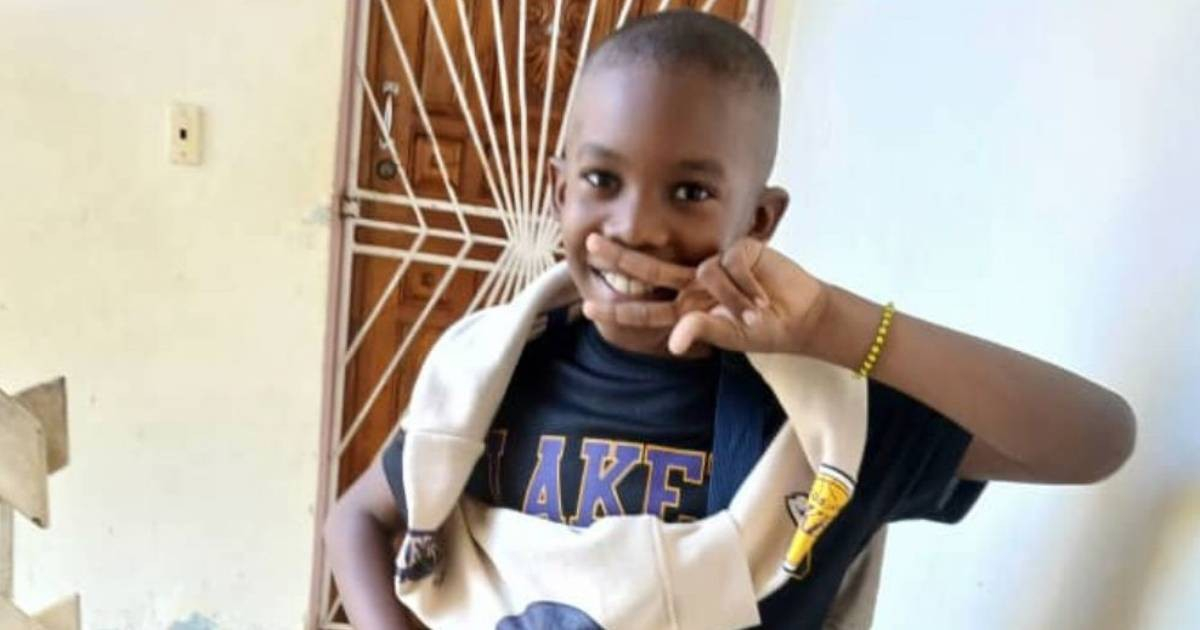
Enzo Larduet Rivera, an 11-year-old boy on the autism spectrum, was safely located on Sunday in Santiago de Cuba, less than a day after he vanished around 1:20 PM in the vicinity of his home.
The last sighting of the child was when he was playing alone near the base of the Escalinata and the Calle 4 Terminal in the Sorribe neighborhood, where he lives with his family at Calle 8, number 107, second floor, between Primera and Carretera Central.
When Enzo went missing, he was wearing maroon shorts and red flip-flops, and he was shirtless.
Although Enzo cannot communicate verbally, he does respond to his name and often hums or sings. He remains calm if approached gently and lovingly.
The urgency in finding him was heightened due to his medication, which causes drowsiness. An initial witness reported seeing a boy matching his description walking in the Martí area, but this was not confirmed by authorities.
His mother, Melisa Rivera Salazar, aged 26, confirmed the joyful outcome via phone to Aris Arias Batalla, who had shared the search alert on Facebook: "Enzo is home and with family."
Melisa also expressed her gratitude to all the Santiago residents and Facebook users "for their immediate attention and cooperation in the search and information regarding the unfortunate incident."
The swift and widespread mobilization on social media followed the usual pattern in Cuba, where Facebook serves as the primary tool for locating missing persons due to the lack of effective official protocols.
The Alas Tensas Gender Observatory has documented this phenomenon, noting that "posting, sharing, and maintaining public pressure" on social networks is the only real mobilization mechanism available to Cuban families.
Children with autism spectrum disorder are particularly vulnerable in situations of disappearance. International studies reveal that nearly half of these children go missing at least once after the age of four, facing risks of drowning, traffic accidents, and other fatal injuries.
The main risk factors are their lack of verbal communication and inability to perceive danger.
Santiago de Cuba has witnessed several similar incidents in recent months. In November 2025, Yordan Corrales Ricardo, a five-year-old boy, was missing for over a week before being found safe in the municipality of Songo-La Maya.
Enzo's case also highlights the shortcomings of the Cuban system in addressing autism: the official prevalence of the disorder on the island is estimated at 0.4 per 10,000 children, significantly lower than the global rate of one in 160 reported by the World Health Organization, suggesting potential underdiagnosis.
The country has only nine specialized educational institutions nationwide for children and adolescents with this condition.
The happy resolution of Enzo Larduet's case, found in less than 24 hours thanks to the collective effort on social media, contrasts starkly with the lack of official alerts and accessible records for missing persons in Cuba, a gap that Cuban families are forced to bridge with their own resources whenever a loved one goes missing.
Key Questions about Missing Children with Autism in Cuba
Why are children with autism more vulnerable to getting lost?
Children with autism are more prone to wandering due to their lack of verbal communication skills and inability to perceive danger, increasing their risk of accidents or harm.
How do Cuban families typically respond to missing person cases?
Cuban families often rely on social media, particularly Facebook, to mobilize search efforts due to the lack of official protocols and accessible records for missing persons.