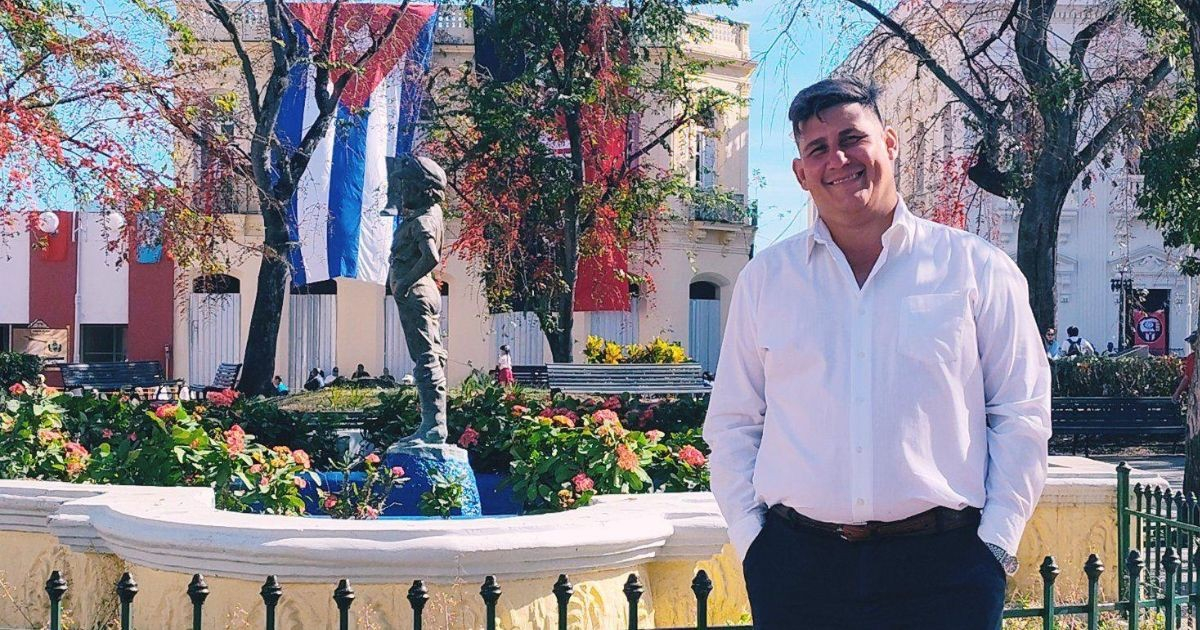
Henry Omar Pérez, a correspondent for the Cuban News Agency (ACN) stationed in Villa Clara, took to social media on Sunday to share an image of a ballot marked with an X—symbolizing a unified vote for all candidates, including Miguel Díaz-Canel Bermúdez. Accompanied by the message, "I voted for Miguel Díaz-Canel Bermúdez and I would do it again," his post was clear in its support.
The post, featuring the hashtag #YoSigoAMiPresidente, emerged shortly after the airing of an NBC News interview where Díaz-Canel staunchly refused to relinquish his position of power.
In a subsequent post, Pérez further solidified his support for the leader with a bold statement: "Renunciar ni renunciar ¡Guapo y fajao!" This phrase directly references Díaz-Canel's refusal to step down, highlighting the regime's directive for state journalists to rally behind the leader on social media platforms.
Interview Sparks Controversy
Díaz-Canel's conversation with NBC's Kristen Welker on "Meet the Press," recorded at the José Martí Memorial in Havana, saw him assert, "The notion of revolutionaries abandoning or resigning doesn't exist in our vocabulary." When probed if he would step down to save Cuba, Díaz-Canel retorted with irritation: "Would you ask Trump that? Is this question from the State Department?"
State Media Propaganda Efforts
Pérez justified his stance through ideological reasoning: "It's my right, I would never join those who want annexation and war in my country." This support fits into a well-documented pattern of organized defense by Cuba's state media, which acts as a propaganda arm for the regime.
The #YoSigoAMiPresidente campaign is a state-sponsored digital propaganda tool used at least ten times during 2024 to back Díaz-Canel on social networks.
Previous Defenses of the Regime
In February 2026, journalist Arleen Rodríguez Derivet delivered a fervent defense of Díaz-Canel's rhetoric, while Leticia Martínez Hernández, head of the leader's press team, shared a poem on Facebook praising him as a "tireless leader."
Pérez's alignment with the regime is well-documented: in November 2025, he branded the independent outlet El Toque as a terrorist organization and insulted its director, José Jasán Nieves, labeling him a "thug" and "saboteur."
Public Sentiment and International Pressure
The contrast between Pérez's support and the general sentiment in Cuba is stark. An informal Facebook poll conducted by activist Elieser El Bayardo on April 11 revealed that 95% of over 8,000 commenters desired Díaz-Canel's departure from office. The activist noted that more than 59% of the views on this post came from within Cuba, underscoring the widespread disapproval of the leader in the very nation Pérez claims to defend.
Díaz-Canel's interview with NBC marks the first appearance of a Cuban leader on the program since Fidel Castro in 1959, occurring amidst intense pressure from the Trump administration, which has imposed over 240 new sanctions against Cuba since January 2026, demanding Díaz-Canel's resignation as a prerequisite for any negotiations.
FAQs on Support for Díaz-Canel and Public Reaction
Why did Henry Omar Pérez show support for Díaz-Canel?
Henry Omar Pérez displayed support for Díaz-Canel as part of a state-directed effort, using social media to promote pro-government sentiments and align with the ongoing propaganda campaign.
What was the public's reaction to Díaz-Canel's governance?
The public reaction has been largely negative, with an informal poll showing 95% of participants advocating for his removal from power, reflecting a significant disapproval within Cuba.
How has international pressure affected Díaz-Canel's leadership?
International pressure, particularly from the Trump administration, has intensified with over 240 new sanctions against Cuba, complicating Díaz-Canel's leadership and demanding his resignation as a condition for diplomatic dialogue.