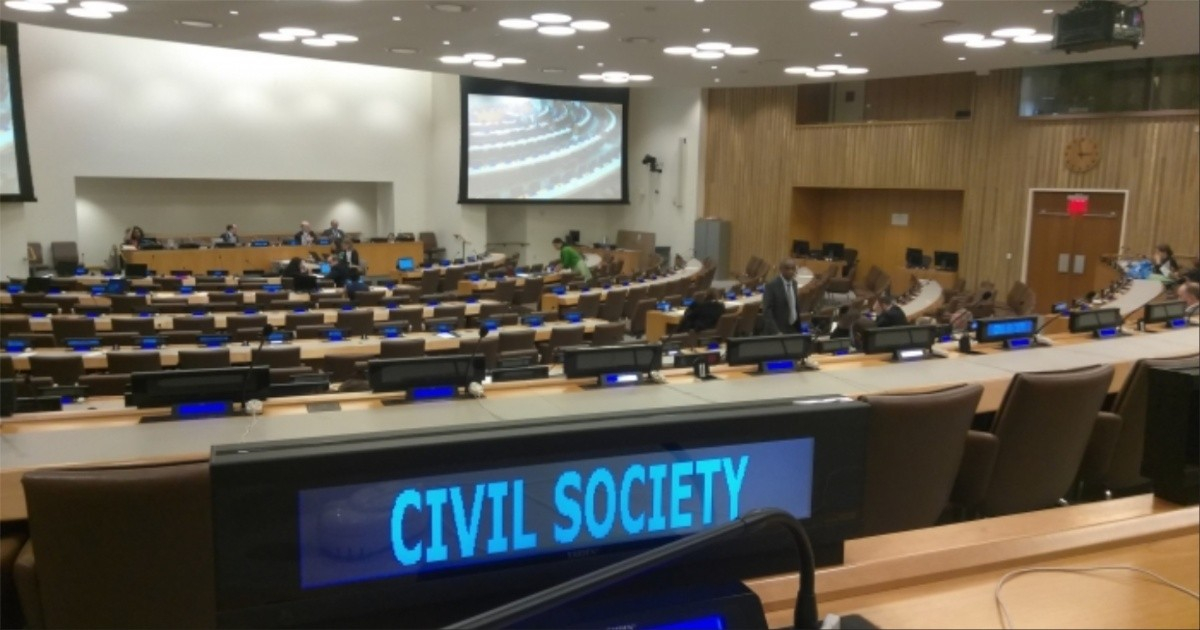
In a surprising move, Cuba was unanimously chosen on Friday to join the United Nations Economic and Social Council's (ECOSOC) Committee on Non-Governmental Organizations (NGOs) for the 2027-2030 term. This decision comes despite Cuba being a nation where independent civil society is effectively banned.
Cuban Foreign Minister Bruno Rodríguez Parrilla expressed his approval on social media platform X, stating, "This outcome acknowledges Cuba's efforts in promoting the involvement of genuine non-governmental organizations from all regions in the United Nations' activities."
The Irony of Cuba's Selection
The irony is palpable: the Cuban government does not allow independent NGOs to operate within its borders. According to the Law of Associations (Law 54/1985), organizations must register with the Ministry of Justice, which routinely denies legal status to any group not aligned with the Cuban Communist Party (PCC). Operating without registration is considered the criminal offense of "illegal association."
In Cuba, the only functioning entities are the so-called "mass organizations" directly controlled by the PCC, such as the Committees for the Defense of the Revolution (CDR), the Federation of Cuban Women (FMC), the Workers' Central Union of Cuba (CTC), and the Union of Young Communists (UJC).
Repressive Measures Against Civil Society
Receiving external funding without state approval can be punished as an "act against State Security," making any attempt to finance an independent civil organization a criminal risk. The CIVICUS Monitor categorizes Cuba under the most restrictive classification: "closed."
Rather than fostering civil society participation, Cuba, alongside countries like Nicaragua, China, Pakistan, and Turkey, has been accused of using its position on the ECOSOC NGO Committee to obstruct and delay accreditation requests from organizations critical of their governments.
Examples of Repression
A notable instance is Cubalex, a Cuban independent legal organization that was raided in 2016 and declared illegal by the Ministry of Justice for lacking state-sanctioned registration. As of December 2025, Prisoners Defenders recorded 1,197 political prisoners in Cuba, including 130 activists, 22 artists, and 10 journalists. In April 2026, the organization reported hundreds of new detentions in March, contradicting official announcements of pardons and clemency.
This isn't the first instance of Cuba holding a contradictory position at the UN. In October 2023, the regime was re-elected to the Human Rights Council, sparking criticism from Human Rights Watch, Amnesty International, and the Council for Democratic Transition in Cuba.
The ECOSOC NGO Committee, established in 1946 and composed of 19 members elected by geographic representation, is tasked with accrediting and recommending which civil society organizations receive consultative status at the UN. Starting in 2027, Cuba will partake in this role, all while continuing to suppress its own civil society.
Cuba's Role in the UN NGO Committee
Why is Cuba's election to the UN NGO Committee controversial?
Cuba's election is controversial because it does not allow independent NGOs to operate within its own borders, contradicting the committee's purpose of accrediting and recommending civil society organizations.
What are the implications of Cuba's position on the NGO Committee?
Cuba's position could be used to block or delay accreditation requests from organizations critical of its government, undermining the committee's mission to promote genuine civil society participation.
How does Cuba restrict civil society within its borders?
Cuba restricts civil society by denying legal status to independent organizations and criminalizing unregistered associations. It also punishes external funding without state approval as an act against State Security.