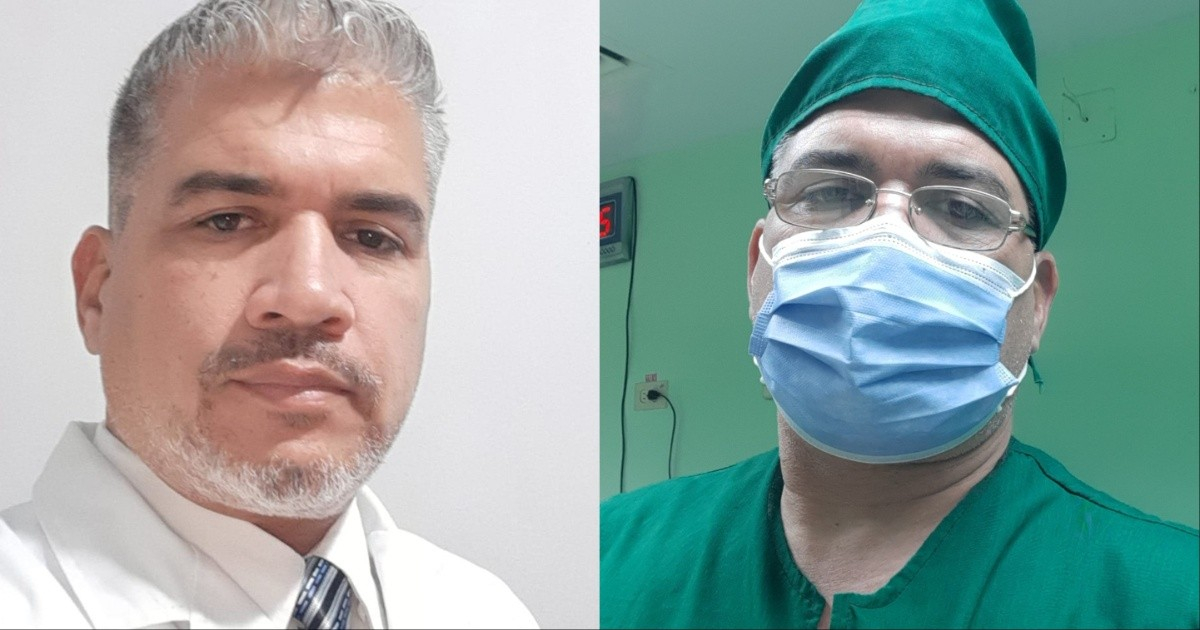
On Friday, Cuban surgeon Yonardo Fonseca Mesa took to Facebook with a brief but urgent message: "They are taking me detained." This alarming post quickly gained traction on social media, raising alarm among his followers and fellow medical professionals.
Previously vocal about the shortcomings of Cuba's healthcare system, the doctor did not disclose further details regarding the reasons for his arrest or the authorities involved. However, his succinct post was enough to trigger concern among those closely monitoring the situation faced by healthcare workers in Cuba.
Confrontation with Hospital Official
Earlier this week, Fonseca Mesa shared on Facebook an account of being humiliated by a hospital official while attempting to use the elevator to perform surgeries on two cancer patients. The incident unfolded before even reaching the operating room.
Describing the ordeal, Fonseca Mesa recounted a challenging night of power outages, a morning without breakfast due to lack of gas, electricity, and solar panels, and having to devise "creative" ways to reach his workplace.
Once at the hospital, as he entered the elevator to head to the fifth floor, a previously unknown official ordered him to take the stairs instead.
"A 'chief of unimportant matters' whom I've never seen before, boldly instructed me to get out of the elevator and take the stairs. He cited 'orders from the hospital director,' claiming the elevator was 'for patients only,'" he narrated.
Standing Up Against Absurdity
Fonseca Mesa painted a vivid picture of the scene in his post:
"Today, after a night of blackouts and a breakfast-less morning (due to no gas, electricity, or 'solar panels'), I creatively managed to reach the place they still call my workplace. I entered the elevator to reach the fifth floor, where two cancer patients awaited surgery."
The directive struck him as not only absurd but also deeply offensive given the circumstances.
Despite the situation's tension, Fonseca Mesa chose to defy the instruction.
"Even though things got a bit tense, I didn't get off the elevator. I made it to the operating room and did my best for those two individuals, who were innocent in all of this," he recounted.
Broader Critique of the System
The surgeon's grievance extended beyond this specific incident. He took the opportunity to criticize the salaries and treatment of healthcare professionals within the country.
Fonseca Mesa isn't alone in facing repercussions for voicing his opinions. Another Cuban doctor had previously highlighted similar tensions with a so-called 'chief of unimportant matters,' illustrating the widespread issues faced by many healthcare workers on the island.
Doctors in Cuba struggle on multiple fronts. Recent statistics indicate that experienced physicians earn between 7,000 and 8,000 Cuban pesos monthly, barely enough to meet basic needs amidst the nation's ongoing economic crisis.
Detentions of healthcare professionals who criticize the system are not unprecedented. A notable case involved Yoendry Figueredo Izaguirre, a doctor expelled from his position in Bayamo after publicly denouncing resource shortages and systemic failures. This pattern of repression is a common consequence for those daring to speak out.
These arrests occur amid a growing climate of repression. The organization Prisoners Defenders reported over 1,214 political prisoners in Cuba as of February 2026, illustrating the extensive crackdown by the regime against dissent and public criticism.
FAQs on the Situation of Cuban Healthcare Professionals
Why was Yonardo Fonseca Mesa arrested?
The specific reasons for Yonardo Fonseca Mesa's arrest remain undisclosed, but it followed his criticism of a humiliating incident at his hospital involving an unknown official.
What challenges do Cuban doctors face?
Cuban doctors contend with low salaries, resource shortages, and systemic challenges, all of which are exacerbated by the country's economic crisis.
Are detentions of healthcare professionals in Cuba common?
Yes, detentions of healthcare professionals who criticize the system are not uncommon, as evidenced by several cases, including that of Yoendry Figueredo Izaguirre.