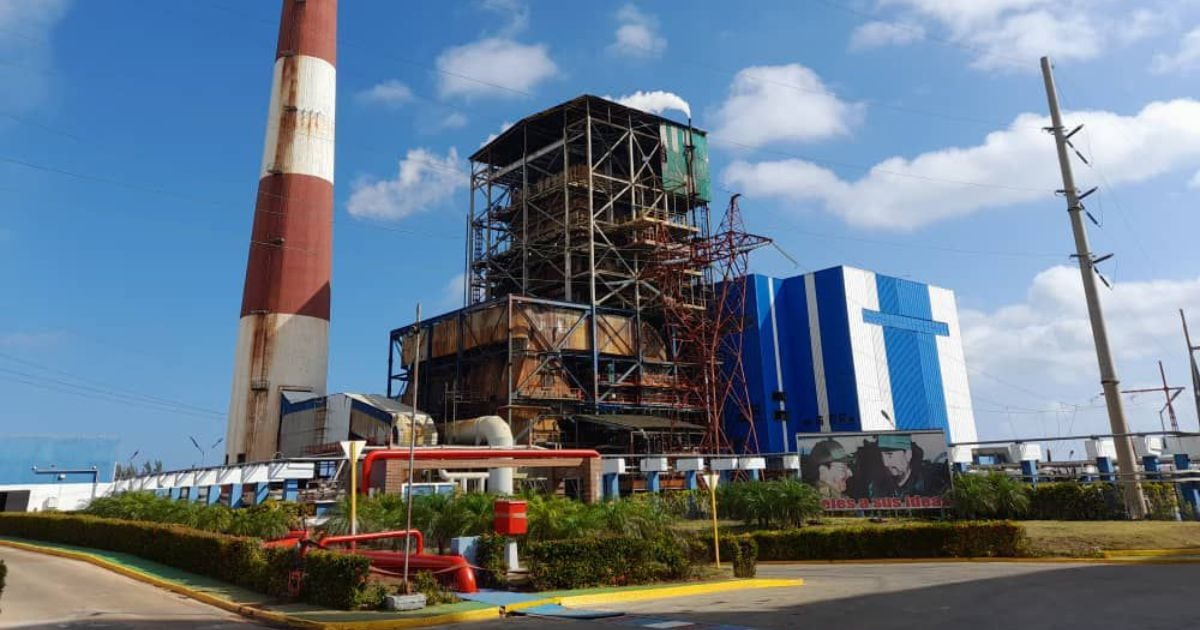
The Cuban government recently announced the overhaul of the "Comandante Ernesto Che Guevara" Nickel Plant in Moa, Holguín, by installing a new sedimentation system from China. Meanwhile, millions of Cubans continue to suffer from unreliable electricity and the country's thermal power plants remain in disrepair.
Government Priorities Under Fire
While Cubadebate touted the investment as a crucial step to enhance mineral processing and support the national economy, the news ignited a wave of criticism on social media. Hundreds of citizens questioned the government's priorities amid persistent power outages.
The disparity is striking: on the same day as the announcement, April 9, Cuba reported an electricity generation shortfall of 1,745 MW, with only 1,375 MW available against a demand of 3,120 MW.
Widespread Power Outages
Several power plant units, including those at the Felton Thermal Power Plant, the Antonio Guiteras Power Plant, and units in Mariel, Renté, and Nuevitas, were offline that day. Just two days earlier, on April 7, a turbine failure at the Ernesto Guevara thermal power plant had taken another unit offline.
On March 16, a complete blackout left all 11 million island residents without electricity, and by March 25, the peak nighttime shortfall nearly hit 1,900 MW, resulting in blackouts lasting up to 24 hours in Havana and other provinces.
Local Dissent
Holguín, home to the nickel plant receiving Chinese investment, is among the provinces hardest hit by power outages, according to local residents. Samira Martínez voiced her frustration, commenting, "Why not upgrade the power plants so people can have electricity, water, and a better quality of life? This news is disheartening."
Echoing the sentiment, Ismael Fuentes Alvares remarked, "They have funds for this, but not for the power plants," while Fredy Rojas bluntly stated, "The power plants need modernization; they are in ruins."
Economic Motives Questioned
Other users speculated about the economic motives behind the regime's decision. Yosdan Charchabal noted, "They are interested in modernizing to make more money," and Amanda Galletano added, "Thanks to China and the PCC, we still have no electricity, and you can't eat nickel."
The rationale behind the regime's priorities is evident: China is Cuba's main nickel buyer, with exports exceeding $128 million in 2023, providing direct revenue for the state, as IPS highlighted.
In 2014, the Cuban Nickel Company Group entered into supply contracts with China's MINMETALS, and the national plan aims to double production to 100,000 tons by 2030. However, in 2024, Cuba failed to meet its production, export, and state contribution targets in the nickel sector.
Carlos Manuel Hech urgently commented, "A lot of people are on the brink of collapse with the electricity issue in Cuba. We need someone with foresight, please."
The question many Cubans repeatedly asked, as Isonys Pérez put it, was: "What social good will benefit from this?"
Addressing Cuba's Energy Crisis
Why is the Cuban government prioritizing the nickel industry over power plant upgrades?
The Cuban government prioritizes the nickel industry because it generates direct revenue through exports, primarily to China, which is a significant economic partner.
What impact have power outages had on Cuban citizens?
Power outages have severely affected daily life for Cubans, leading to disruptions in electricity, water supply, and overall quality of life, with some areas experiencing blackouts lasting up to 24 hours.
How is China involved in Cuba's nickel industry?
China is a major buyer of Cuban nickel and has entered into supply contracts with Cuban companies. This relationship is crucial for Cuba's economic strategy, as nickel exports are a significant source of income.