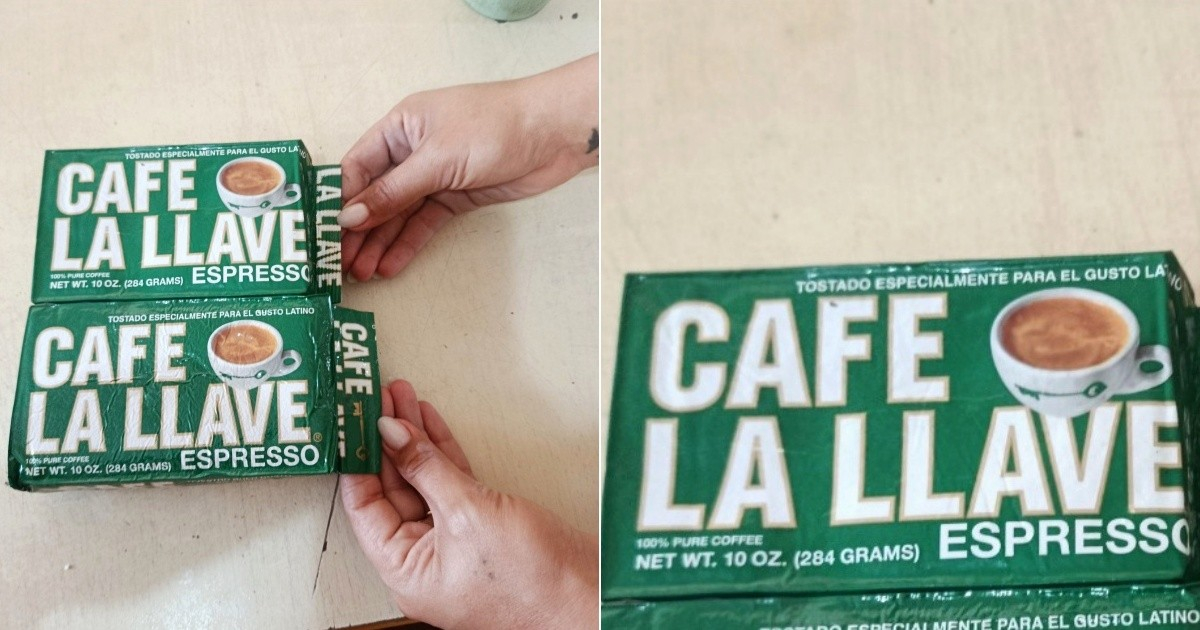
A post on Facebook has set off alarms among Cuban consumers, warning of alleged counterfeit La Llave coffee being sold in dollar-operated stores on the island. The concern has rapidly spread as more people become aware of the issue.
"Be cautious when purchasing coffee at USD stores. They are selling repackaged products. The packages lack aroma, are smaller, and don't have the complete label as shown in the photo," Javier Solís stated in a post that quickly gained traction online.
Accompanying his warning, Solís shared a photo comparing the authentic product with the fake one, urging consumers to be vigilant: "The one below is the original, and the one above is a scam. Protect your money; dollars are hard to come by."
Spotting the Differences
The alleged counterfeit products can reportedly be identified easily: smaller packages, incomplete labels, and most notably, the absence of the distinctive aroma that La Llave coffee is known for. Solís' testimony has prompted further reports from other users, amplifying the warnings.
Community Concerns Escalate
After the initial report, numerous users shared similar experiences, which have heightened the sense of alarm. Some comments directly accuse the product of being repackaged: "It's true, they're selling it for $2000… It's repackaged coffee… Who knows if it's even coffee. Trust is gone. There's no respect. The deceit is blatant," one user expressed.
Other individuals claim to have noticed inconsistencies even before the topic became widespread: "As soon as I tried it, I told my husband this isn't La Llave," another user mentioned.
Furthermore, some suggest this problem isn't new: "This has been happening for a while, those who know coffee can tell the difference." Concerns about a possible organized network have also surfaced, with users noting individuals collecting empty packages for resale.
A Broader Issue in Cuba
Independent media outlets have documented similar reports over the years. Consumers are advised to "carefully inspect packaging, ensure original seals, and be wary of packages with incomplete labels or unusual sizes." The issue of counterfeit or adulterated products isn't limited to coffee; it extends to various goods, including food and hygiene products, sold both in informal markets and state-run stores.
Economic Context Fuels Fraud
The economic situation in Cuba provides fertile ground for these fraudulent activities. Chronic shortages of basic goods and high prices have turned coffee into a near-luxury item. A single package can cost over 2,000 CUP, making it particularly appealing for counterfeit or resale networks.
Given the weak regulatory controls and lack of effective consumer protection mechanisms, citizens find themselves vulnerable, relying on social media as their primary means of alerting others. Counterfeit La Llave coffee scams have been reported before, with instances involving sawdust-filled packages and mislabeled products costing consumers significant amounts of money.
The environment in which these scams occur is crucial. An original La Llave coffee package is priced around $7.50 in stores operating with freely convertible currency, while on the informal market, it exceeds 2,000 Cuban pesos, nearly half of the minimum monthly wage of 2,100 pesos.
Cuban coffee production has consistently fallen short. In the first half of 2025, the country produced only 2,887 tons, which is merely 23.7% of the national plan, with Santiago de Cuba's harvest barely reaching 65% of the expected target.
Understanding the La Llave Coffee Fraud in Cuba
What are the signs of counterfeit La Llave coffee?
Counterfeit packages may lack aroma, be smaller, and have incomplete labels compared to authentic La Llave coffee.
Why is counterfeit coffee a problem in Cuba?
Due to economic shortages and high prices, coffee has become a luxury item, making it a target for counterfeit operations.
How can consumers protect themselves from buying fake coffee?
Consumers should inspect packaging carefully, ensure seals are original, and avoid products with incomplete labels or unusual sizes.