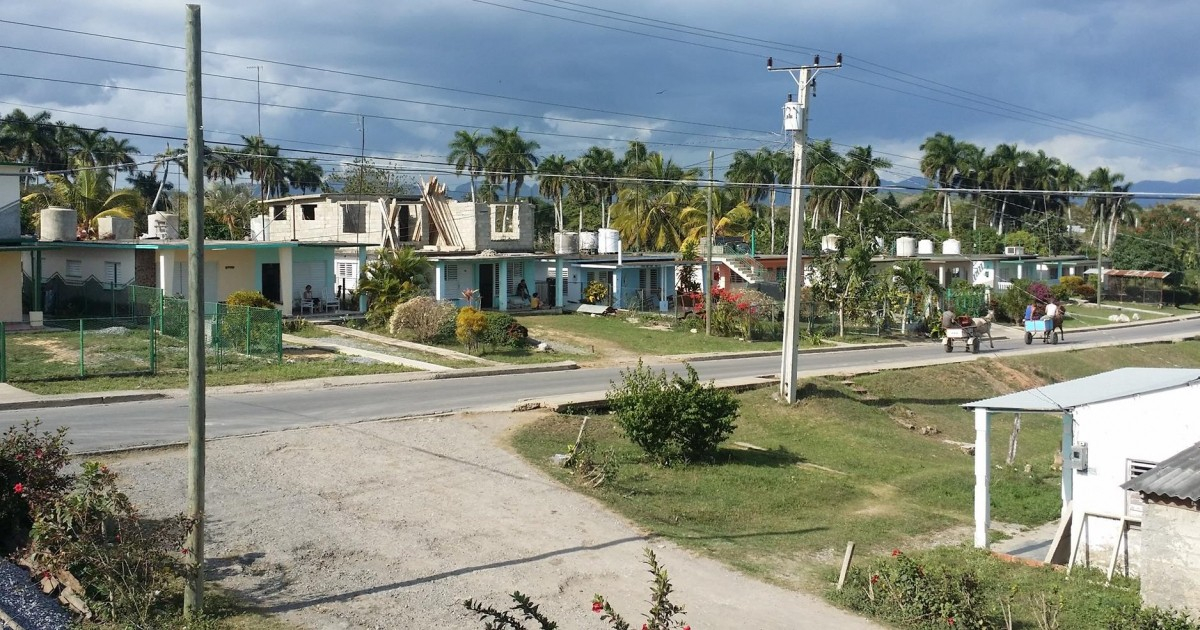
The community of Entronque de Herradura, located in the municipality of Consolación del Sur, Pinar del Río, has been suffering from a lack of regular potable water service for over two years, as reported by residents to Martí Noticias on Wednesday.
This town, home to around 12,000 residents, relies on the El Hatillo aqueduct, which operates sporadically and suffers from numerous issues with its pipeline network. Locals attribute the crisis to alleged illegal diversions, where connections have reportedly been sanctioned for agricultural purposes—such as irrigating crops and filling lagoons—during a drought, preventing water from reaching households.
Reports also highlight the existence of clandestine connections along the pipelines, including those filling private swimming pools, while the local government and the Communist Party, aware of the situation, have yet to provide tangible solutions.
With the aqueduct paralyzed, families are forced to rely on private suppliers who sell water at 4,000 pesos per pipa, a price unaffordable for retirees and low-income workers.
Activist Nilda García outlined the severity of their plight: "We've been without drinking water for more than two years. The situation is dire, and the elderly can't even afford a pipa of water because their pensions are insufficient."
Political dissident Eduardo Díaz Fleitas, who resides in the area, also voiced his frustration: "There's no one to talk to, no solution in sight. People are left to fend for themselves."
The community's desperation is encapsulated in this statement: "It's not enough that there's a lack of medicine, roads, and food. They solve their own problems, yet the people are left in utter poverty. They get their water trucks, but we, the people, have to pay whatever price is set for a pipa of water."
The water crisis is exacerbated by power outages lasting up to 30 hours in Pinar del Río, hindering the operation of water pumps. The provincial Electrical Company admitted last June that "we lack the megawatt capacity needed to establish a rotation of blackouts."
Martí Noticias attempted to reach out to local authorities for comment, but found no phone number listed, highlighting the level of institutional neglect faced by the community.
This issue is not unique to Entronque de Herradura.
In April 2025, the newspaper Granma reported that farmers were illegally tapping into the four main conduits supplying Pinar del Río, Consolación del Sur, and Viñales to irrigate their fields, a practice that the Hydraulic Resources authorities acknowledged they couldn't control.
By September of that year, entire neighborhoods in the province had gone over two months without water, and the cost of a pipa equaled half the average salary.
Nationally, 2025 marked the fifth driest year in Cuba since 1901, with more than 3.1 million people—30% of the population—experiencing total or partial water scarcity.
Activists from Entronque de Herradura have issued an urgent appeal to the relevant authorities and the public to file formal complaints to shed light on the plight of this community forsaken by the regime.
Understanding the Water Crisis in Pinar del Río
What are the causes of the water crisis in Entronque de Herradura?
The water crisis is attributed to irregular operations of the El Hatillo aqueduct and illegal diversions for agricultural use, preventing water from reaching local households.
How are residents managing without regular water supply?
Residents rely on private suppliers selling water at high prices, which many, especially retirees and low-income workers, find unaffordable.
Have local authorities responded to the crisis?
Despite awareness of the situation, local authorities and the Communist Party have not provided concrete solutions to address the crisis.